

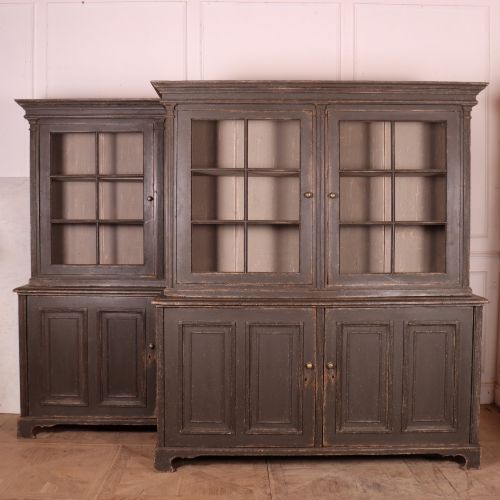
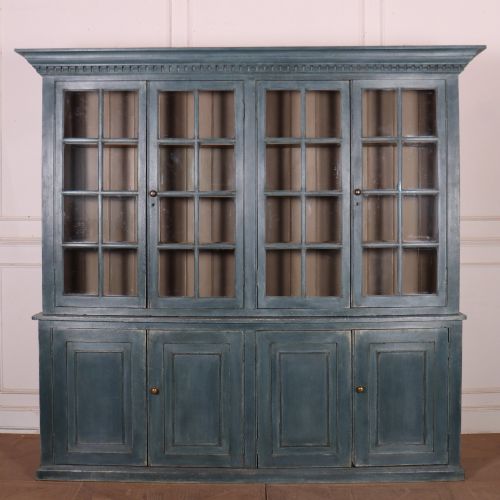
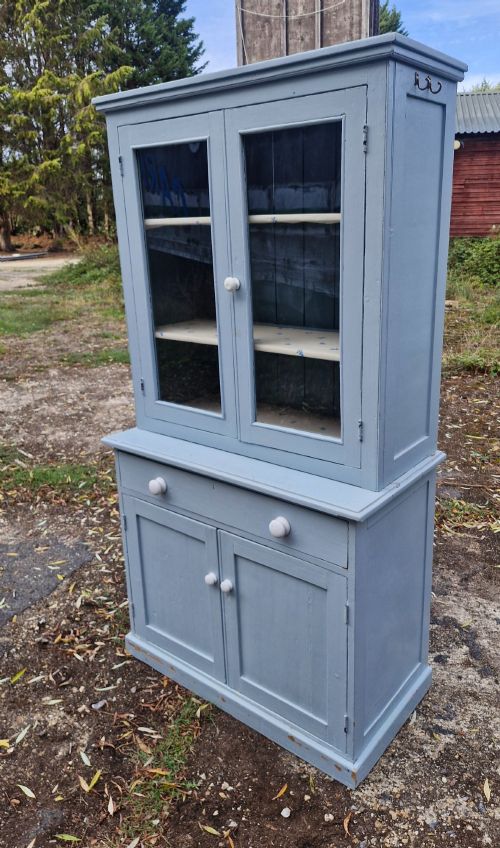
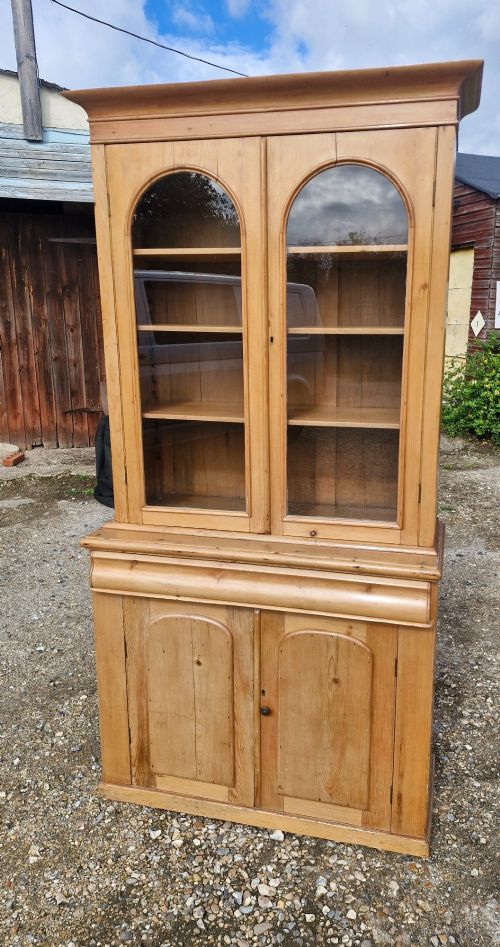
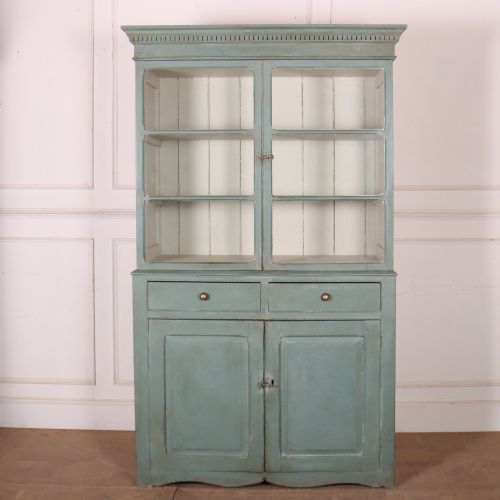
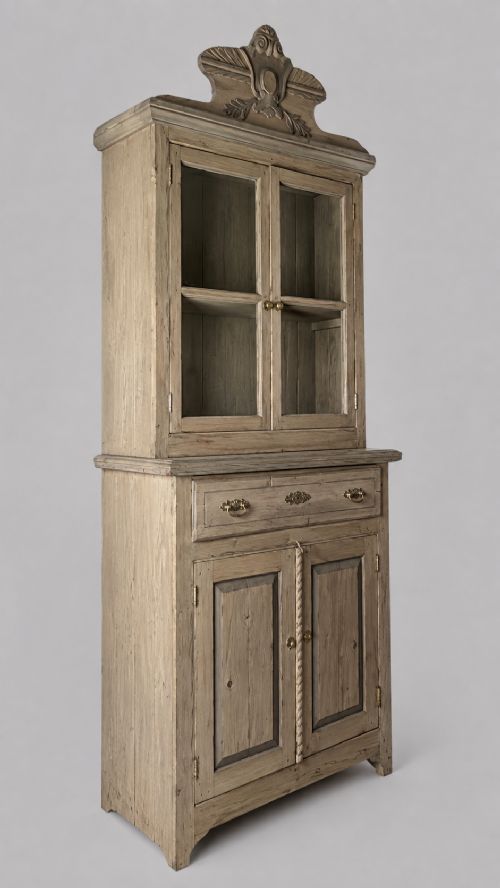
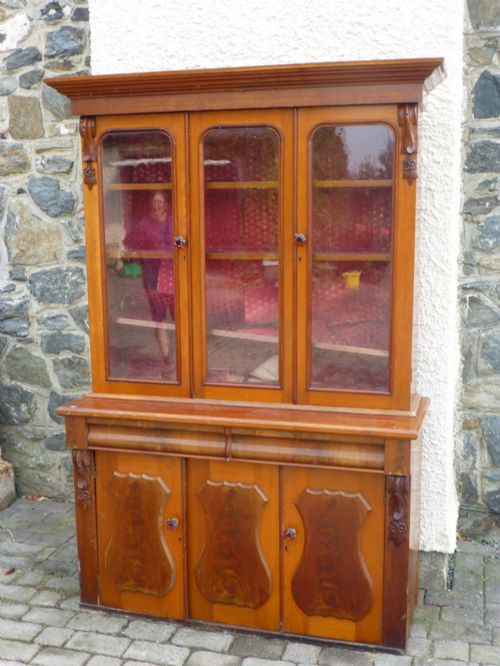
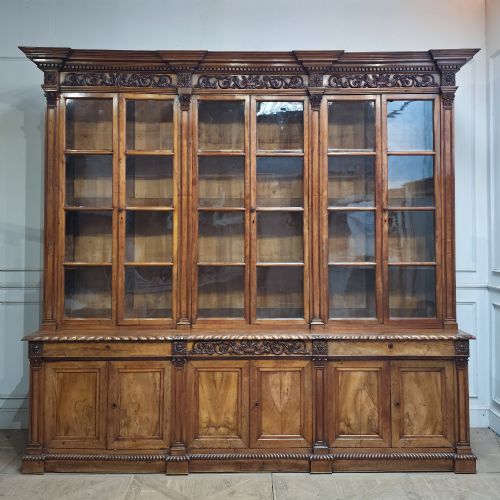
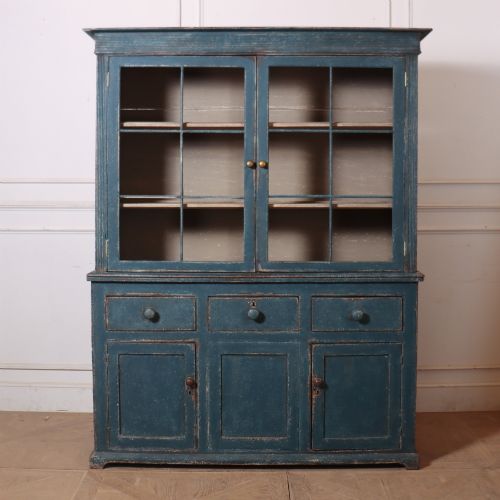
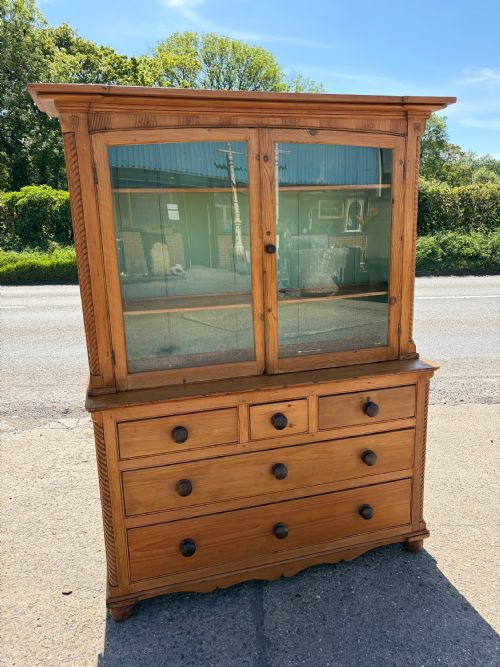
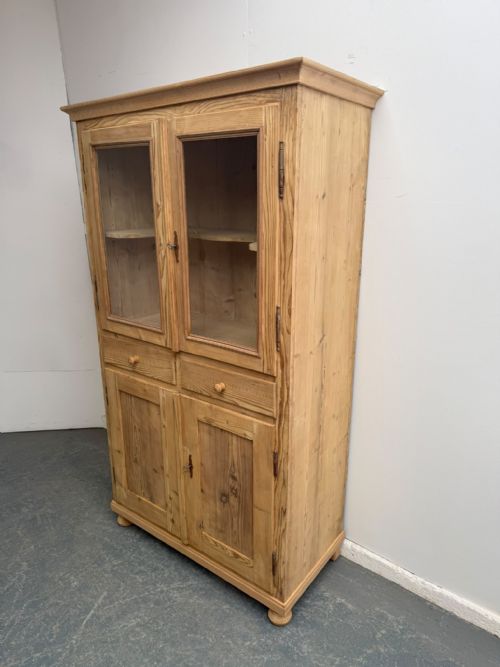


Glazed Door Kitchen Cupboard
These glazed door kitchen cupboard pieces offer practical display and storage, bringing historic utility and honest character to any room.
Glazed Door Kitchen Cupboard
A glazed door kitchen cupboard provides both visible display space and enclosed storage, drawing from a long tradition of domestic utility. These pieces appear across various regional styles, including English, Scottish, Welsh, French, and Scandinavian vernacular forms.
The selections here most commonly feature pine, oak, and walnut timbers, often finished with paint or left in a natural waxed state. They range from two-part dressers and tall bookcases to dedicated display cabinets built to house household provisions and china.
Originating from the nineteenth and early twentieth centuries, these cupboards reflect the practical needs of rural and provincial homes. Buyers encounter diverse regional variations, from simple rustic pine constructions to more substantial walnut and mahogany hybrids.
How they were made
Cabinetmakers constructed these pieces primarily using solid timbers like pine, oak, and walnut, joined with traditional joinery suited to heavy domestic use. Glass panels were fitted into wooden doors to protect contents while keeping them visible.
Many examples utilise painted finishes, sometimes applied in multiple layers over decades of household maintenance. Brass hardware such as hinges and pulls appears frequently, securing doors and drawers built for daily service.
Glazed Door Kitchen Cupboard Retail Price Guide 2026
Typical asking prices for glazed door kitchen cupboard among the pieces listed under this phrase on Sellingantiques today, from the lower quarter to the upper quarter. They describe what is for sale here now, not the wider market.
Listings feature items spanning the nineteenth century through the early twentieth century, utilising pine, oak, walnut, and painted wood.
What varies in quality
Quality in these cupboards rests on the integrity of the timber selection and the retention of original structural elements. Pieces built with well-seasoned oak or pine show greater stability in their joints and door frames over generations.
The handling of glazed doors and panel proportions distinguishes standard utility pieces from finer vernacular examples. Retained original hardware and honest surface patination elevate the visual presence of a cupboard.
The Glazed Door Kitchen Cupboard Glossary
- Glazed door
- A door fitted with glass panels designed to showcase contents while protecting them from dust. This feature distinguishes display-oriented sections from solid-front cupboards.
- Kitchen dresser
- A large utilitarian furniture form combining lower storage cupboards or drawers with upper shelving or glazed cabinets. These served as the central storage hub for domestic tableware.
- Vernacular furniture
- Domestic pieces made by regional craftsmen using local traditions and materials rather than following high-style academic designs. These items prioritise direct utility and local character.
- Breakfront
- A cabinet design where the central section projects forward from the flanking wings. This architectural arrangement adds depth and visual rhythm to larger case pieces.
- Two-part
- A piece constructed in separate upper and lower sections to facilitate transport and placement in domestic spaces. The upper glazed cabinet simply rests upon or secures to the lower base.
Glazed Door Kitchen Cupboard: Frequently Asked Questions
What is a glazed door kitchen cupboard?
A glazed door kitchen cupboard is a utilitarian storage piece featuring glass-fronted upper sections for displaying crockery and lower compartments for provisions.
These items range from tall provincial dressers to smaller freestanding wall or floor cabinets built primarily in the nineteenth and early twentieth centuries.
How were these cupboards used?
Historically, households utilised these pieces in kitchens and pantries to store everyday tableware, dried goods, and culinary utensils.
The glass doors allowed cooks to quickly locate provisions while protecting delicate ceramics from kitchen dust and grease.
How do I fit one into my home?
These cupboards integrate well into modern kitchens, dining rooms, or living spaces as focal storage and display units.
Their substantial vertical presence makes them ideal for storing books, glassware, or decorative collections while adding historic texture to a room.
How do I tell different regional styles apart?
Regional styles reveal themselves through timber choice, construction methods, and painted surface treatments specific to certain areas.
For instance, Welsh and Scottish pieces often employ local oak and vernacular proportions, whereas French and Scandinavian examples favour distinct painted finishes and softwoods.