

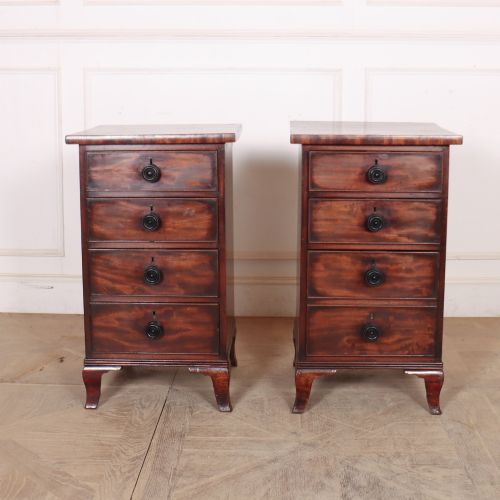

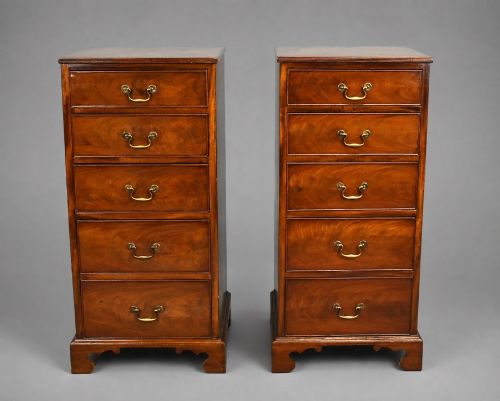
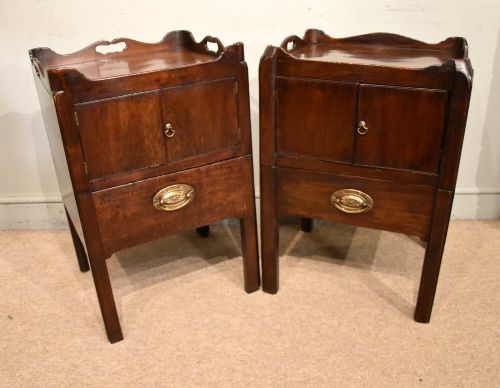
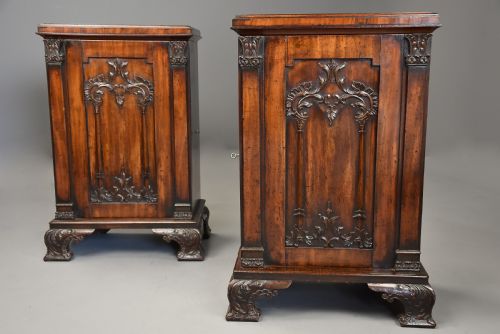
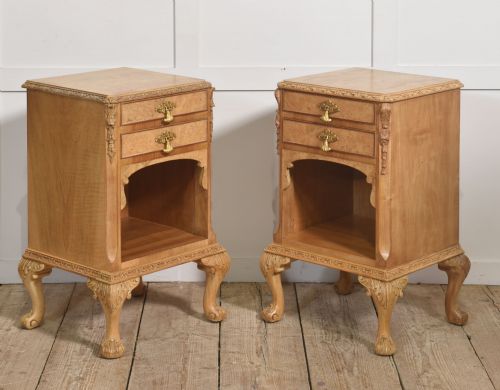
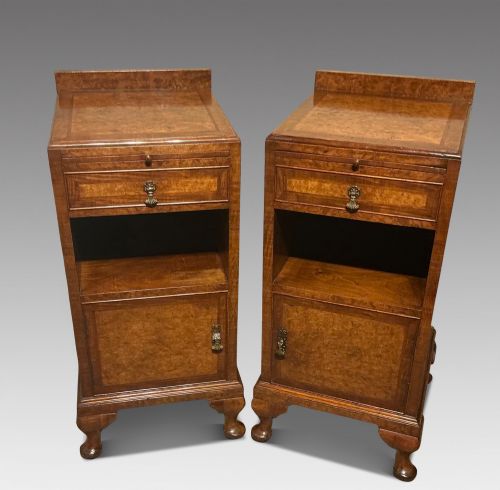
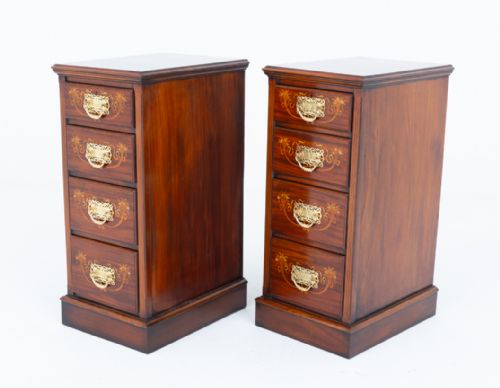
Pair Georgian Bedside Cupboards
Pair georgian bedside cupboards bring matched proportion and timber warmth to the bedside, spanning genuine 18th-century pieces to later revivals.
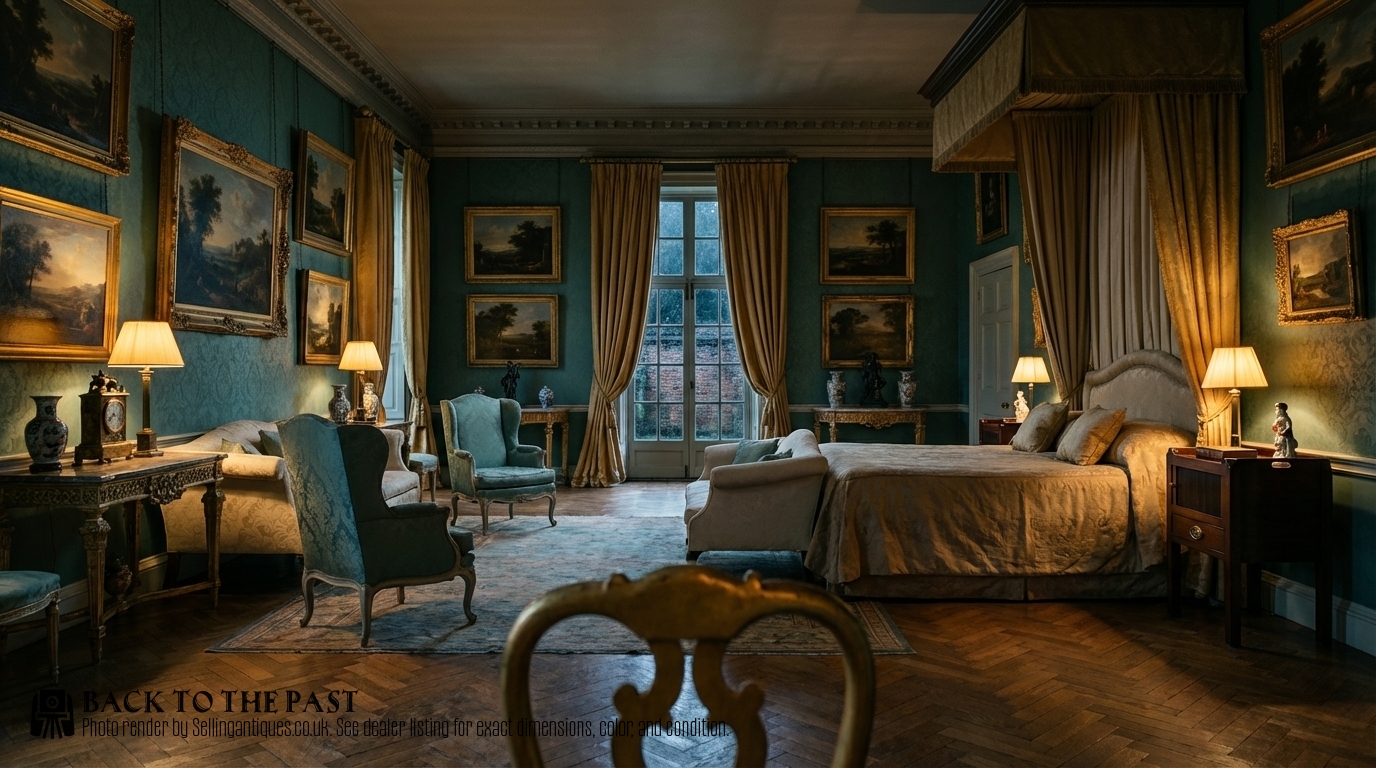
Pair Georgian Bedside Cupboards
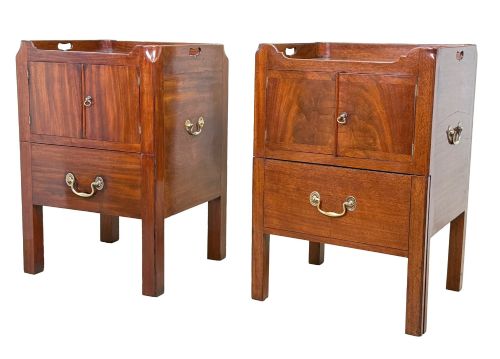
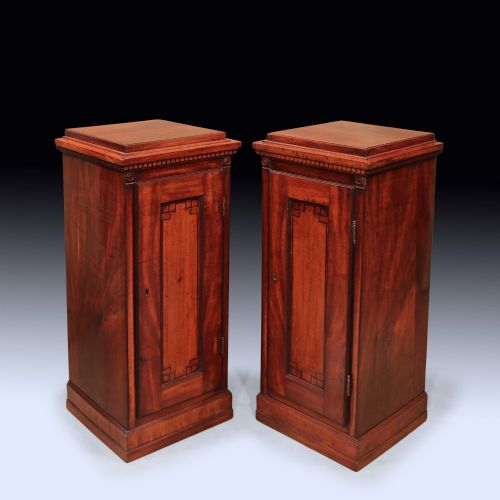
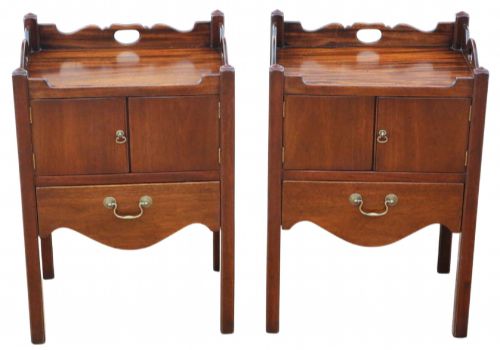
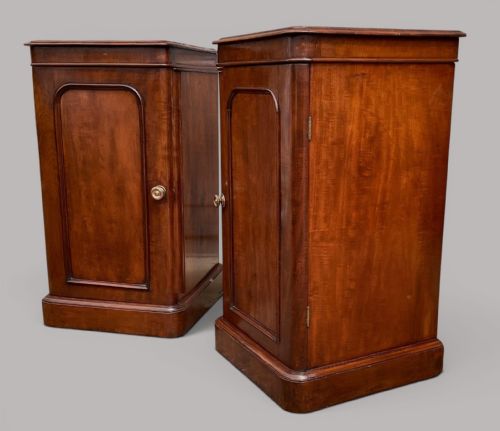
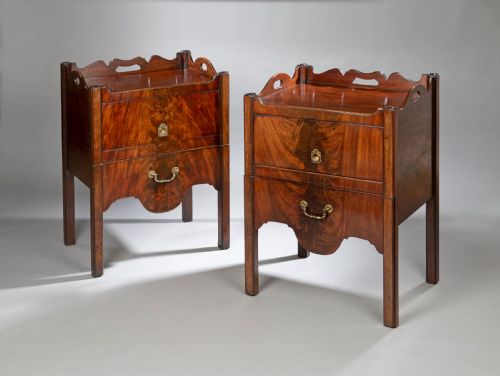
Pair georgian bedside cupboards encompass compact storage pieces designed for the bedroom, frequently taking the form of pedestal cabinets, pot cupboards, tray top commodes, and small chests of drawers. Original examples date from the 18th century and the Regency period, while later interpretations emerge from the Victorian era and the 20th century.
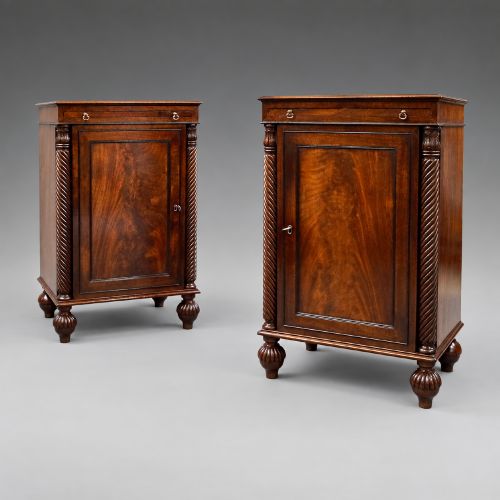
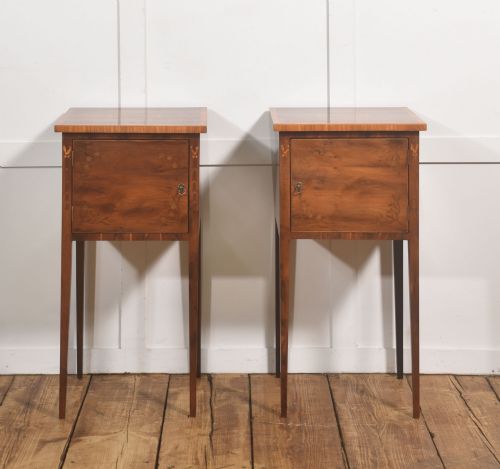
The pieces on this page lean heavily towards mahogany, supplemented by walnut, satinwood, and burr walnut. Buyers frequently encounter George III formats alongside Sheraton Revival and Georgian Style revivals from the 1900s and 1930s.
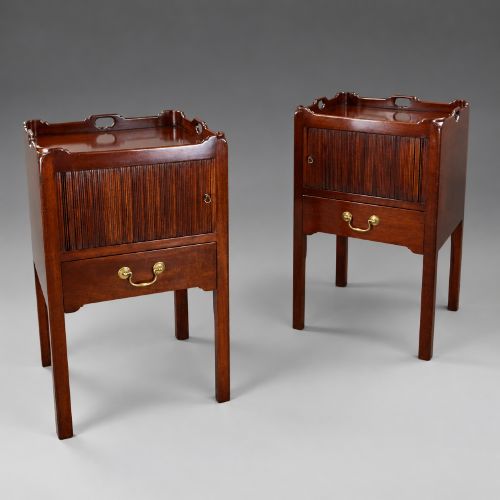
Formations vary from simple enclosed cupboards with doors to tambour fronts, open trays, and small drawer configurations. These symmetrical pairs provide practical surface space and concealed storage beside a bed.
How They Were Made
Cabinetmakers utilised solid mahogany and supporting secondary timbers, often applying flame mahogany veneer to drawer fronts and cupboard doors to create rich grain patterns. Inlay, hand-painted detailing, and brass hardware complete the construction of finer examples.
Joinery methods reflect the period of origin, from 18th-century dovetailing to later revival manufacturing techniques. Surfaces are frequently finished with tray tops or curved serpentine lines that demand precise woodworking skill.
Pair Georgian Bedside Cupboards Retail Price Guide 2026
Typical asking prices for pair georgian bedside cupboards among the pieces listed under this phrase on Sellingantiques today, from the lower quarter to the upper quarter. They describe what is for sale here now, not the wider market.
What Varies in Quality
The distinction between ordinary and exceptional pieces rests on timber selection, figure consistency, and the fidelity of the match within the pair. Matched pairs showing identical grain orientation and uniform colour command greater attention than pieces assembled together at a later date.
Original hardware, crispness of carved details like bracket feet or pierced tray galleries, and untouched period patination elevate a piece. Later revival pieces vary according to the depth of the timber and the care taken in replicating Georgian proportions.
Holland and Sons·Gillows
The Pair Georgian Bedside Cupboards Glossary
- Commode
- A small cabinet or chest of drawers, often featuring enclosed storage or a commode seat in earlier centuries. In the context of bedside tables, it denotes a refined enclosed cabinet.
- Tambour
- A flexible shutter door constructed from narrow vertical strips of wood glued to a canvas backing. This mechanism slides smoothly within concealed grooves around a curved corner.
- Tray top
- A raised rim surrounding the upper surface of a bedside table or commode. This design prevents items from rolling off the edge.
- Serpentine
- A curved line or front featuring a convex centre flanked by concave sides. This undulating shape requires advanced woodworking proficiency.
- Pot cupboard
- A compact bedside cabinet originally designed to house a chamber pot. They frequently feature a door above a lower enclosed compartment or drawer.
Pair Georgian Bedside Cupboards: Frequently Asked Questions
What is a pair georgian bedside cupboard used for?
These pieces function as bedside storage tables, holding lamps, books, and small personal items while concealing night storage behind cabinet doors or drawers.
Their compact footprints make them suitable for flanking a bed while adding period character to a bedroom layout.
How do I spot a genuine 18th-century pair?
Examine the secondary timbers, hand-cut dovetails, and timber shrinkage patterns visible on the interior and drawer linings. Eighteenth-century pieces display authentic patination and construction methods distinct from later 20th-century revivals.
Cabinetry from the Georgian era also relies on solid mahogany boards and traditional adhesives rather than modern plywood or machine-cut elements.
Are tambour fronts rare?
Tambour fronted cupboards appear less frequently than standard hinged door cabinets in the surviving record. The slatted construction requires meticulous joinery to ensure the sliding mechanism operates smoothly.
Pieces with intact tambour sliding doors are valued for their mechanical ingenuity and clean aesthetic.
How do I care for antique mahogany surfaces?
Maintain the timber by dusting with a dry, soft cloth and avoiding placement near direct heat sources or strong sunlight. Wax polish applied sparingly helps preserve the finish.
Protect the top surfaces from moisture using coasters to prevent water marks on antique French polish or wax.