

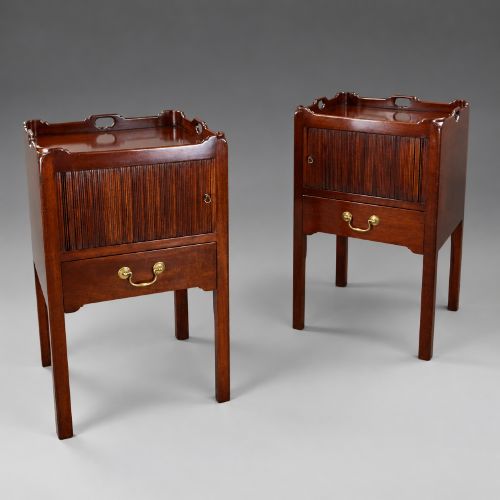
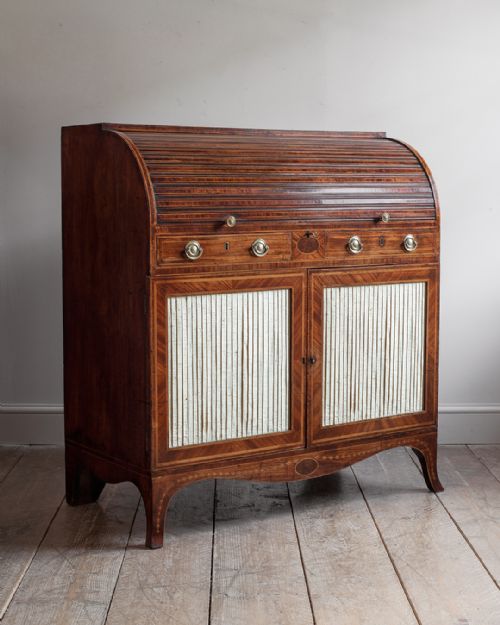
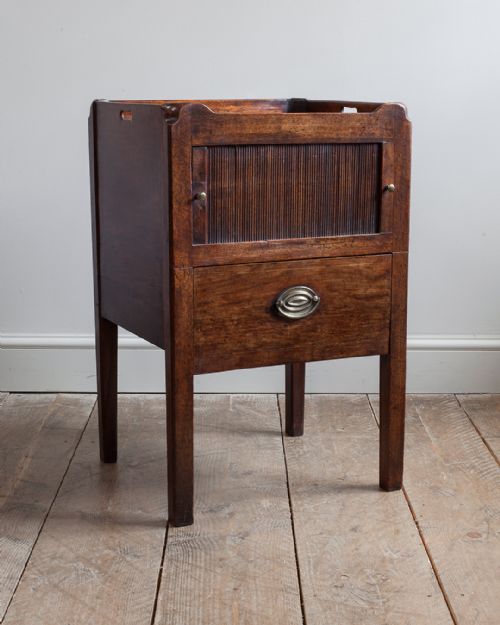

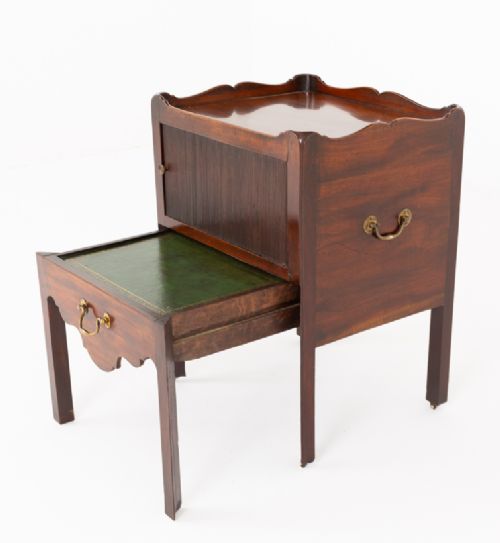





Georgian Tambour Cabinet
A georgian tambour cabinet brings clever slatted sliding closures to compact bedside tables and writing desks.
Georgian Tambour Cabinet
When you search for a georgian tambour cabinet, you encounter compact bedside tables, nightstands, commodes, and writing desks produced during the Georgian and Regency periods. The pieces appearing on this page span the eighteenth and nineteenth centuries, alongside later revivals from the twentieth century.
Bedside cupboards and nightstands dominate the selection, often featuring tray tops or enclosed storage. Alongside these smaller pieces, writing desks and cylinder bureaus surface with fitted interiors and sliding shutters.
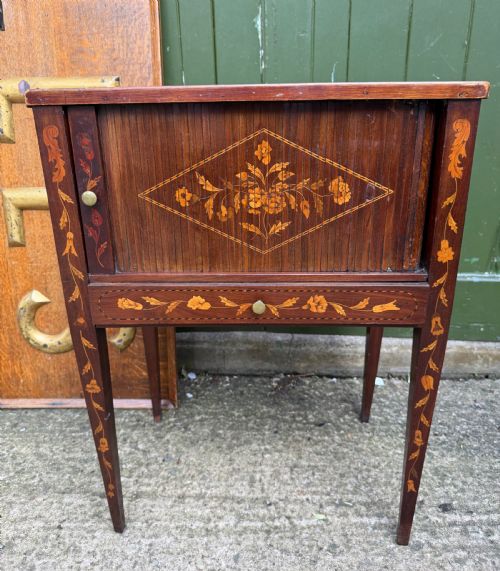
Origins stretch across English workshops to continental examples, including Dutch marquetry pieces showing floral inlay. Makers applied these sliding fronts to corner cupboards and side cabinets to conceal storage within slender proportions.
Materials and Technique
Cabinetmakers built the primary carcases of these pieces using solid mahogany, complemented by secondary timbers like fruitwood and walnut. Satinwood and boxwood appeared as contrasting veneers and stringing, highlighting the linear geometry of the designs.
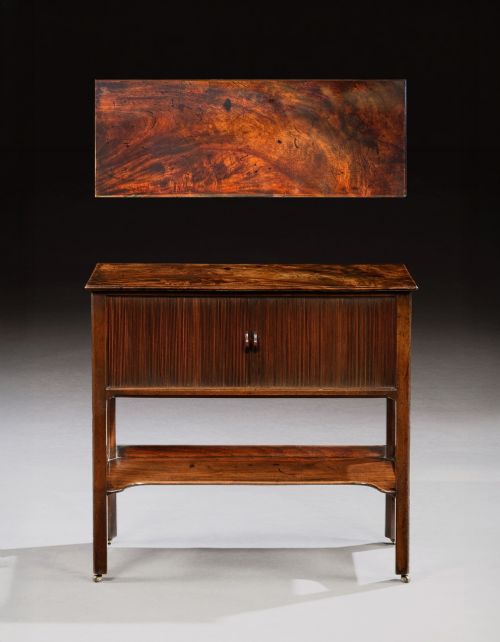
The defining tambour mechanism relies on narrow vertical strips of wood glued to a stout linen or canvas backing. This flexible shutter slides smoothly within grooved tracks cut into the cabinet frame, concealing the interior shelving or compartments.
Georgian Tambour Cabinet Retail Price Guide 2026
Typical asking prices for georgian tambour cabinet among the pieces listed under this phrase on Sellingantiques today, from the lower quarter to the upper quarter. They describe what is for sale here now, not the wider market.
Listings for a georgian tambour cabinet feature mahogany predominantly, alongside accents of satinwood, boxwood inlay, and walnut.
Craftsmanship and Proportion
Superior examples reveal themselves in the precision of the tambour tracks and the uniform alignment of the slatted strips. When the sliding shutter moves without binding along its curved track, it demonstrates careful joinery and seasoning of the timber.
The refinement of the secondary details distinguishes the finer pieces from standard utility items. Crisp boxwood inlay, well-figured mahogany grain matching across the surfaces, and original brass hardware elevate the standing of a nightstand or writing table.
The Georgian Tambour Cabinet Glossary
- Tambour
- A flexible sliding shutter formed of narrow wooden slats attached to a fabric backing. This ingenious closure allows access to enclosed spaces without swinging doors.
- Commode
- A decorative closed cabinet or chest with doors, drawers, or tambour fronts. In Georgian terms, this often denotes a bedside table or nightstand.
- Tray top
- A raised rim edging the upper surface of a bedside table or commode. This practical feature prevents items from rolling off the polished timber top.
- Marquetry
- Elaborate decorative veneer work arranged in floral or pictorial patterns. Dutch examples frequently employ this technique on walnut and mahogany carcases.
- Cylinder bureau
- A writing desk featuring a quarter-cylinder rolling shutter that conceals a fitted interior of pigeonholes and small drawers.
Georgian Tambour Cabinet: Frequently Asked Questions
What is a tambour cabinet?
A tambour cabinet is a small storage piece enclosed by a flexible sliding shutter made of vertical wooden slats. These shutters slide along recessed tracks to open and close compartments without requiring clearance for swinging doors.
Craftsmen favoured this mechanism for bedside tables, writing desks, and commodes where space was limited and clean exterior lines were desired.
How were these cabinets used?
These cabinets served primarily as bedside nightstands, commodes, or compact writing desks in Georgian bedrooms and parlours. The enclosed shelving kept personal belongings tidy and out of sight.
Writing versions provided a concealed surface for correspondence, housing small drawers and pigeonholes beneath the rolling shutter.
How do I spot a reproduction?
Examinations of the interior construction and timber seasoning reveal the true age of a piece. Eighteenth-century examples display hand-cut dovetails, older secondary woods, and wear patterns consistent with extended use.
Later twentieth-century revivals often show uniform machine milling within the tambour tracks and lack the patination found on genuine period surfaces.
How do I care for tambour furniture?
Keep these pieces away from direct heat sources and extreme humidity fluctuations to prevent the wooden slats from warping in their tracks. Maintaining stable environmental conditions protects the delicate backing fabric.
Apply high-quality beeswax sparingly and polish with a soft cloth to preserve the historical patina of the mahogany or walnut surfaces.