

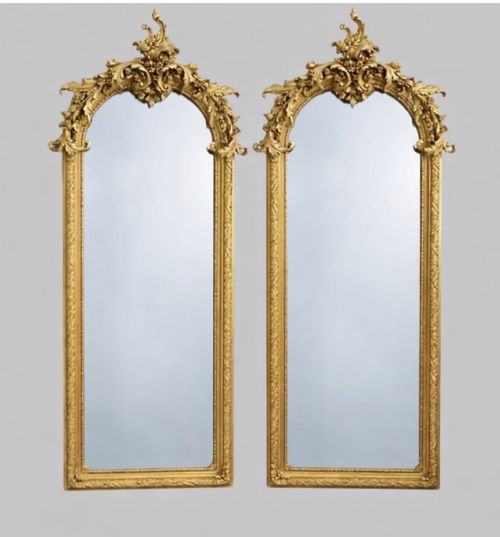
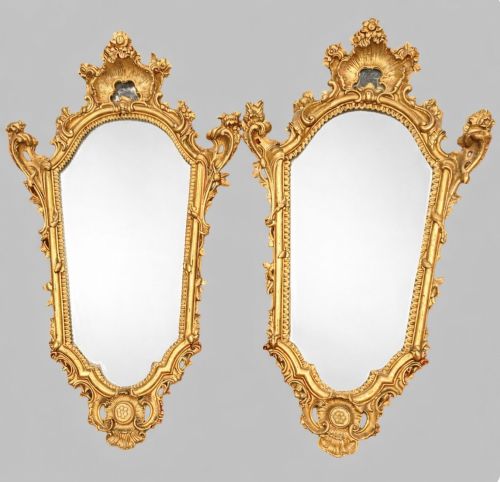


Pair French Pier Mirrors
These pair french pier mirrors bring architectural symmetry and light to a room, valued for their tall proportions and decorative presence.
Pair French Pier Mirrors
When you search for pair french pier mirrors, you encounter tall vertical looking glasses designed to hang between windows or above console tables. The pieces on this page span the eighteenth, nineteenth, and early twentieth centuries, reflecting classical and revival aesthetics.
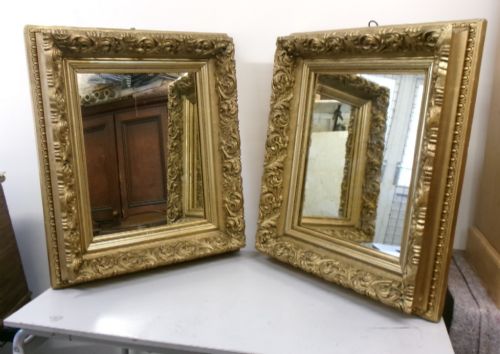
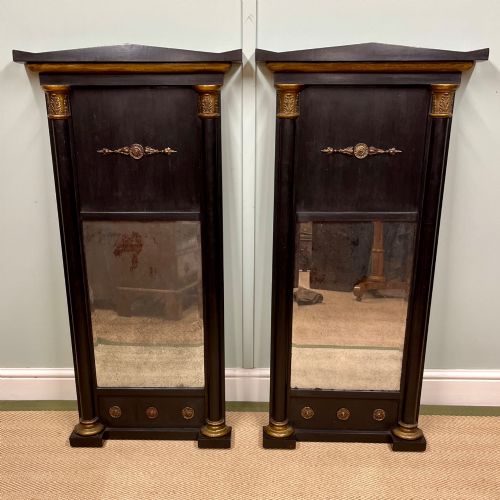
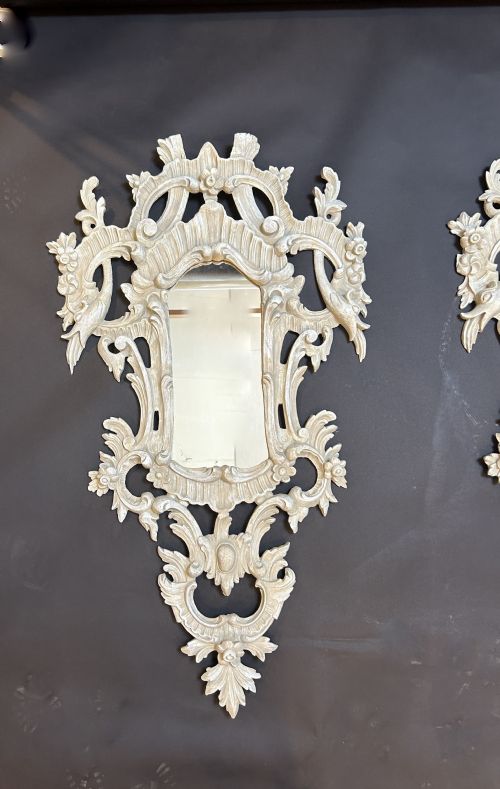
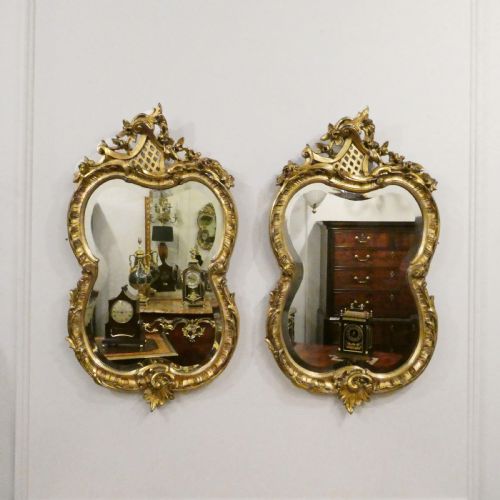
Most examples you meet here date from the nineteenth century, showcasing styles such as Rococo Revival, Empire, and Louis XV mannerisms. These glasses served both to illuminate dark salons by reflecting candlelight and to create an illusion of greater spatial depth.
Forms range from large scale giltwood frames to painted and parcel gilt wood finishes. Alongside traditional wall mirrors, the selection includes related console tables that complete a formal interior arrangement.
How they were made
Carved wood and gesso provide the structural foundation for many of these frames, allowing artisans to shape elaborate scrolls, floral motifs, and architectural moulding. Giltwood and gold leaf finishes are applied over prepared grounds to catch the light.
Alternative finishes include original painted surfaces, ivory paint, and parcel gilt highlights that emphasise the carved relief work. Mirror glass of the period is set within these frames, sometimes retaining its original silvering and imperfections.
Pair French Pier Mirrors Retail Price Guide 2026
Typical asking prices for pair french pier mirrors among the pieces listed under this phrase on Sellingantiques today, from the lower quarter to the upper quarter. They describe what is for sale here now, not the wider market.
Some nineteenth century bistro mirrors survived decades of noisy patrons before finding their way into domestic salons.
What varies in quality
The depth and crispness of the wood carving distinguish finer examples from simpler production. Hand-chiseled gesso and intricate relief work indicate skilled workshop execution rather than cast composition ornament.
The condition and originality of the surface finish, whether giltwood or painted, heavily influence the character of each piece. Retaining original mirror glass and authentic gilding marks out a superior survival.
The Pair French Pier Mirrors Glossary
- Pier glass
- A large mirror designed specifically to hang on the pier, which is the wall space between two windows. These tall glasses amplify natural light in grand rooms.
- Giltwood
- Timber that has been coated with a thin layer of gold leaf or gold paint. This finish creates a luminous reflective quality on the carved frame.
- Gesso
- A plaster mixture applied to wood frames to create a smooth surface for gilding or to build up low relief ornamentation. It is often modeled before hardening.
- Rococo revival
- A nineteenth century design movement that harks back to the asymmetrical scrolls, shell motifs, and curving lines of the eighteenth century French style.
- Parcel gilt
- A decoration technique where only specific parts of an object are gilded, leaving other areas painted or exposed as natural wood.
Pair French Pier Mirrors: Frequently Asked Questions
Where should I hang pair french pier mirrors?
Traditionally, these tall glasses fit between two windows or above a low console table. They work well in reception rooms and hallways where vertical height draws the eye upward.
Ensure the wall construction can support substantial carved wood and glass weight. Placing them opposite a window maximises the reflection of natural daylight.
Are nineteenth century mirrors usually matching pairs?
Many grand salons required balanced symmetry, so workshops produced matching pairs for placement on opposite walls or flanking a fireplace. These matched sets remain sought after for interior schemes.
Minor variations between left and right pieces often confirm hand crafting rather than modern machine production.
What distinguishes Empire style from Rococo mirrors?
Empire style draws on classical Roman, Greek, and Egyptian motifs, featuring architectural symmetry, columns, and martial emblems. It projects a sense of formal, austere grandeur.
Rococo style embraces asymmetry, naturalistic floral curves, and exuberant scrollwork. The frames feel more organic and playful compared to classical geometry.