



Ebonised Empire Mirror
An ebonised empire mirror brings striking dark frames and classical presence to a room, offering the bold contrast that collectors seek.
Ebonised Empire Mirror
When you search for an ebonised empire mirror, you look at nineteenth-century wall, pier, and overmantel forms that combine dark finishes with classical restraint. These pieces emerge from the Regency, Empire, and Napoleon III periods, capturing the architectural seriousness of nineteenth-century interiors.
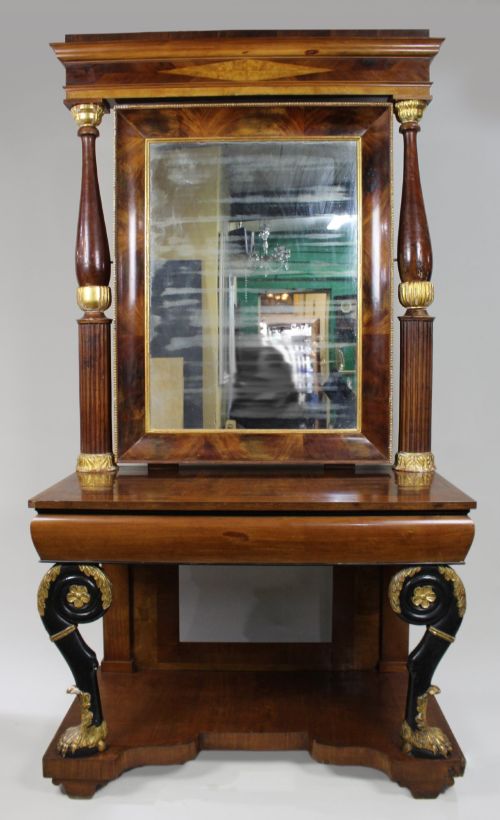
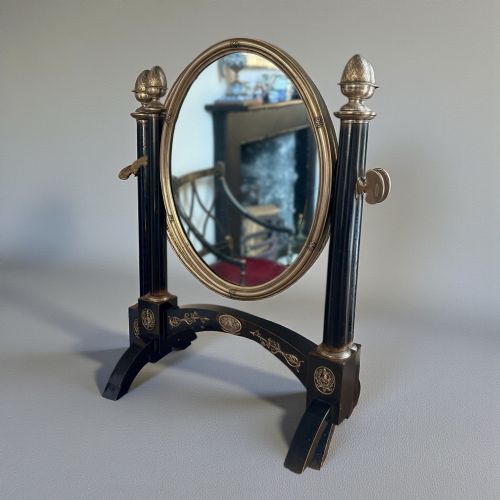
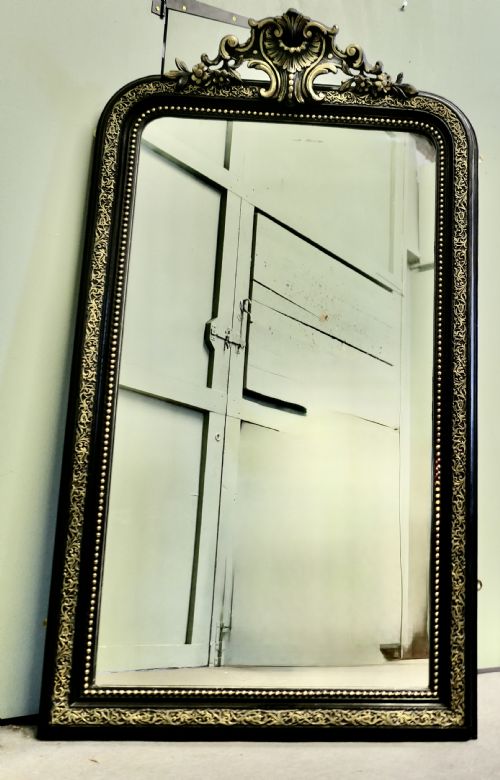
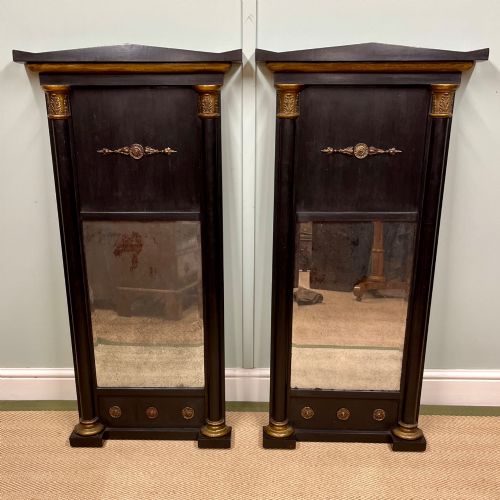
The most common examples you meet on this page are French and Swedish wall mirrors, alongside console tables paired with pier mirrors. They span dressing mirrors and large cushion mirrors, uniting dark surfaces with gilded highlights.
Makers drew on Neoclassical and Biedermeier vocabularies to shape these frames, resulting in upright proportions and clean architectural lines. Every piece reflects the nineteenth-century preference for disciplined geometry paired with rich, dark tones.
Materials and construction
Carpeneters built these frames using woods such as mahogany, birch, and pine, applying ebonised finishes to achieve a dense, light-absorbing black surface. Giltwood, gesso, and gold leaf were then worked into the mouldings to create sharp contrasts against the dark timber.
Makers integrated parcel gilt and gilt brass mounts to accentuate the classical motifs carved into the wood. The original glass plates, often set within cushion frames or rectangular surrounds, complete the construction recorded in these nineteenth-century pieces.
Ebonised Empire Mirror Retail Price Guide 2026
Typical asking prices for ebonised empire mirror among the pieces listed under this phrase on Sellingantiques today, from the lower quarter to the upper quarter. They describe what is for sale here now, not the wider market.
Assessing quality and finish
Quality in an ebonised empire mirror rests upon the crispness of the carved detail and the depth of the ebonised finish. Finer examples retain their original gold leaf and gilt brass mounts with minimal restoration to the underlying gesso.
The integration of the mirror plate within the frame distinguishes finer workshop production from simpler output. Better pieces demonstrate balanced proportions across cushion or pier formats, where the contrast between black lacquer and gilt highlights remains sharp and controlled.
The Ebonised Empire Mirror Glossary
- Ebonised wood
- Timber treated to imitate ebony through staining or painting. This dark finish defines the visual weight of nineteenth-century classical frames.
- Pier mirror
- A tall glass designed to hang on the wall between windows. These mirrors often stood above matching console tables in formal rooms.
- Parcel gilt
- Woodwork or metal decorated with thin applications of gold leaf on specific raised details. It provides bright contrast against ebonised surfaces.
- Gesso
- A plaster mixture applied to wood frames as a base for gilding. Its thickness allows for sharp, crisp moulding work.
- Napoleon III
- A French design period spanning the mid-nineteenth century. It revived earlier classical forms with decorative French exuberance.
Ebonised Empire Mirror: Frequently Asked Questions
What is an ebonised empire mirror?
An ebonised empire mirror is a nineteenth-century glass featuring a dark, ebonised wood frame combined with classical Neoclassical or Empire design motifs. These pieces typically include gilded highlights or brass mounts.
They reflect the formal interior styles of the nineteenth century, drawing on French and Swedish design traditions to create strong visual contrast.
Where were these mirrors placed?
These mirrors were traditionally hung on walls between windows, known as pier glasses, or positioned above mantelpieces as overmantel mirrors. They also appeared as dressing and vanity mirrors on tables.
Their upright proportions and reflective glass served to bounce light around nineteenth-century rooms while anchoring formal decor schemes.
How do I distinguish French and Swedish styles?
French pieces from the Empire and Napoleon III periods often feature bold gilt brass mounts, parcel gilt contrasts, and deep cushion frames. Swedish Biedermeier and related pieces lean towards simpler birch or ebonised surfaces with restrained geometry.
Examining the woodwork and the application of gold leaf reveals the regional preferences of the nineteenth-century workshop.
How do I care for ebonised wood?
Ebonised surfaces require gentle dusting with a soft, dry cloth to protect the dark finish and underlying wood. Avoid modern chemical polishes that can degrade nineteenth-century lacquers and finishes.
Keep the mirror away from direct sunlight and excessive moisture to preserve both the timber frame and the original glass plate.