

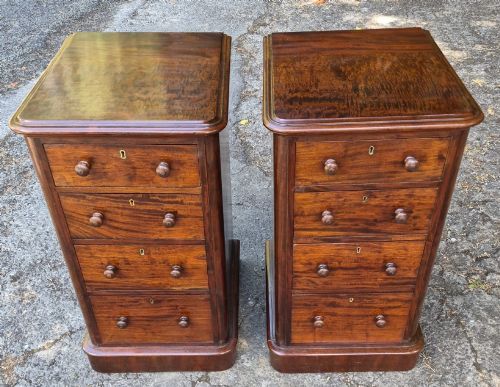


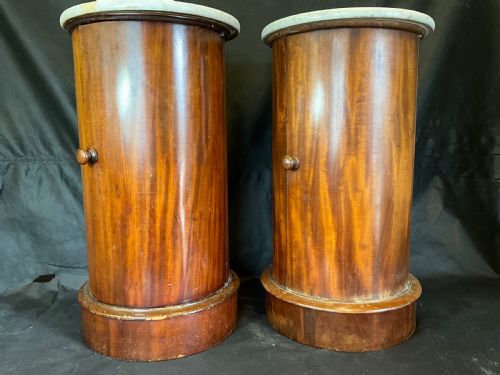


Pair Flame Mahogany Tables
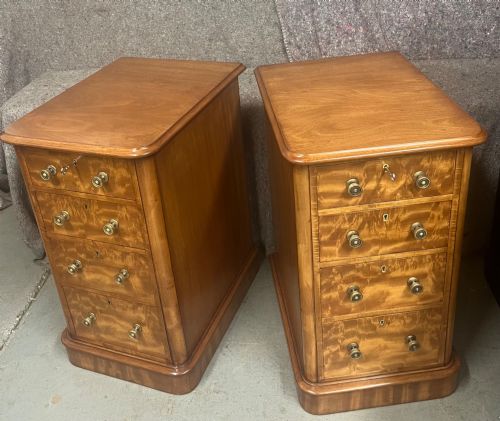
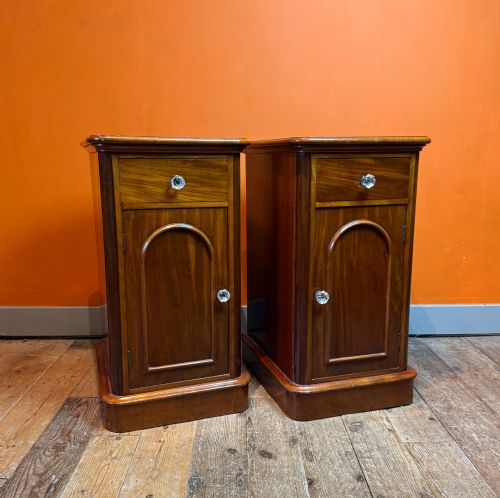
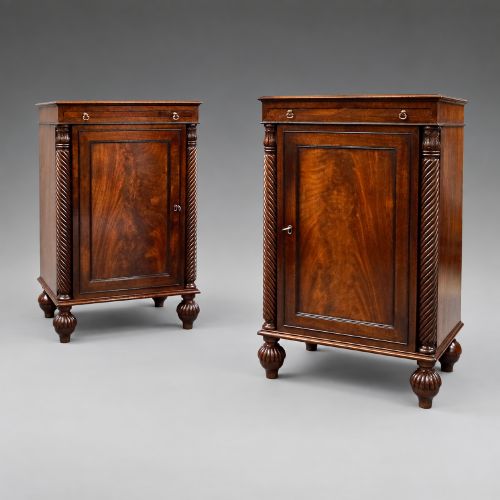
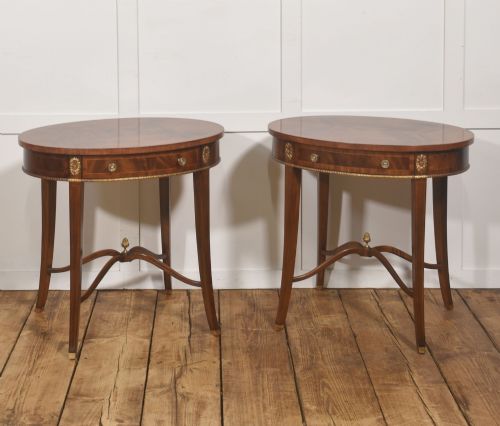
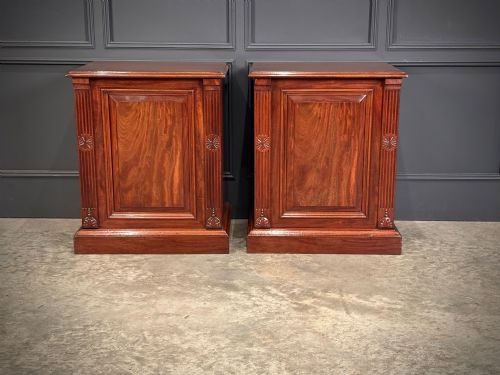
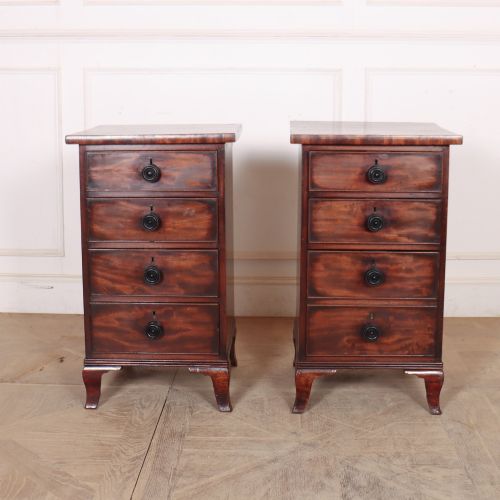
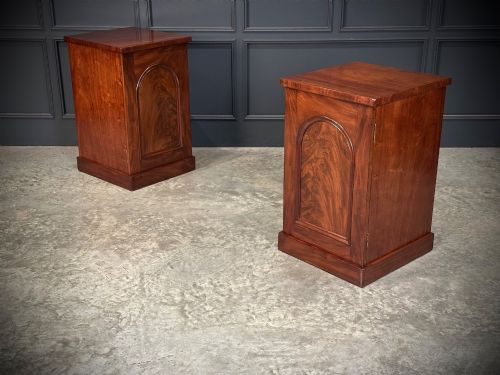
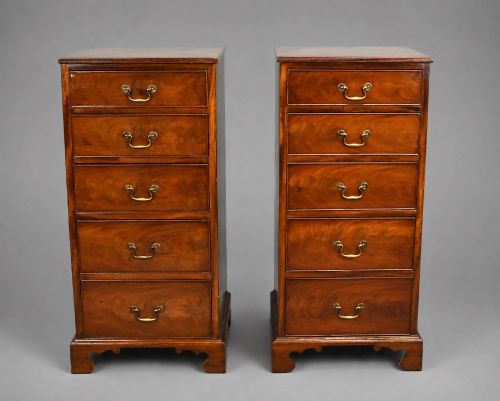
Pair flame mahogany tables are matching surfaces displaying distinctive timber figuring, sought after for symmetry and rich grain warmth.
Pair Flame Mahogany Tables
Pair flame mahogany tables comprise matching items designed for domestic use, predominantly appearing on this page as bedside cabinets, chests, commodes, and console tables. These matching items originate from periods spanning the Georgian, Regency, and Victorian eras through to the early twentieth century.
The selection centres heavily on bedside storage forms, including cylindrical pedestals, tray top commodes, and lamp chests alongside larger console and serving tables. Buyers encounter forms ranging from classical architectural designs to serpentine fronts and Gothic revival pieces.
How they were made
Construction relies primarily on solid timber frames embellished with flame mahogany veneer, which utilises the dramatic flame-like grain patterns derived from wood growth junctions. Workshops applied these veneers carefully over secondary woods to create balanced, mirrored patterns across matching pairs.
Details such as boxwood inlay, brass fittings, marble tops, and giltwood or ormolu mounts appear across various pieces. Cabinet makers shaped these materials into curved serpentine fronts, bowfronts, and cylindrical bodies using traditional joinery and turning techniques.
Pair Flame Mahogany Tables Retail Price Guide 2026
Typical asking prices for pair flame mahogany tables among the pieces listed under this phrase on Sellingantiques today, from the lower quarter to the upper quarter. They describe what is for sale here now, not the wider market.
Listings span multiple centuries, ranging from Georgian and Regency periods through to Victorian and early twentieth century revivals.
What varies in quality
Quality rests upon the selection and symmetry of the veneer work, where superior examples exhibit bold, well-matched flame figuring across both surfaces of a pair. The depth of the timber's natural colour and the crispness of carved mouldings or inlay further distinguish finer commissions from standard production.
The sophistication of the form, whether an architectural pedestal or a finely proportioned serpentine chest, dictates the standing of a pair. Maker attribution, such as documented workshops like Gillows, elevates a pair through superior structural integrity and refined detailing.
Gillows
The Pair Flame Mahogany Tables Glossary
- Flame mahogany veneer
- A thin slice of wood cut from the fork of a mahogany tree to produce a rippling, flame-like pattern. This decorative veneer is prized for its dramatic visual movement.
- Serpentine
- A shape featuring a double-curved front that undulates outward at the centre and inward at the sides. It requires skilled woodworking to execute smoothly.
- Pedestal cabinet
- A tall, freestanding enclosed cabinet supported on a plinth or base. These pieces typically house internal shelving or drawers.
- Bowfront
- A convex, outwardly curved furniture front popular in classical designs. This form softens room geometry while maximising internal storage space.
- Tray top
- A raised rim encircling the upper surface of a small table or commode. This feature prevented items from rolling off the edge.
Pair Flame Mahogany Tables: Frequently Asked Questions
Where were pair flame mahogany tables used?
These tables served primarily in bedrooms as bedside cabinets, nightstands, and lamp chests, providing enclosed storage alongside sleeping quarters.
Larger variations functioned in reception rooms and hallways as serving tables, console tables, and card tables for entertaining guests.
How do I identify a Regency pair?
Regency pieces often display classical architectural proportions, clean lines, and restrained brass or inlay decoration inspired by antiquity.
They frequently take the form of pedestal cabinets, cylindrical cupboards, or formal console tables dating from the early nineteenth century.
What is flame mahogany veneer?
Flame mahogany veneer is cut from the fork of the tree where branches join the trunk, creating characteristic rippled flame patterns.
Cabinet makers applied these thin decorative timber sheets symmetrically across matching pairs to produce striking visual depth.
How do I care for mahogany surfaces?
Maintain the timber by keeping surfaces away from direct sunlight and excessive heat sources that can dry out the veneer.
Clean gently with a soft cloth and avoid chemical polishes to preserve the natural warmth and patina of the wood.