

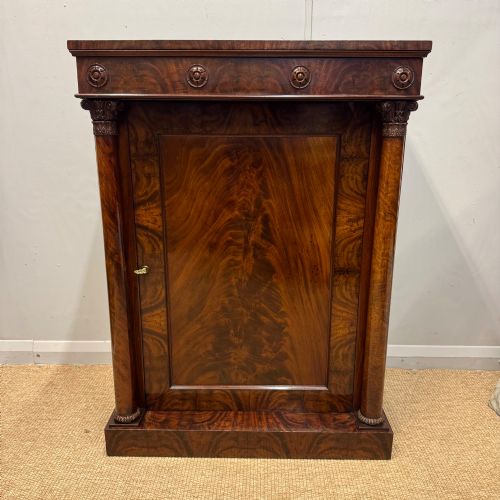
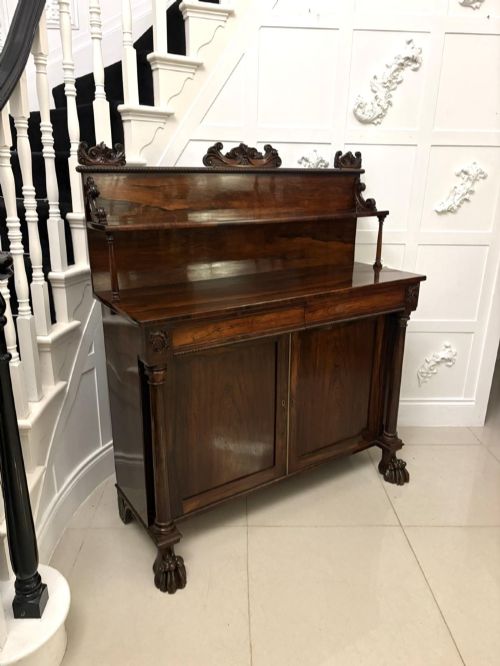
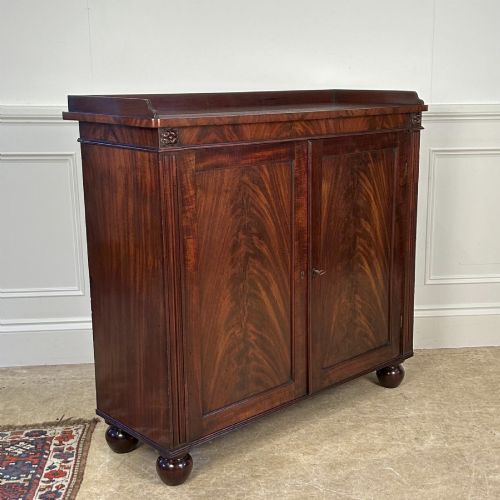
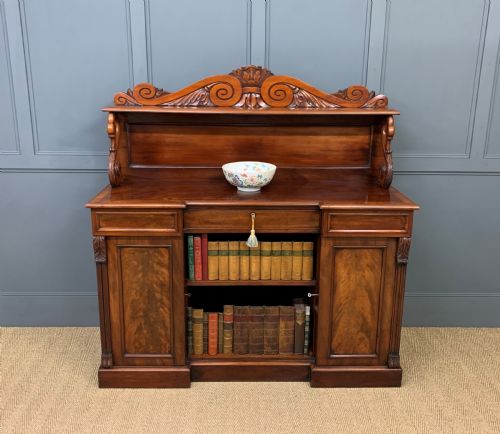
Regency Carved Mahogany Cupboards
Regency carved mahogany cupboards are architectural timber storage pieces that bring serious early nineteenth century presence and warm cabinet grain to a room.
Regency Carved Mahogany Cupboards
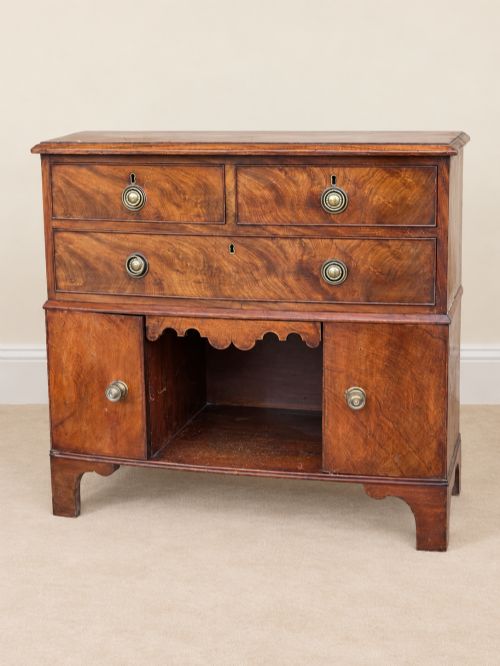
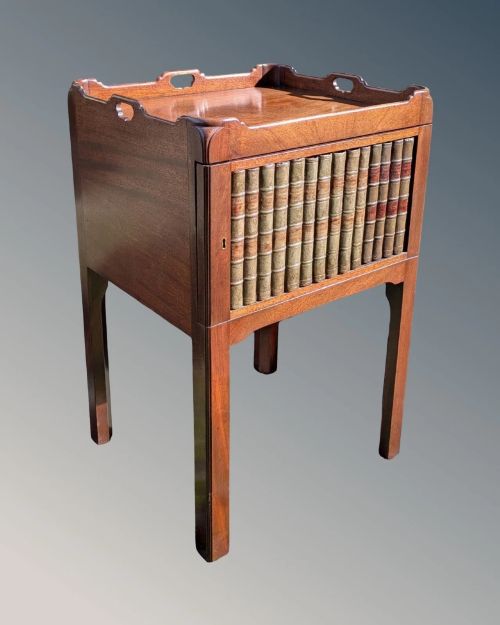
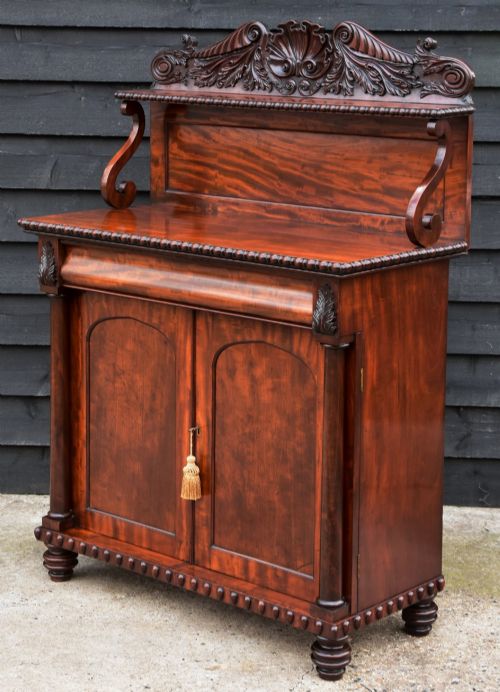
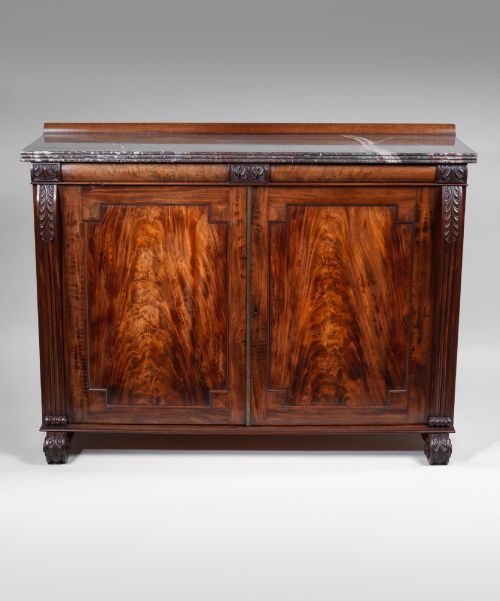
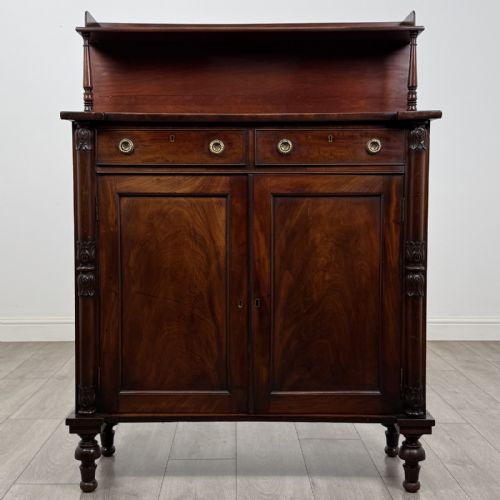
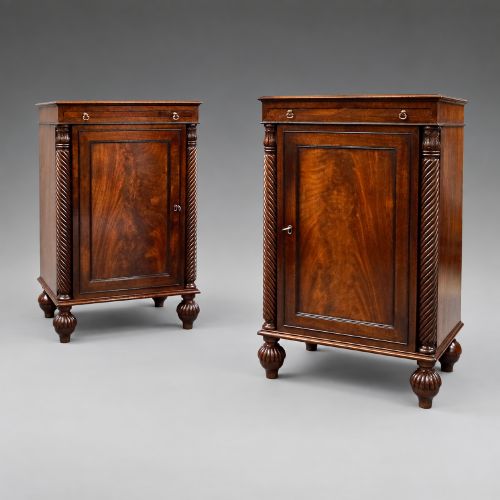
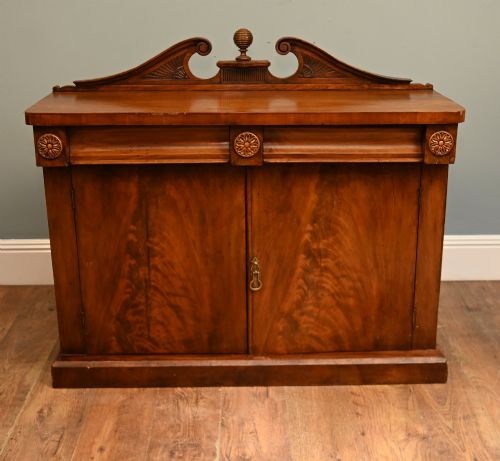
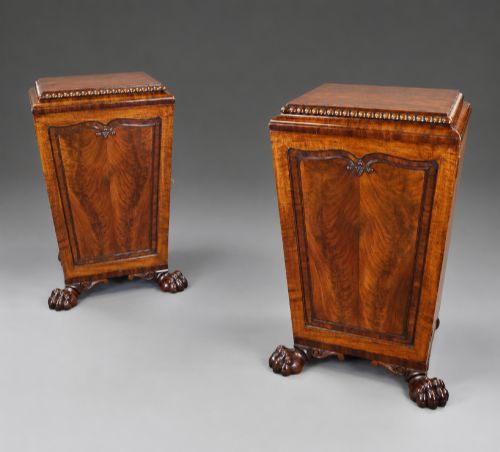
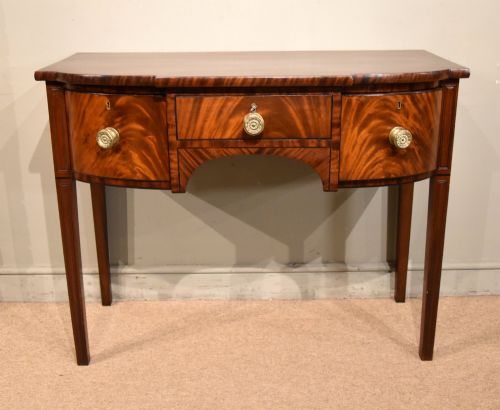
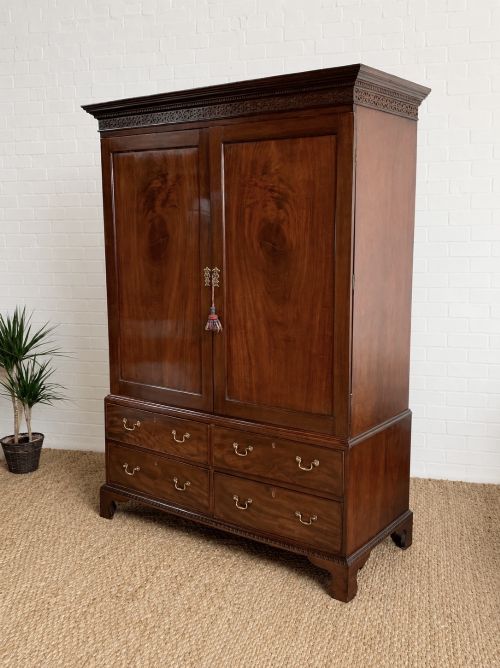
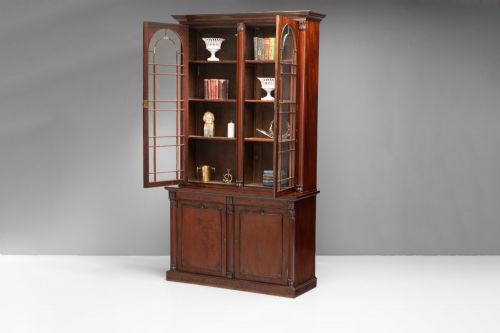
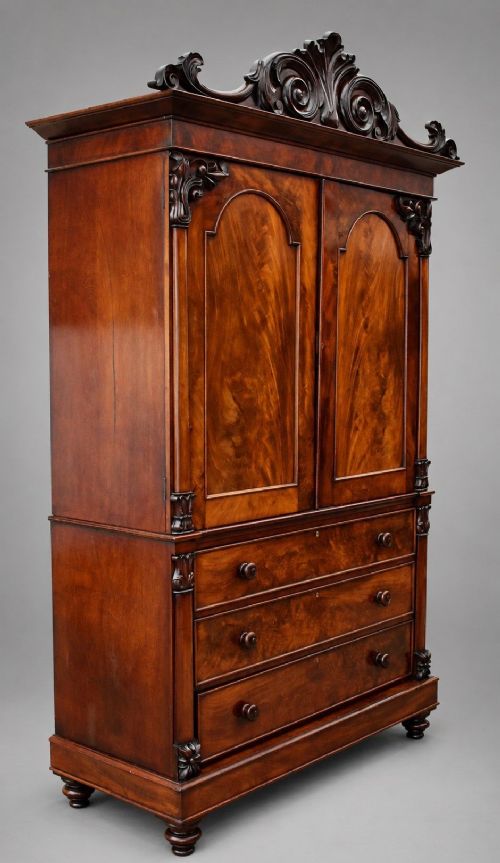
When you search for regency carved mahogany cupboards, you encounter a selection of side cabinets, chiffoniers, linen presses and bookcases rooted primarily in the nineteenth century and the Regency, William IV and George IV periods. The pieces meeting this search on this page lean heavily toward side cabinets and chiffoniers featuring two doors, alongside taller linen presses and bookcase hybrids.
The typology spans compact dwarf secretaire cabinets, pedestals, serving sideboards and multi-drawer linen presses built for domestic storage. Makers and workshops of the era designed these functional items to anchor dining rooms, libraries and parlours with substantial timber presence.
Most examples date from the broader early nineteenth century, drawing on Georgian traditions while developing the distinct carved details characteristic of Regency and William IV design. The surviving inventory reflects both formal case furniture and smaller scaled cupboards tailored for specific rooms.
Materials and construction methods
Cabinetmakers relied on solid mahogany and flame mahogany veneer laid over secondary timbers like oak and pine, frequently selecting figured cuts to create rich grain patterns across door panels. Brass mounts, glass panes and fabric inserts appear as secondary materials on glazed bookcases and chiffonier doors.
Joinery involved sturdy frame and panel construction for large case pieces, paired with hand-cut dovetails for internal drawers and turned or carved supports. Carved details such as blind fretwork cornices and barley twist columns were shaped by hand before polishing.
Regency Carved Mahogany Cupboards Retail Price Guide 2026
Typical asking prices for regency carved mahogany cupboards among the pieces listed under this phrase on Sellingantiques today, from the lower quarter to the upper quarter. They describe what is for sale here now, not the wider market.
Listings span the 18th Century, 19th Century, Regency, George IV, William IV and Victorian periods, constructed primarily in mahogany with brass, glass and oak.
Evaluating craftsmanship and condition
Quality rests in the selection of the timber, particularly how matched flame mahogany veneer is laid across prominent door surfaces and drawer fronts. Superior pieces display thoughtful grain orientation and crisp execution of carved architectural details rather than repetitive machine moulding.
The integrity of the secondary timbers, original brass hardware, and the smooth movement of heavy doors and drawers separate finer workshop output from standard commercial production. Well-preserved polish and minimal replacement of structural elements preserve the historical weight of the piece.
Gillows of Lancaster
The Regency Carved Mahogany Cupboards Glossary
- Chiffonier
- A low cabinet with doors, often featuring a raised shelf superstructure on the top. This form evolved during the Regency period to serve dining rooms and drawing rooms.
- Linen Press
- A tall two-part storage piece with upper sliding trays or shelves and lower drawers for textiles. They provide deep storage capacity inside heavy timber frames.
- Flame Mahogany
- A veneer cut from the branch junction of the mahogany tree to create dramatic flame-like grain patterns. Cabinetmakers prized this figure for principal display surfaces.
- Blind Fretwork
- Carved ornamentation applied to a solid background without a pierced through-cut. It adds texture to cornices and friezes on case furniture.
- Compactum
- A large multi-section wardrobe combining hanging space, drawers and sliding trays in one carcass. These pieces offered comprehensive clothing storage for period bedrooms.
Regency Carved Mahogany Cupboards: Frequently Asked Questions
Where should I place a chiffonier?
These low cabinets suit dining rooms, living spaces and hallways where surface display space and enclosed shelving are both useful.
Their restrained height allows them to sit beneath mirrors or paintings without dominating the vertical wall space.
How do I care for mahogany veneer?
Keep timber furniture away from direct heat sources and sudden humidity shifts to protect the underlying veneer from lifting.
Apply traditional wax polish sparingly and buff with a soft cloth to maintain the natural lustre of the wood.
What is a linen press used for today?
The internal sliding trays make these tall pieces ideal for storing folded garments, bed linen or heavy blankets.
In modern interiors they also function as wardrobe storage or concealed media cabinets in bedrooms and dressing rooms.
How do I distinguish Regency from William IV style?
Regency design draws on classical restraint with delicate brass inlay, reeded legs and refined proportions.
William IV pieces tend to be heavier and bolder, featuring robust scrolls, carved brackets and prominent flame mahogany figures.