
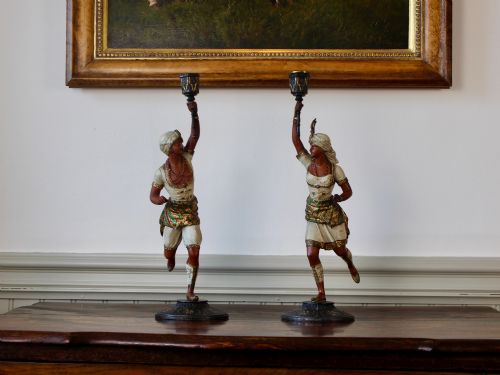


Pair Figural Candle Holders
Pair figural candle holders bring sculpted human and animal figures together with functional illumination, bridging sculpture and domestic lighting.
Pair Figural Candle Holders
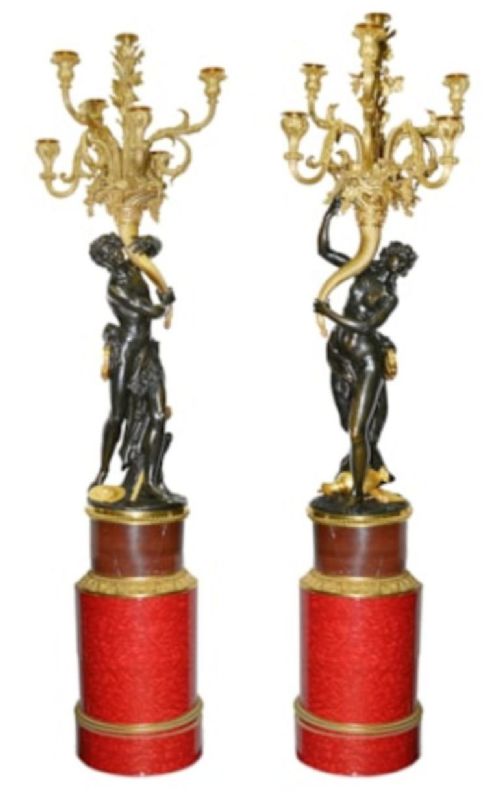
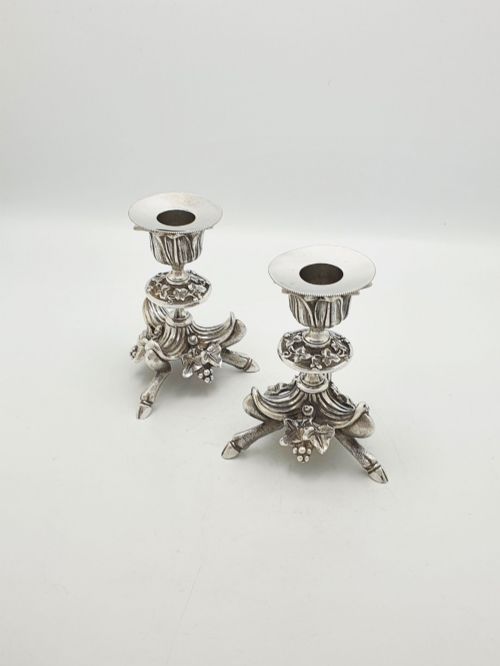
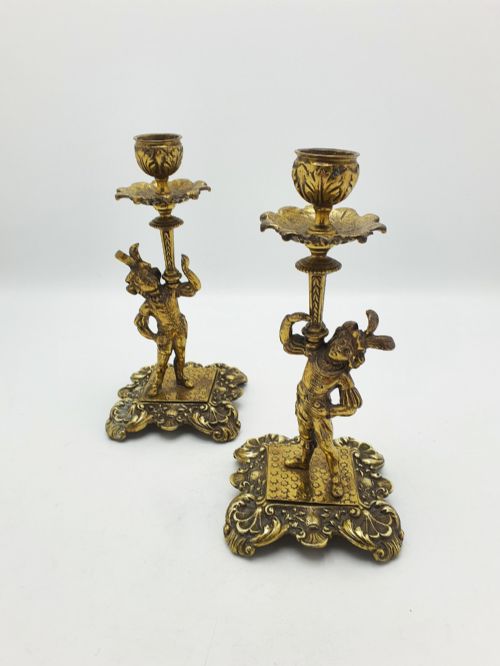
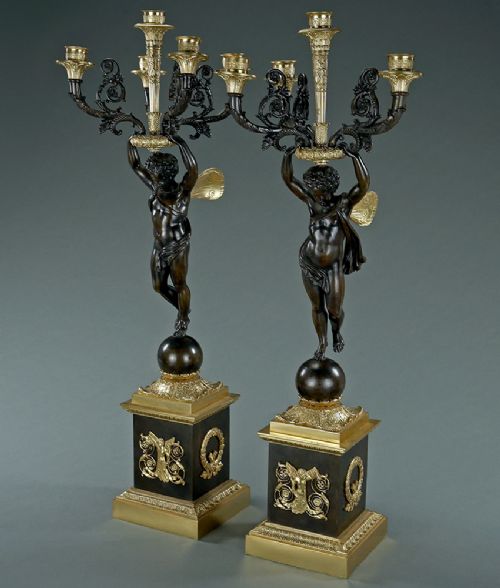
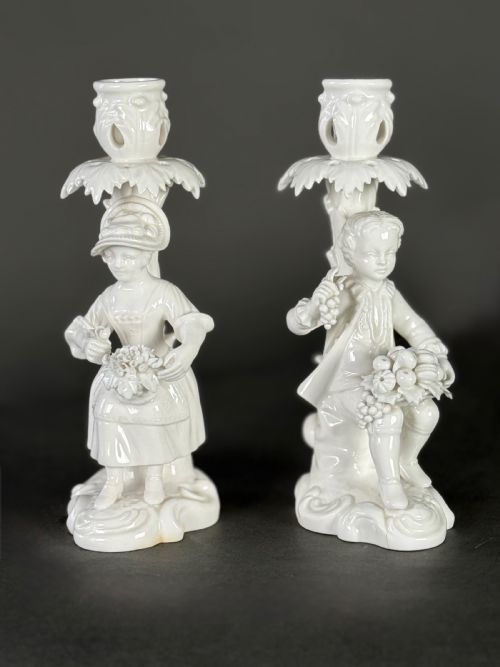
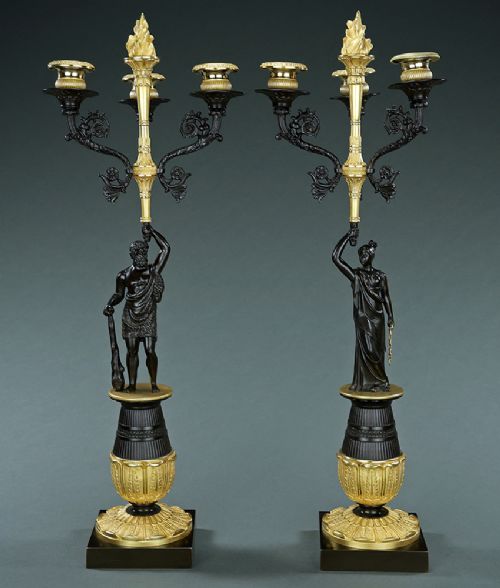
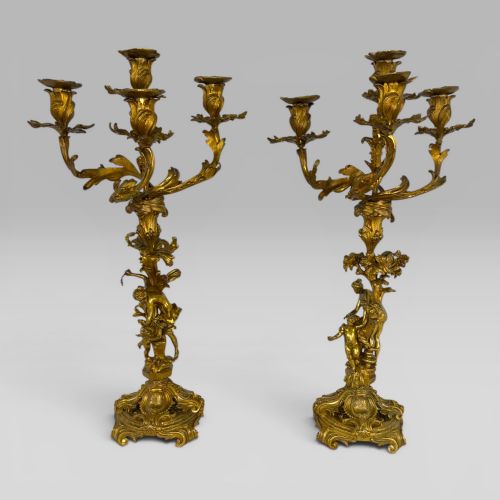
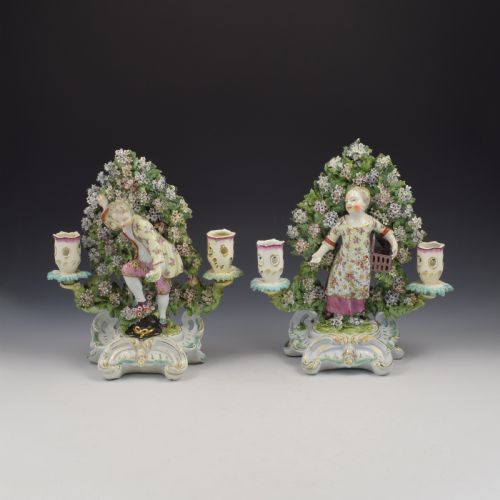
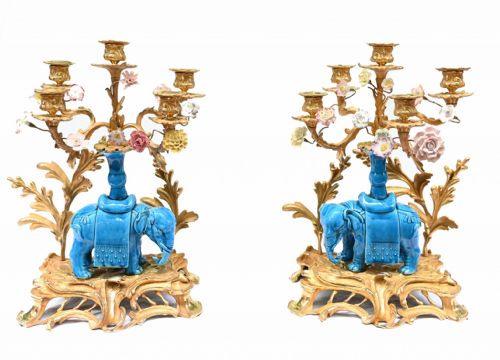
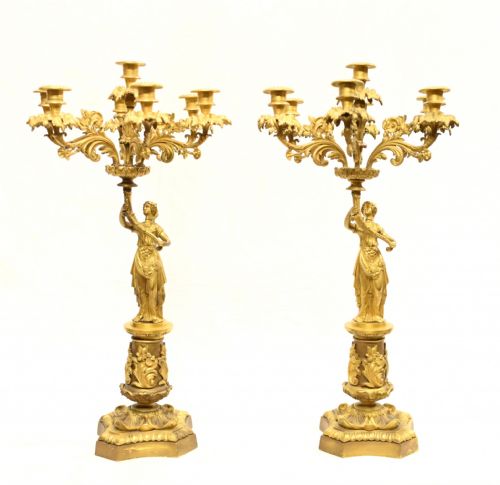
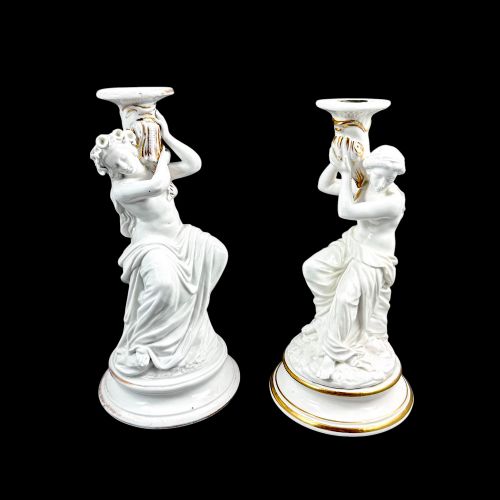
When you search for pair figural candle holders, you encounter sculptural objects that incorporate human figures, cherubs, animals, or literary characters into the stem or base of the lighting device. The examples on this page span from the eighteenth century through to the early twentieth century, taking the form of both single-socket candlesticks and multi-armed candelabra.
The aesthetic vocabulary draws heavily from revival styles, notably French Rococo, Louis XVI, and Renaissance revivals, alongside productions from English factories such as Derby and Chelsea. Figures range from mythological subjects like Hercules and Hesione to pastoral shepherds, dancers, and allegorical children representing the seasons or virtues.
Continental porcelain factories, French foundries, and English potteries dominate the origins of these dual pieces, providing symmetrical arrangements intended for mantelpieces and side tables. The execution varies from delicate hard-paste porcelain adorned with floral bocage backgrounds to cast bronze, ormolu, and silver-plated metal figures set upon marble or onyx bases.
Materials and construction methods
Ceramic examples rely on moulded hard-paste porcelain, often finished with hand-painting, gilding, and applied floral elements known as bocage. Factories utilised precise kiln firings to stabilise complex figural groups before adding surface enamel colours.
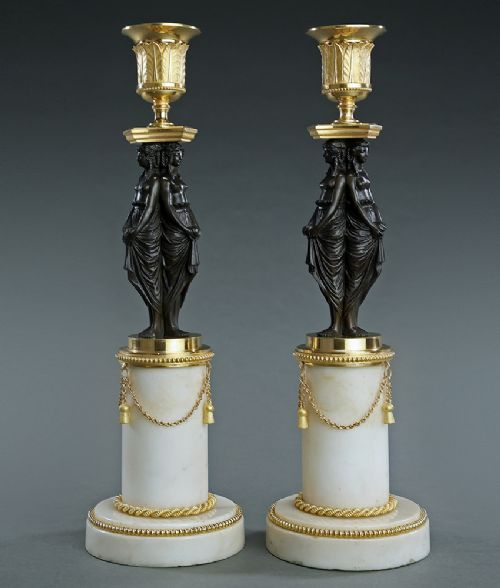
Metal versions utilise bronze, brass, or spelter, shaped through traditional casting techniques and frequently enhanced with surface treatments such as ormolu, silver-plating, or cold painting. Heavier metal figures are mounted securely onto stone bases like marble or onyx to provide stability for the branching candle arms.
Materials documented across the inventory include porcelain, bronze, brass, silver-plate, spelter, marble, and onyx.
Evaluating standard and execution
The integrity of the pair is paramount, requiring matched heights, consistent patination, and harmonious proportions between the figural base and the sconces above. In porcelain iterations, the preservation of delicate applied details like leaves and petals distinguishes higher grade productions.
Derby·Royal Worcester·Sitzendorf·Meissen·Chelsea·WMF·James Hadley
The Pair Figural Candle Holders Glossary
- Bocage
- An intricate background of applied porcelain leaves and flowers surrounding a figural group. This botanical element is typical of eighteenth-century English porcelain factories.
- Ormolu
- A technique of applying finely ground, high-carat gold to an object of bronze. The resulting surface provides a rich golden finish characteristic of decorative metalwork.
- Spelter
- An alloy of zinc and lead used as a cheaper substitute for bronze. It frequently appears in nineteenth-century figural metalwork and takes various surface finishes to mimic heavier metals.
- Caryatid
- A sculpted female figure serving as an architectural support or stem. These figures appear frequently in classical revival designs.
- Hard paste
- A dense, durable porcelain composition fired at high temperatures. It forms the body of many continental and English figures from the eighteenth and nineteenth centuries.
Pair Figural Candle Holders: Frequently Asked Questions
How do I care for antique metal candle holders?
Dust metal pieces gently with a soft, dry cloth to prevent the accumulation of grit in the crevices of the sculpture. Avoid abrasive polishes that can strip away original gilding, silver-plating, or cold-painted finishes.
Keep the items away from direct heat sources and moisture to protect any underlying stone bases like marble or onyx. Ensure any wax residue is removed carefully using warm water rather than sharp metal tools.
How can I distinguish porcelain periods?
Examination of the glaze, potting weight, and underglaze factory marks provides the primary indicators for dating ceramic pieces. Eighteenth-century examples often feature hand-modelled details with distinct paste characteristics, while later nineteenth-century revivals display different manufacturing uniformity.
The presence of specific mark styles, such as Derby patch-marks, helps anchor pieces to precise production windows.
Where were these displayed originally?
These decorative objects were designed primarily for formal reception rooms, placed symmetrically on mantelpieces above fireplaces. They also decorated side tables, console tables, and large chests of drawers within domestic interiors.
Their dual function provided both ambient lighting during evening hours and sculptural decoration during daylight.