
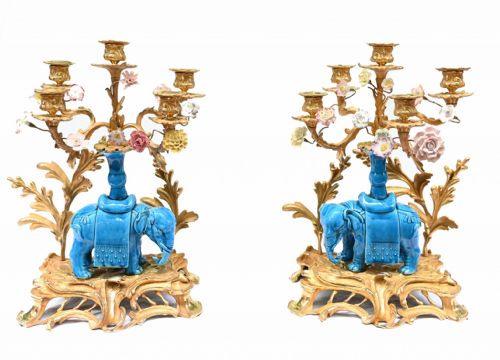
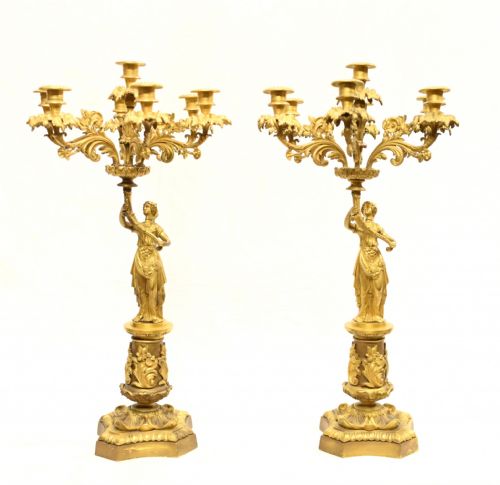


Pair Figural Candelabra
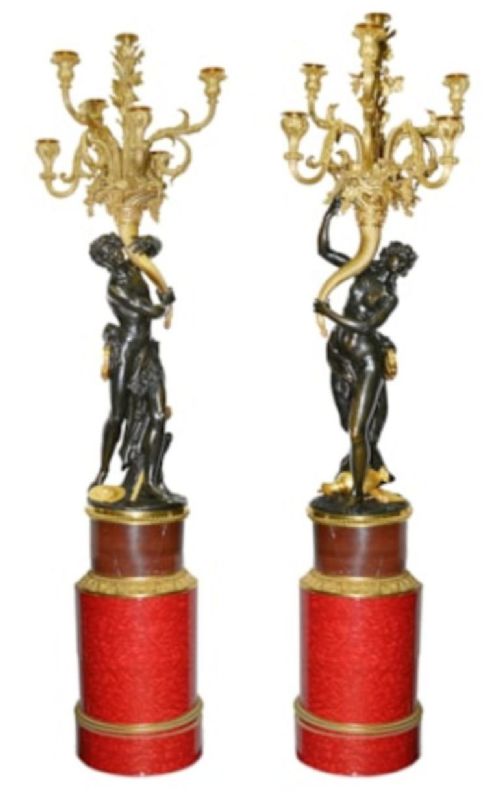
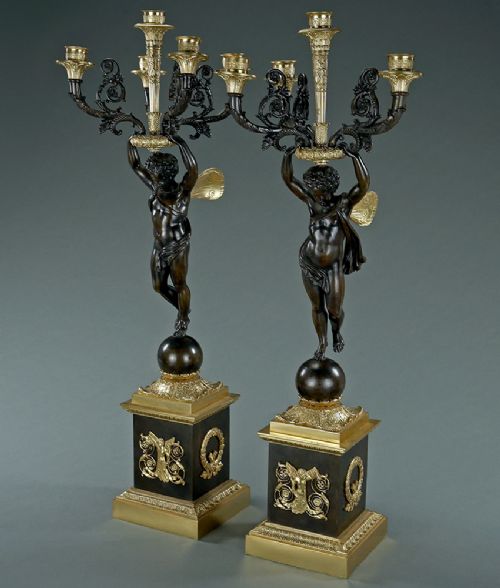
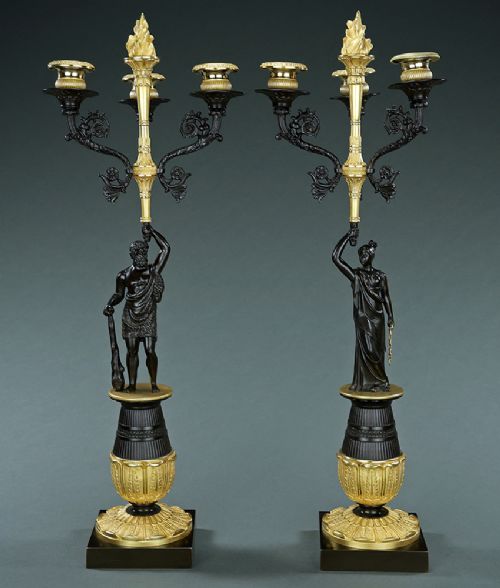
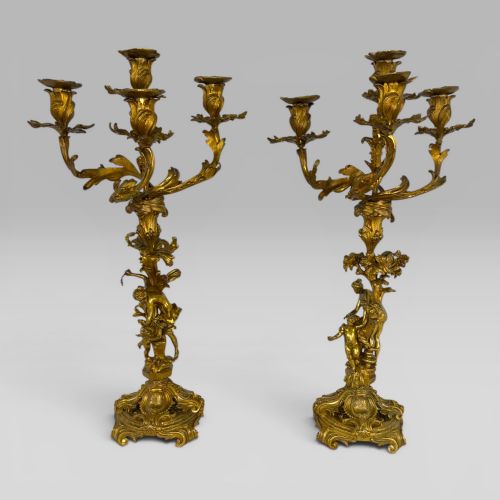
These pair figural candelabra bring sculptural presence to a room, cast in bronze and porcelain with human and mythological forms.
Pair Figural Candelabra
A pair figural candelabra combines practical lighting with sculptural human, animal or mythological figures, usually standing on a shared base and branching into multiple candle arms. You will frequently find French and English examples from the nineteenth century shaped by Rococo Revival, Louis XVI and Empire styles.
The figures themselves range from classical deities and putti to specific literary or allegorical subjects, cast in metal or modelled in porcelain. They appear alongside related objects such as mantel clocks and table lamps, sharing the same decorative vocabulary.
How They Were Made
Foundries and potteries shaped these pieces using bronze, ormolu, gilt bronze, patinated bronze, porcelain and marble bases. Metal elements involved lost-wax casting and chiselling, followed by gilding or chemical patination to create contrast.
Ceramic figures and floral bases came from porcelain manufactories, where painters applied polychrome enamels and gilding before firing. Mounts and drip pans were then fitted to secure the candle sockets.
Styles recorded span Rococo Revival, Victorian, Louis XVI, French Empire and Renaissance Revival.
What Varies in Quality
The precision of the chasing and the depth of the bronze work distinguish standard production from exceptional studio output. Crisp detailing in facial expressions, drapery and foliate scrolls marks a superior piece.
Porcelain quality depends on the delicacy of the modelling and the hand-painted fidelity of the enamels. Well-matched pairs with original gilding and undamaged mounts hold greater cohesion.
Royal Worcester Hadley·Ernst Bohne and Sohne·Jules Salmson
The Pair Figural Candelabra Glossary
- Ormolu
- Gilt bronze, where finely ground gold is amalgamated onto a copper alloy base and heated. This technique produces a durable, rich golden surface found on French lighting.
- Patinated bronze
- A treated metal surface created by chemical means to achieve dark brown, green or near-black tones. It provides contrast against bright gilt highlights.
- Putto
- A plump, winged infant figure often depicted as a cherub or mythological attendant. These figures frequently support candle branches or sit upon bases.
- Torchère
- A stand or candelabrum designed to hold a light source aloft, frequently styled as a column or held by a standing figure.
- Drip pan
- A small metal plate fitted beneath the candle nozzle to catch melting wax. They protect the arms and figures below.
Pair Figural Candelabra: Frequently Asked Questions
How do I clean bronze candelabra?
Dust gently with a soft brush to protect patinated and gilt surfaces from abrasion.
Avoid chemical polishes that strip historical finishes, particularly on ormolu.
Can these candelabra be wired for electricity?
Many examples are adapted into lamps while retaining their original candle sockets.
Reversible wiring methods preserve the underlying metalwork without permanent alteration.
How do I distinguish French from English pieces?
French examples lean towards heavy gilt bronze, Empire motifs and classical figures.
English variants frequently utilise porcelain components from factories like Royal Worcester.
What periods are most common?
The majority originate from the nineteenth century, particularly the Victorian era.
Revival styles draw heavily on earlier Rococo and Neoclassical vocabularies.