
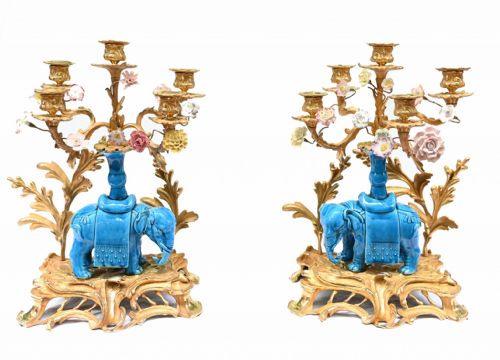


Victorian Figural Table Centrepieces
Victorian figural table centrepieces command the dining table with sculptural presence, combining figurative modeling and functional display.
Victorian Figural Table Centrepieces
Victorian figural table centrepieces unite decorative sculpture with utilitarian serving forms across the dining table. These works incorporate human figures, cherubs, and animals into candelabras, bowls, and vases.
The pieces appearing on this page span the nineteenth and early twentieth centuries, reflecting Victorian, Edwardian, and Art Nouveau design. Rococo Revival influences frequently shape the decorative curves and ornamentation of the mounts and porcelain bases.
Moulded ceramic and cast metal dominate the forms, ranging from continental porcelain groups to silver plated candelabra. Figures often support vessels, hold candle arms, or ride upon chariots and shells.
Materials and construction methods
Porcelain and ceramic provide the sculptural body for many examples, often enriched with gilding, gold leaf, and enamel work. Factories shaped these materials into intricate figures and flower carts.
Silver plate and sterling silver furnish structural framework and reflective surfaces for candelabras and cruet sets. Cut crystal combines with silver plate to form large nautical centrepieces.
Moulding, casting, and hand painting unite to form complex multi-part compositions. Artisans assembled porcelain groups and metal mounts with secure joinery to support candelabra arms and heavy bowls.
Listings feature periods spanning from eighteen-sixty to nineteen-twenty, encompassing Victorian, Edwardian, and Art Nouveau styles.
Distinctions in craftsmanship
The weight and finish of the metal components determine the standard of silver plated and sterling silver pieces. Substantial casting in the metal mounts ensures stability for multi-light candelabras.
Cohesion between the figural element and the vessel defines the better works. The integration of cherubs, animals, or human forms into the functional centrepiece vase or bowl requires careful proportion.
Kister·Scheibe Alsbach·Sitzendorf·Royal Worcester Hadley·Royal Dux
The Victorian Figural Table Centrepieces Glossary
- Candelabra
- A branched candlestick holding multiple lights. These objects often incorporate figural stems and ornate bases.
- Gilding
- The application of gold leaf or gold powder to a surface. This technique highlights raised porcelain details and metal mounts.
- Silver Plate
- A thin layer of silver fused to a base metal. This method provided the appearance of solid silver for elaborate dining wares.
- Rococo Revival
- A nineteenth-century design style characterised by asymmetrical scrollwork and naturalistic motifs. This aesthetic influences many nineteenth-century centrepiece bases.
- Cruet Set
- A matched set of small glass bottles for oil and vinegar held in a metal frame. Figural examples incorporate decorative stands supporting the glass.
Victorian Figural Table Centrepieces: Frequently Asked Questions
What is a figural centrepiece?
A figural centrepiece is a decorative dining table ornament that incorporates human figures, animals, or mythological characters into its design. These objects function as vases, bowls, or candle holders while providing a sculptural focal point.
Maker workshops combined ceramic modeling with metal casting to produce complex table decorations. They served as ornamental displays during formal nineteenth-century dining.
How do I clean silver plated centrepieces?
Silver plated centrepieces require gentle cleaning with a soft cloth and a specialised silver polish formulated for plated items. Avoid harsh abrasives that can wear away the thin silver layer over the base metal.
Careful handling protects protruding figural elements and delicate joins. Regular dusting prevents tarnish accumulation in recessed scrollwork and crevices.
Where were these porcelain figures made?
Many figural porcelains originated in European factories, particularly in regions such as Thuringia and other continental ceramic centres. These workshops employed skilled modelers and painters to create intricate porcelain groups.
English manufacturers also produced notable figural pieces using local ceramic bodies and silver plating techniques. Factory marks on the base often indicate the specific workshop of origin.
Can I use candelabras for dining?
Multi-arm candelabras can illuminate a dining table when fitted with appropriately sized candles. Ensure the candles sit securely in the sconces and trim wicks to prevent excessive dripping onto the porcelain or metal figures.
Position candelabras where they do not obstruct conversation across the table. Protective pads placed beneath the base prevent scratching the table surface.