

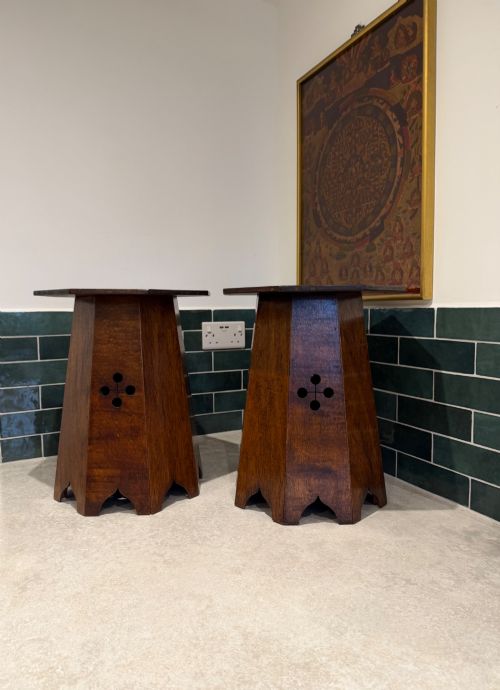
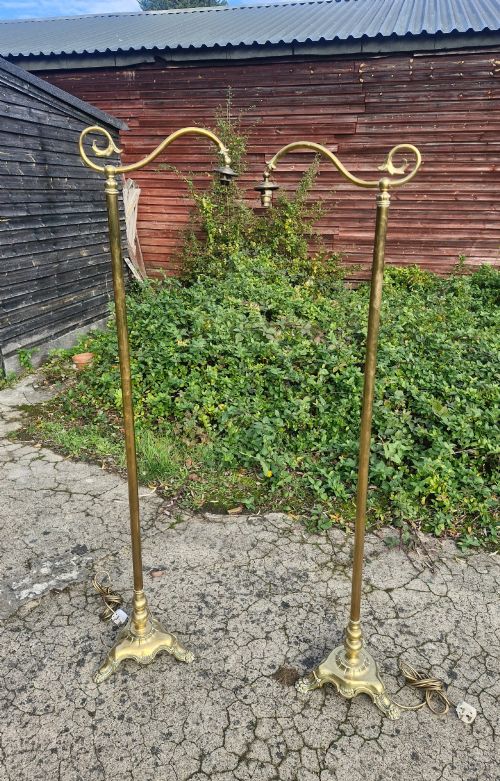
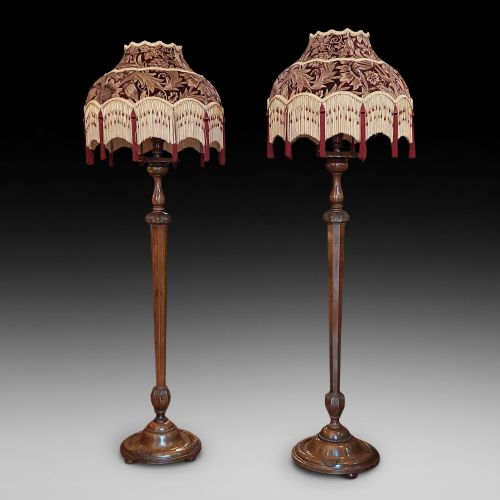
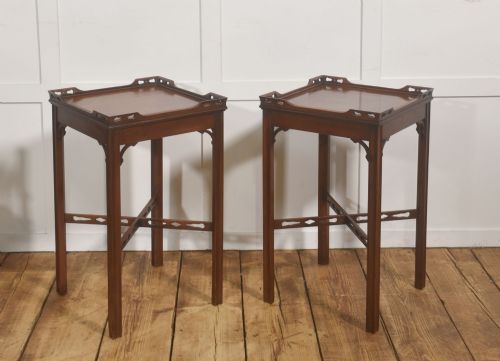
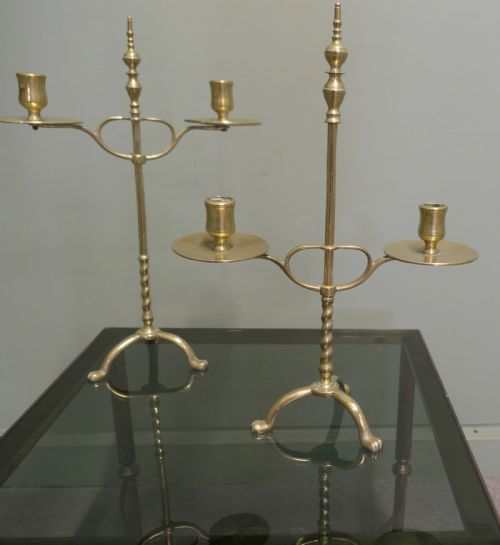
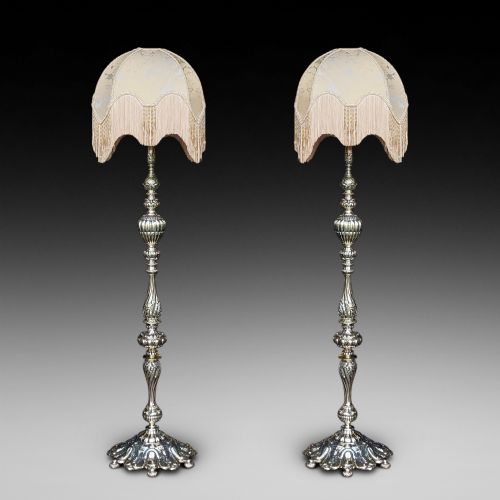


Pair Edwardian Lamp Stands
Pair Edwardian lamp stands bring practical elegance to a room, offering matched illumination and period character from the early twentieth century.
Pair Edwardian Lamp Stands
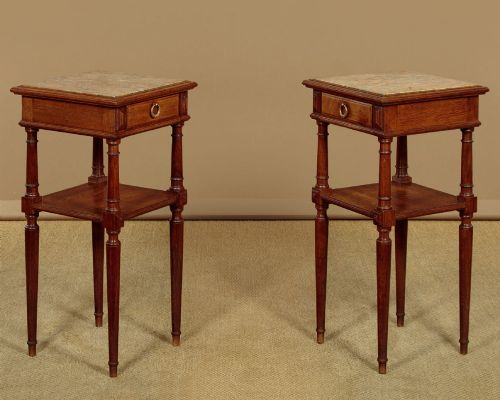
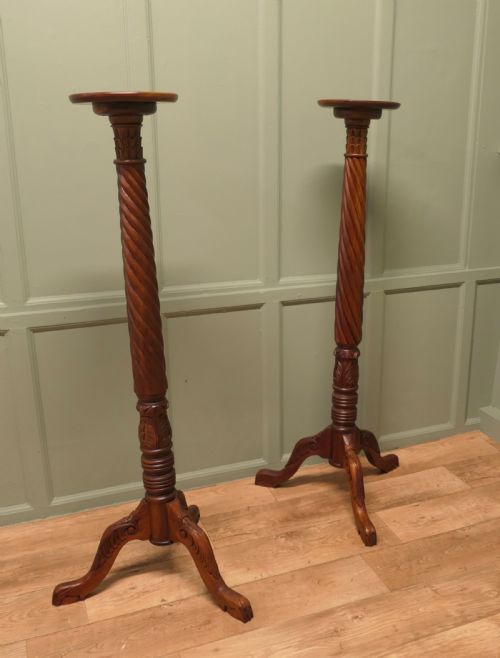
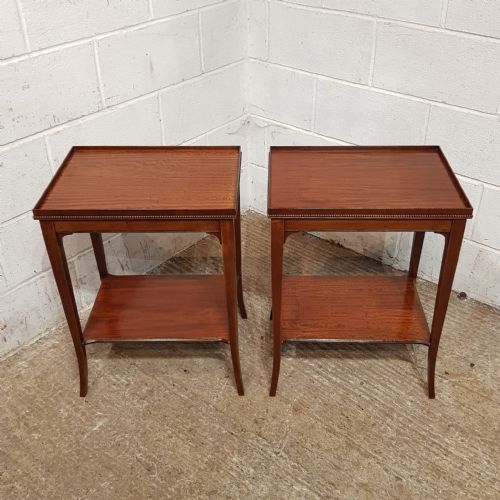
When searching for pair Edwardian lamp stands, buyers encounter a selection spanning floor-standing models, torchere stands, and smaller table-height supports designed to hold lighting. These furnishings emerge predominantly from the Edwardian era, alongside Victorian and nineteen-twenties pieces that share similar domestic functions.
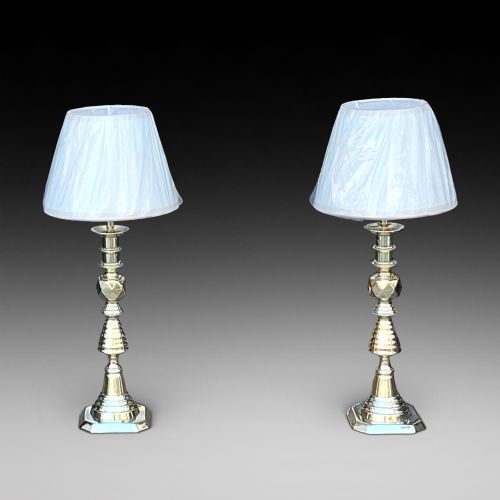
The assortment includes standard lamps, adjustable students lights, and bedside cabinets adapted for illumination, reflecting the varied ways homes integrated artificial light during the period. Mahogany and brass dominate the physical forms, often paired with silk fabric shades and fringes.
How They Were Made
Cabinetmakers utilised mahogany, satinwood, oak, and burr walnut to construct the wooden stands, occasional tables, and cabinets that support or incorporate lighting. Inlay work frequently embellishes the timber surfaces, demonstrating refined woodworking techniques common to the workshops of the time.
Metal components rely heavily on brass and gilt metal, shaped into heavy standard lamps and adjustable students lights designed for functional durability. Cut glass and crystal elements appear alongside fabric and fringe on shades, completing the mixed-media construction of these dual lighting fixtures.
Pair Edwardian Lamp Stands Retail Price Guide 2026
Typical asking prices for pair edwardian lamp stands among the pieces listed under this phrase on Sellingantiques today, from the lower quarter to the upper quarter. They describe what is for sale here now, not the wider market.
Materials recorded across the inventory encompass mahogany, oak, satinwood, burr walnut, brass, gilt metal, cut glass, crystal, fabric, and fringe.
What Varies in Quality
The calibre of timber selection and complexity of inlay work largely determine the standing of wooden lamp stands and associated tables. Finer examples display carefully matched grain patterns in mahogany or burr walnut, whereas simpler utilitarian pieces utilise plain oak.
Metal thickness and weight distinguish robust brass standards and candlesticks from lighter alternatives, while the integrity of original mechanical adjustments on student lights affects desirability. The sophistication of turned columns and the presence of decorative cut glass or crystal further delineate the hierarchy among these pieces.
Clarke
The Pair Edwardian Lamp Stands Glossary
- Torchere
- A tall ornamental stand designed to support a light or candle. These slender pedestals lift the light source above table height.
- Standard lamp
- A tall floor-standing lamp base designed to illuminate a room from a corner or beside seating. They provide ambient vertical height in interior arrangements.
- Inlay
- A decorative technique where contrasting woods or materials are inserted into recessed portions of a base surface. Satinwood frequently provides the pale contrast against darker mahogany.
- Canterbury
- A partitioned stand originally designed for sheet music or folios, occasionally adapted as a lamp standard. It combines lower storage compartments with upright support.
- Gilt metal
- Metal treated with a gold-coloured finish or plating to simulate solid gold. This material appears on decorative bases alongside marble.
Pair Edwardian Lamp Stands: Frequently Asked Questions
What rooms suit pair Edwardian lamp stands?
These matched stands fit comfortably in drawing rooms, studies, and bedrooms where symmetrical lighting enhances the interior balance. Floor models anchor corners or sit beside armchairs, while table-height versions rest on side cabinets.
Their period materials blend easily with traditional furniture arrangements, providing functional illumination without dominating the space.
How do I distinguish Edwardian from Victorian stands?
Edwardian pieces generally exhibit lighter proportions, simpler lines, and brighter satinwood inlay compared to the heavier, darker timber constructions typical of the Victorian era. The transition around nineteen hundred brought a preference for airier domestic spaces.
Examining the secondary woods and decorative motifs helps clarify the specific period of manufacture.
Are these lamp stands wired for modern use?
Many surviving stands receive updated electrical wiring to comply with current safety standards while retaining their original aesthetic appeal. Dealers often note when rewiring has taken place.
Buyers should inspect the flex and plug arrangements to ensure compatibility with household sockets.
Can I use modern shades on antique bases?
Contemporary shades fit securely onto standard Edwardian and later brass or wooden fittings provided the gallery or spider mount matches the fixer. Fabric shades with fringes reflect the period look accurately.
Proportion remains the key consideration when pairing a new shade with an antique standard.