





Edwardian Galleried Tables
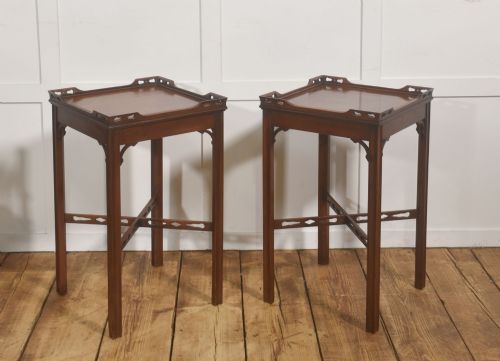
Edwardian galleried tables are small tables framed by raised wooden or brass galleries, offering practical surface space with a refined edge.
Edwardian Galleried Tables
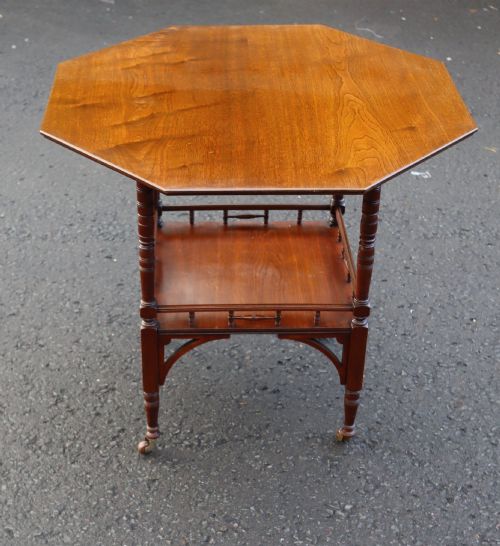
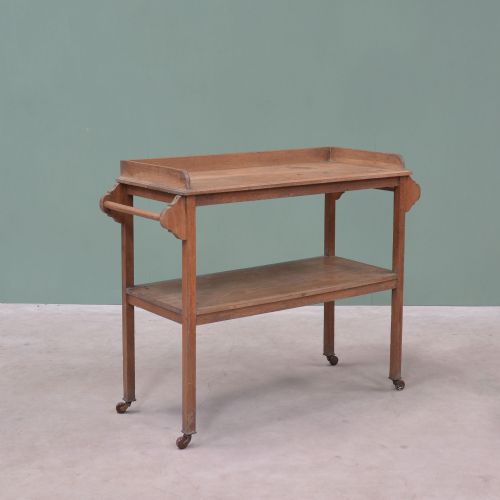
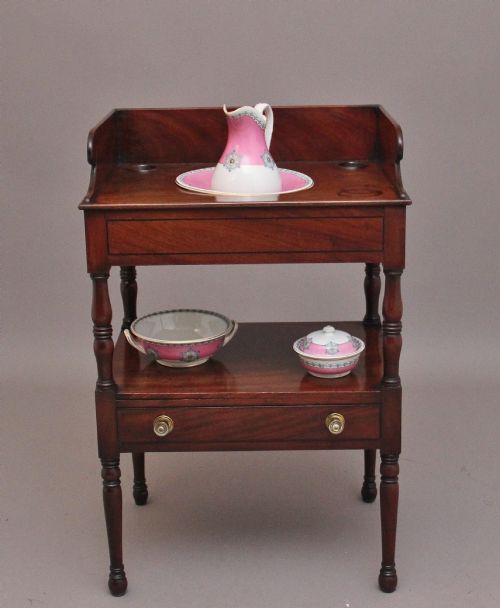
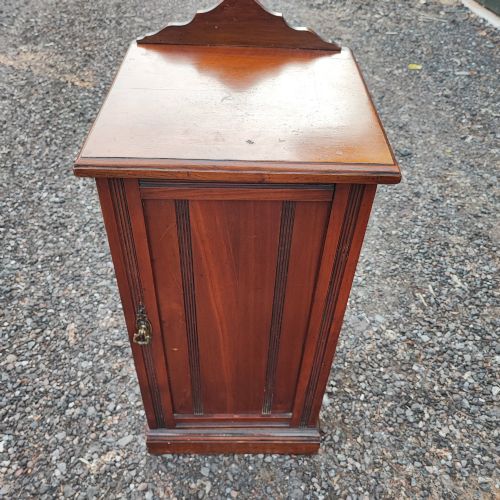
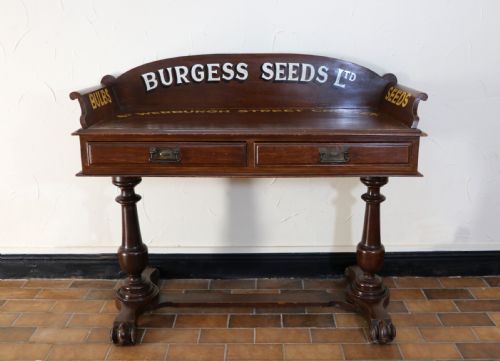
Edwardian galleried tables span forms such as side tables, occasional tables, serving trolleys, bedside cabinets and desks created during the Edwardian era and surrounding decades. These pieces serve domestic rooms with raised galleries designed to keep items secure on the surface.
The version most commonly met on this page is the Edwardian mahogany side table or occasional table, often featuring satinwood inlay or multi-tier designs. Surviving examples reflect the domestic requirements of late nineteenth and early twentieth century homes.
Originating in periods spanning the Victorian era through to nineteen-ten, these tables incorporate styles ranging from plain Edwardian utility to French Revival and Neo-Classical forms. Mahogany and walnut provide the primary structural timbers across the selection.
How they were made
Onyx and marble appear inset into table tops on specific continental and classical variations, paired with carved or turned wooden supports. Leather surfaces line the tops of desk variants, providing a durable writing plane framed by the surrounding gallery.
Edwardian Galleried Tables Retail Price Guide 2026
Typical asking prices for edwardian galleried tables among the pieces listed under this phrase on Sellingantiques today, from the lower quarter to the upper quarter. They describe what is for sale here now, not the wider market.
Some tables include revolving book tiers, letting readers access an entire shelf of volumes without moving from their chair.
What varies in quality
The standard of a piece rests on the precision of its timber selection, particularly the grain matching in mahogany and the crispness of any satinwood inlay. Finer examples display meticulous attention to the joinery of the raised gallery and the stability of the tier supports.
Design ambition separates basic utility tables from elaborately styled pieces in the French Revival or Neo-Classical manner, where carved details and integrated brass work are executed with greater fluency.
The Edwardian Galleried Tables Glossary
- Gallered
- Fitted with a low raised edge or railing around the perimeter of a tabletop to prevent items from sliding off. This feature defines the primary search category.
- Satinwood
- A durable, light-coloured tropical hardwood prized for its lustrous sheen and used extensively for stringing and decorative inlay work.
- Neo-Classical
- A revival style drawing on classical Greek and Roman motifs, characterised by symmetry, straight lines and restrained ornamentation.
- Canterbury
- A low multi-tiered stand originally designed for holding sheet music or books, featuring vertical partitions.
- Occasional table
- A small, movable table intended for intermittent use in a principal room rather than a fixed dining or desk purpose.
Edwardian Galleried Tables: Frequently Asked Questions
What is a galleried table?
A galleried table is a small surface enclosed by a low wooden or metal railing designed to secure small objects.
These pieces appeared in various forms throughout the nineteenth and early twentieth centuries for domestic use.
Where were these tables used?
These items served sitting rooms, bedrooms and studies as side tables, bedside cabinets or compact writing desks.
The raised gallery made them suitable for holding tea services, books or writing implements safely.
How do I identify an Edwardian piece?
Edwardian furniture typically displays lighter proportions, refined satinwood inlay and simpler lines than heavier Victorian precedents.
Porter and cabinet maker designs from this era often embrace Neo-Classical or French Revival stylistic influences.
What woods are commonly found?
Mahogany and walnut form the primary structural timbers across the selection, often accented with satinwood details.
Oak appears on utility forms, while brass and marble incorporate into the decorative scheme of continental pieces.