



Pair Cobalt Blue Vases
A pair cobalt blue vases brings depth and striking symmetry to any mantelpiece, uniting rich, dark ceramics with centuries of ornamental design.
Pair Cobalt Blue Vases
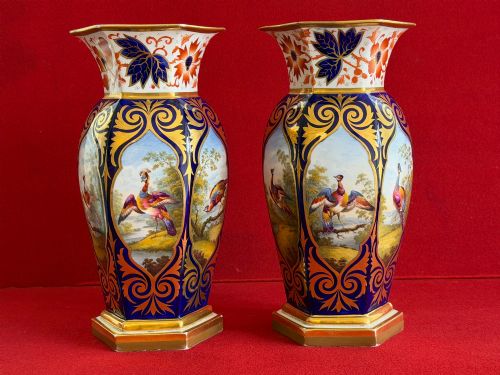
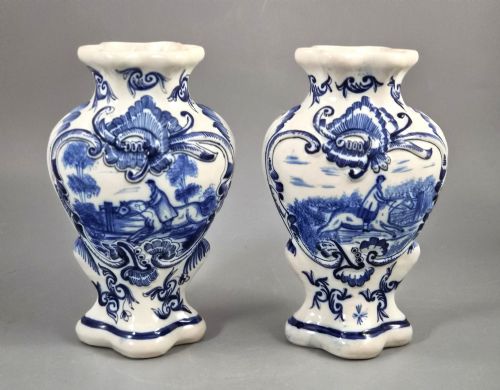
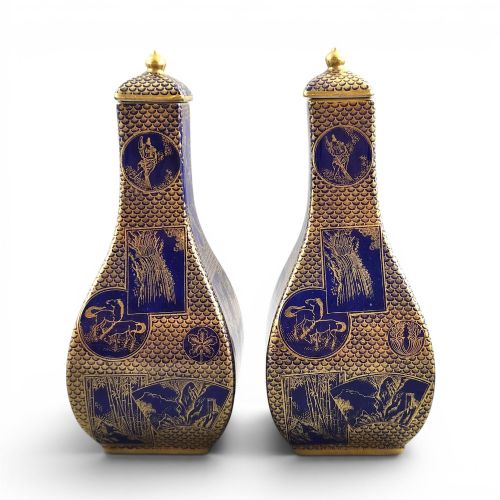
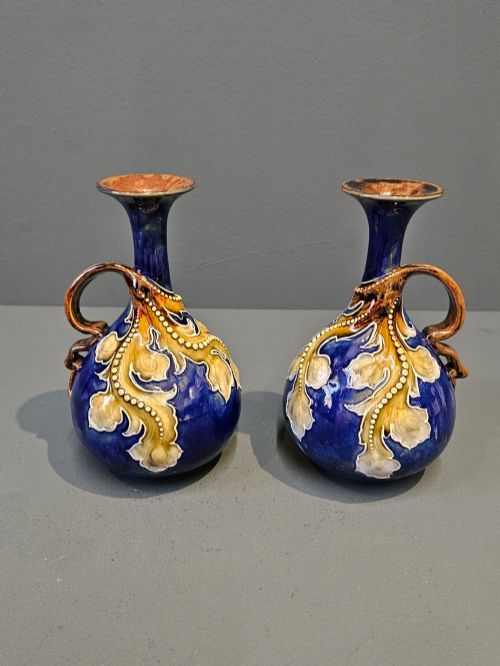
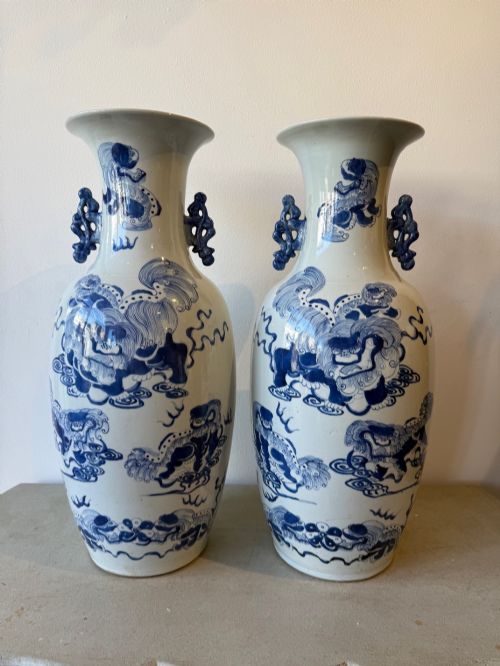
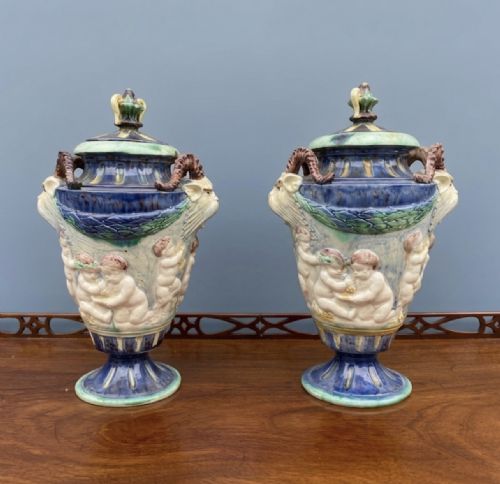
When you search for pair cobalt blue vases, you encounter symmetrical sets of ornamental vessels dominated by a deep, intense blue ceramic body. These pieces span from seventeenth-century Chinese export porcelain and Japanese Arita wares to nineteenth-century European factories including Sevres, Coalport, and Doulton Lambeth.
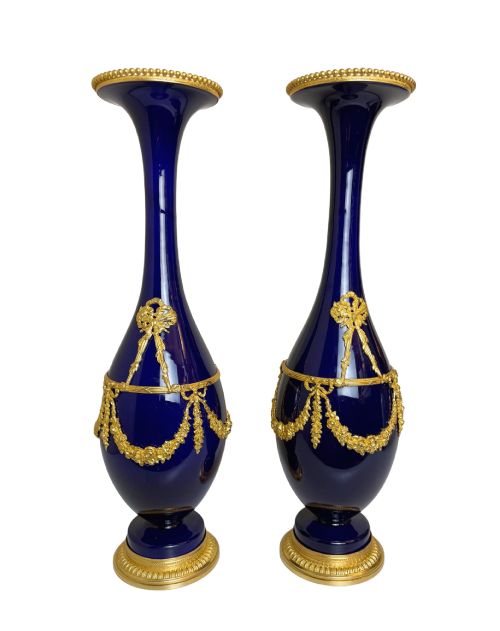
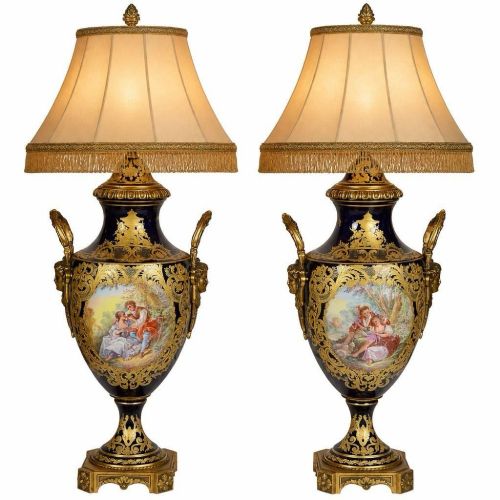
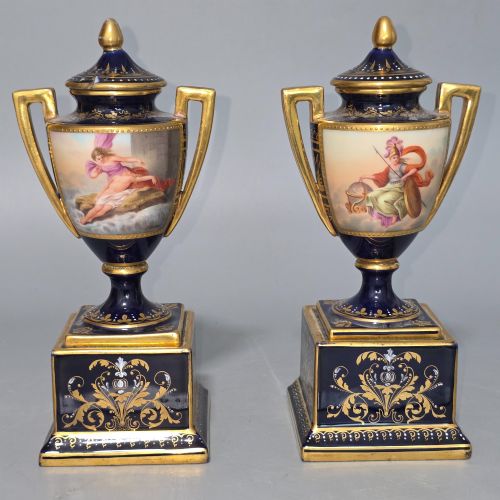
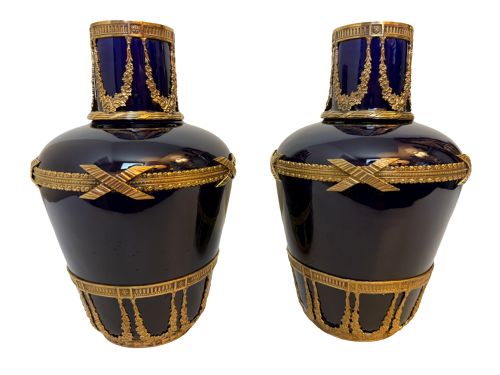
The versions you are most likely to meet on this page include nineteenth-century French porcelain urns mounted in gilt bronze, Victorian earthenware with moulded or painted decoration, and Japanese Imari or Satsuma vases from the Meiji period. Forms range from simple baluster jars and lidded vessels to elaborate garniture sets and converted table lamps.
How they were made
Potters achieved the signature deep hue by applying cobalt oxide beneath or within the glaze before firing the porcelain, earthenware, or stoneware body at high temperatures. Many examples then received secondary decorative firings to incorporate hand-painted enamel motifs and intricate gold leaf accents.
European makers frequently added cast or chased ormolu and gilt bronze mounts to enhance the architectural presence of the porcelain bodies. Glass variants utilised layered overlay techniques to create contrasting colour depths before surface cutting and gilding.
Listings feature periods ranging from the seventeenth century to the twentieth century, encompassing porcelain, earthenware, glass, and bronze.
What varies in quality
The standard of painting and gilding heavily dictates the distinction between ordinary production and exhibition pieces, with freehand enamel work and heavy raised gold tooling commanding greater attention. The crispness of the porcelain moulding or the precision of the pottery throwing forms the foundational baseline of the object.
Mounts also separate tiers of production, where hand-chased bronze or ormolu fitted precisely to the ceramic contours outperforms mass-cast factory fittings. Maker signatures and factory marks further separate standard decorative stock from documented studio or manufactory masterworks.
Flight Barr and Barr·Fourmaintraux Courquin·Mason's Patent Ironstone·Doulton Lambeth·Vienna Porcelain·Carlton Ware·Kinkozan·Royal Crown Derby·Ernst Wahliss·Royal Doulton·Coalport
The Pair Cobalt Blue Vases Glossary
- Ormolu
- Gilded bronze mounts applied to the base, rim, or handles of ceramic vessels. This French technique added decorative luxury to nineteenth-century porcelain.
- Imari
- A Japanese style of porcelain decoration featuring underglaze blue combined with iron red, green, and extensive gilt highlights. It heavily influenced European ceramic design.
- Satsuma
- A type of Japanese earthenware characterised by a ivory-coloured crackle glaze and detailed polychrome enamel painting. Much of it was produced for export during the Meiji period.
- Moriage
- A ceramic decorating technique where slip is piped onto the surface like cake icing to create raised, textured patterns. It frequently appears on Japanese Satsuma vases.
Pair Cobalt Blue Vases: Frequently Asked Questions
How were pair cobalt blue vases used historically?
These vessels functioned primarily as decorative garnitures displayed symmetrically across mantelpieces, sideboards, or architectural brackets in formal nineteenth-century interiors. Larger covered jars and urns also served to punctuate room schemes or hold dried botanicals and potpourri.
Over time, many of these matching vessels were adapted into table lamps as domestic lighting preferences shifted. Their balanced forms made them natural centrepieces for formal reception rooms.
How do I style pair cobalt blue vases at home?
Positioning the pair symmetrically on a heavy sideboard or mantle creates a traditional focal point that draws the eye and anchors a room's colour scheme. Ensure they sit against a neutral background to allow the rich cobalt glaze and any gilding to stand out clearly.
If the pieces have been converted to lamps, place them on matching side tables to provide balanced ambient lighting. Keep surrounding objects minimal to let the intricate painted details or bronze mounts remain the primary visual draw.
How do I tell Japanese Imari from European copies?
Examine the weight, body paste, and pigment characteristics of the ceramic to determine its origin. Japanese Imari from the Meiji period typically utilises a lighter, finer porcelain body with characteristic iron-red and cobalt tones beneath clear glazes.
European factories like Samson and various English potteries produced deliberate style revivals that often feature heavier earthenware bodies or different footring construction. Look closely at the brushwork and the characteristic crackle or purity of the glaze surface.
What is the difference between earthenware and porcelain vases?
Porcelain is fired at much higher temperatures, producing a vitrified, non-porous body that rings when struck and often appears translucent under strong light. Earthenware is fired at lower heats, resulting in a porous, opaque ceramic body that requires thick glazing to remain watertight.
Victorian potteries utilised earthenware for heavy moulded pieces like Doulton Lambeth wares, while high-end decorative factories favoured porcelain for smooth, finely painted surfaces.