


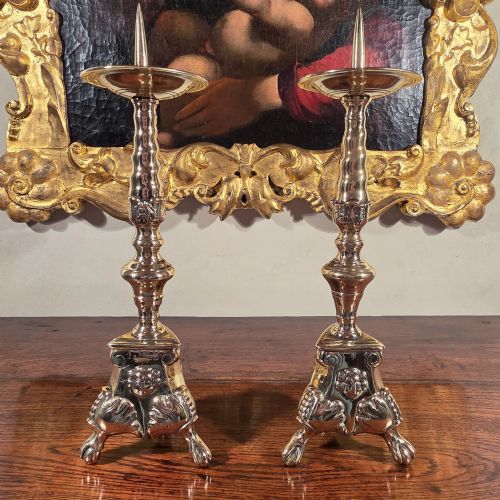


Pair Church Candlesticks
Pair church candlesticks bring grand ecclesiastical proportion and warm metallic or gilded presence into domestic interiors.
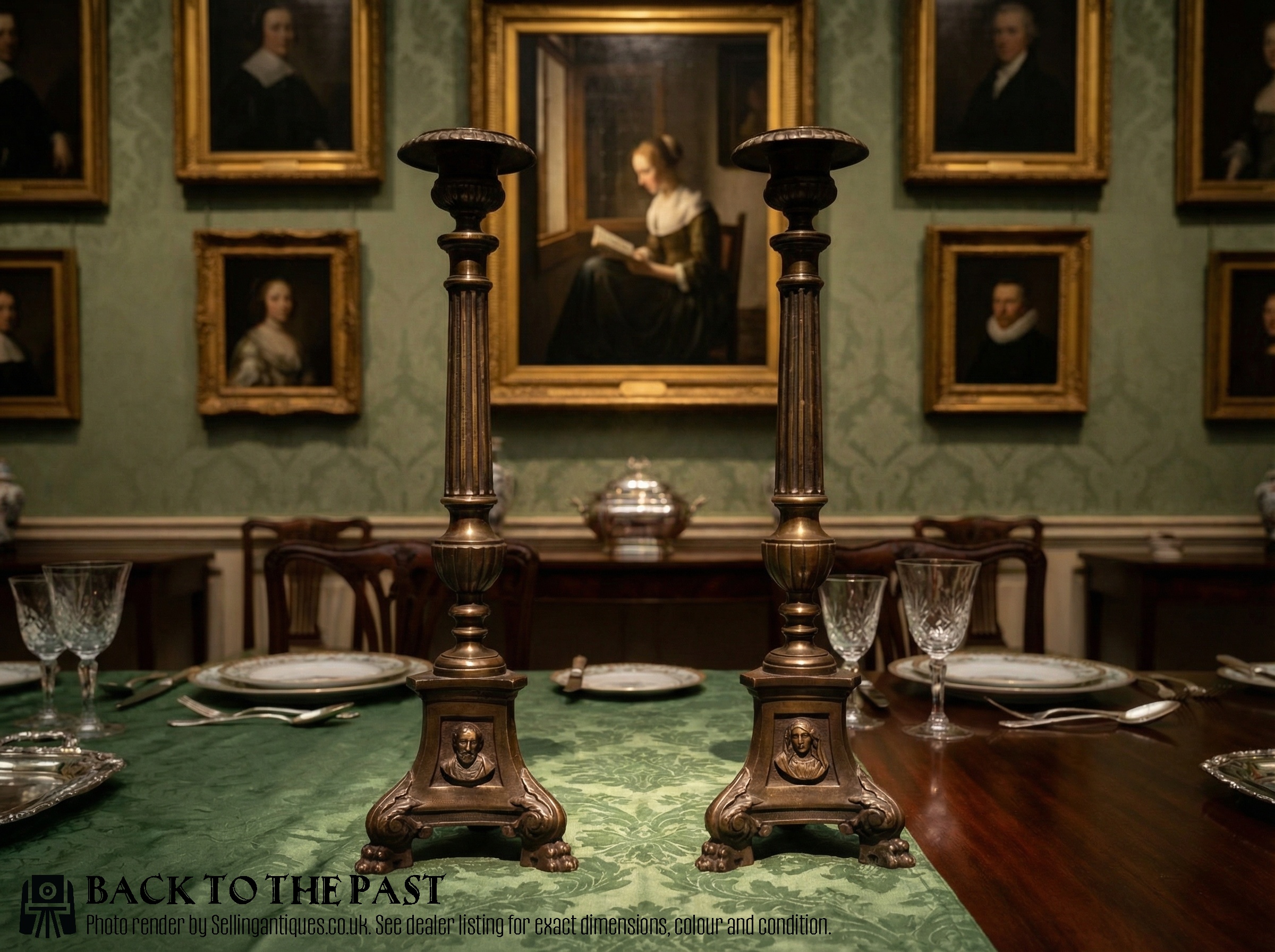
Pair Church Candlesticks
When searching for pair church candlesticks, buyers encounter substantial ceremonial lighting designed for altars and chancels. These pieces originate predominantly from the nineteenth and eighteenth centuries, reflecting strong ecclesiastical aesthetics.
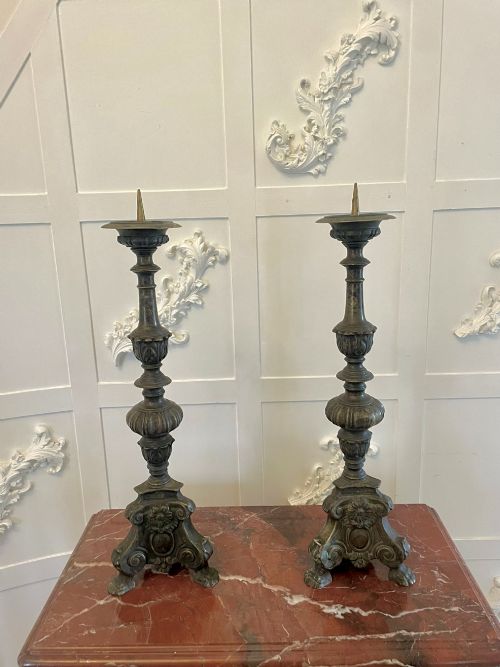
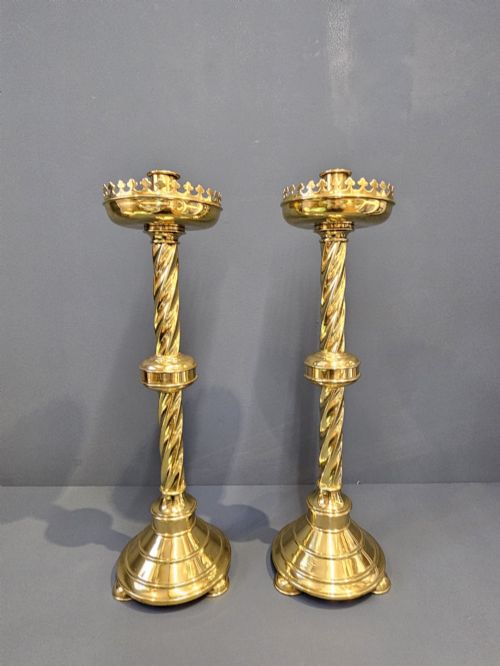
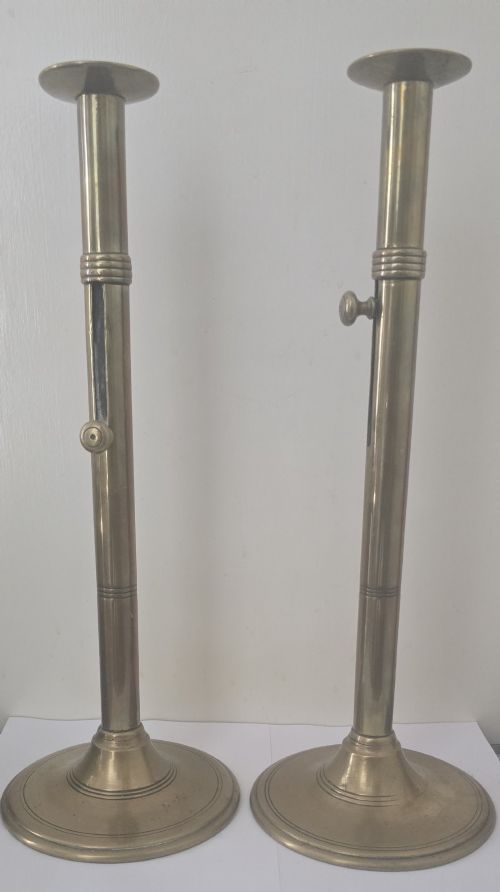
The most common form on this page is the tall brass shaft, often featuring heavy proportions and Gothic Revival or Victorian detailing. Examples also appear in carved wood, giltwood, bronze, and wrought iron.
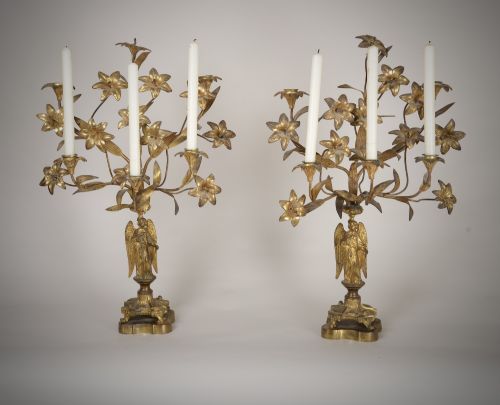
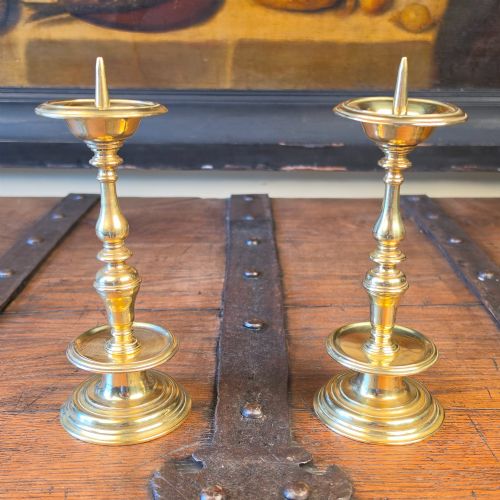
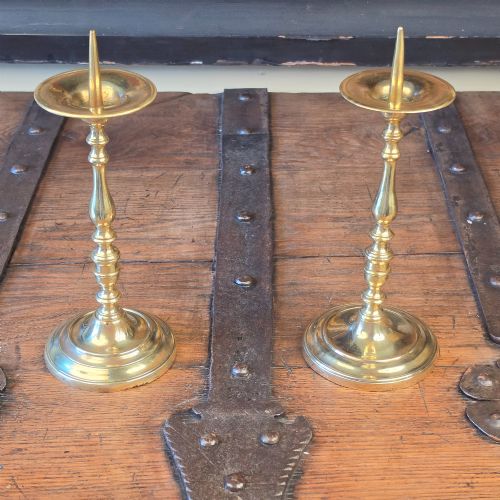
Many survivors take the form of pricket sticks featuring a central spike to hold large candles, alongside socket variants and converted table lamps.
Materials and Construction
Cast and turned brass forms the backbone of these listings, providing the weight and structural integrity required for tall altar pieces.
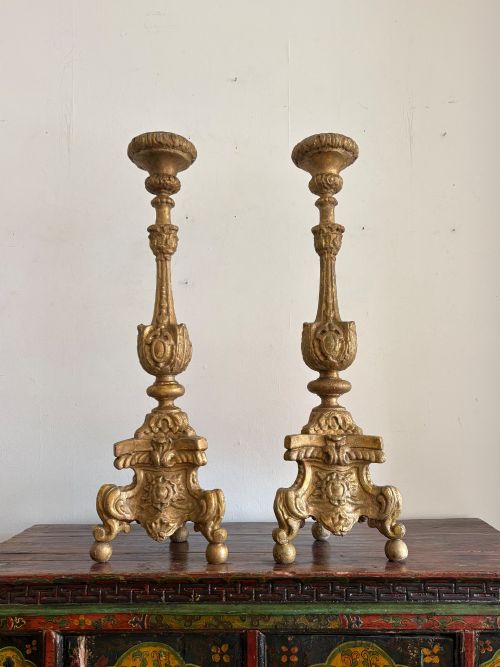
Carved wooden examples utilise gesso, silver leaf, and gilt finishes to achieve ornate baroque and Venetian altar styles.
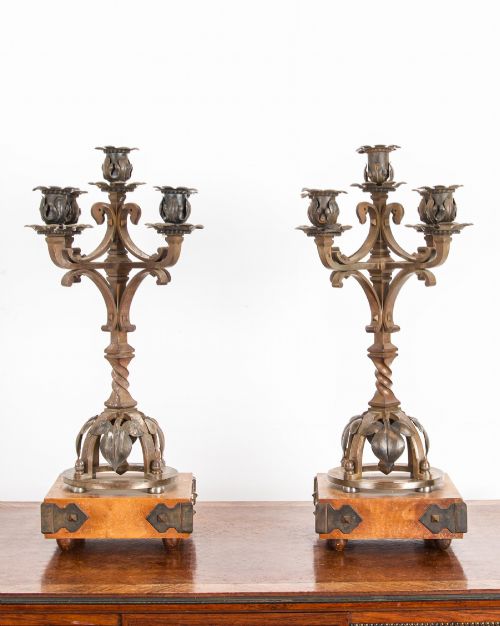
Wrought iron and bronze appear in specific regional styles, such as Amsterdam School interpretations combining mixed metals.
Some heavy specimens weigh enough to double as impromptu medieval defensive weaponry, though church wardens strongly advise against it.
Assessing Quality
Substantial weight and thick gauge metal separate superior metal castings from lighter, purely decorative reproductions. Heavier bases ensure stable elevation for tall columns.
The crispness of chased and cast detailing defines the artistic merit of Victorian Gothic and Baroque specimens. Hand-carved wooden surfaces show depth and precision in the gesso and gilding application rather than flat uniformity.
T Thomason & Co
The Pair Church Candlesticks Glossary
- Pricket
- A candlestick featuring a sharp central metal spike designed to impale the base of a thick candle. This form predominates in traditional altar settings.
- Gothic Revival
- An architectural and decorative style popular during the nineteenth century, drawing heavily on medieval ecclesiastical motifs. Pointed arches and trefoils frequently decorate these pieces.
- Giltwood
- Timber carved and coated with a thin layer of gold leaf. This material appears frequently on continental altar candlesticks.
- Mecca
- A traditional Venetian silver-leaf finish covered with a transparent yellow lacquer to simulate gold. It creates a warm, aged metallic lustre on wooden candle holders.
- Amsterdam School
- An early twentieth-century architectural and design movement characterised by expressive forms and brick or metal combinations. Pieces from this tradition often blend brass and iron.
Pair Church Candlesticks: Frequently Asked Questions
How were church candlesticks used?
These candlesticks stood upon altars and chancels to provide ceremonial illumination during services. Their impressive height ensured they remained visible to congregations filling large ecclesiastical spaces.
Over time, many of these tall fixtures transitioned from active liturgical duty into domestic decorative arts. Today, collectors repurpose them as statement floor or table pieces.
Can I convert them to lamps?
Many examples on the market arrive already converted into table lamps with internal wiring. This adaptation allows historic ecclesiastical metalwork to function safely within modern domestic lighting schemes.
Buyers often select specimens that retain their original prickets or sockets if they prefer using traditional wax candles. Conversion typically depends on personal preference for ambient lighting versus open flame.
How do I date a pair?
Dating relies on identifying stylistic markers such as Victorian Gothic revival motifs, eighteenth-century baroque curves, or early nineteenth-century Regency proportions. Construction methods, including casting marks and hand-carving techniques, provide further clues to age.
Heavier brass pieces frequently align with the Victorian era, while carved and gilded wooden altar sticks often point toward earlier continental workshops.
Where should I place them?
Their substantial height makes them ideal for flanking large sideboards, fireplaces, or architectural mantels. Placing them in pairs creates symmetrical focal points in high-ceilinged rooms.
Careful consideration of floor clearance is necessary when dealing with heavy floor candlesticks or tall pricket stands.