
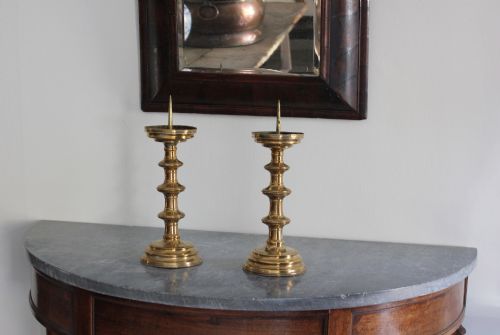


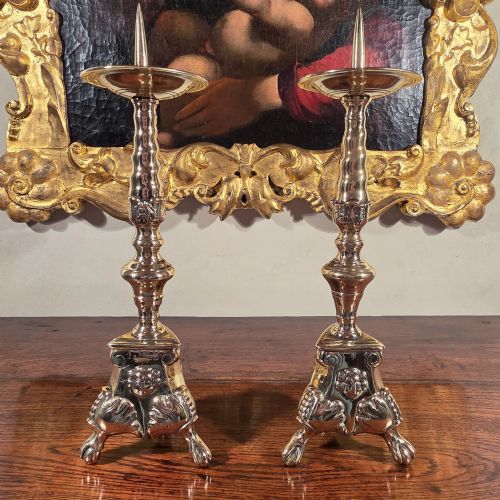


Brass Altar Prickets
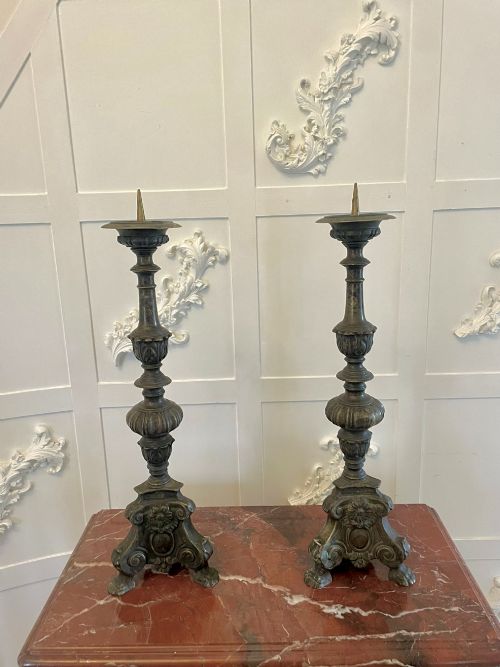
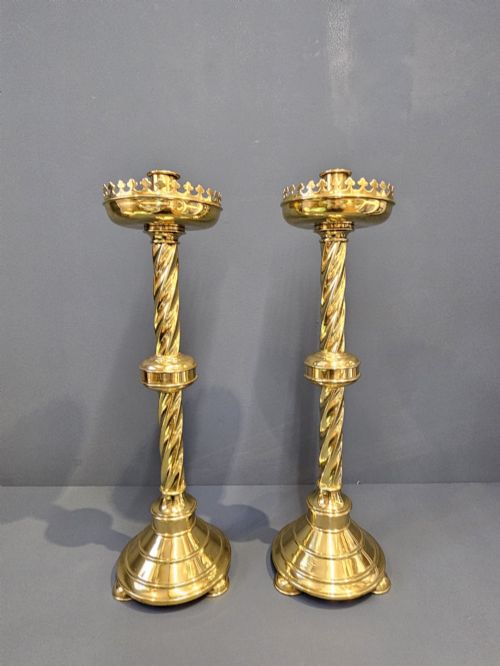
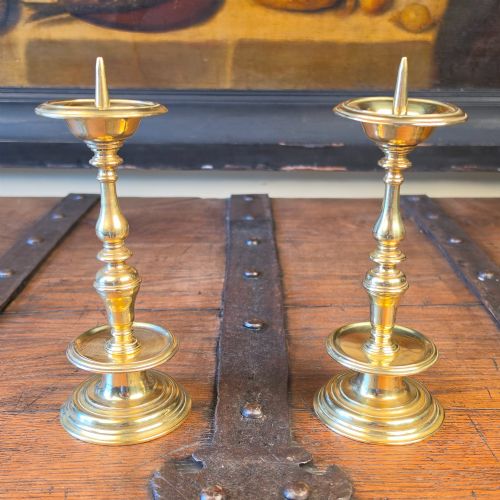
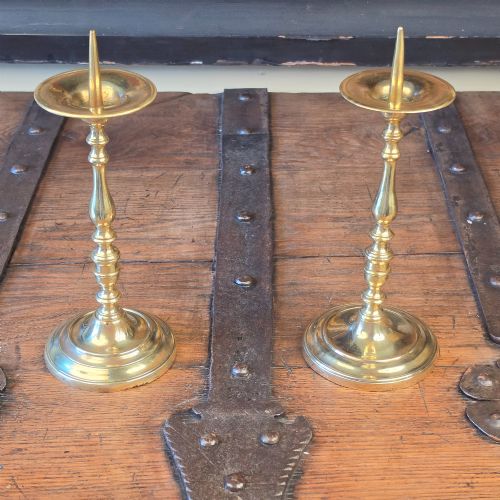
Brass altar prickets are church candlesticks featuring a central spike to hold large wax tapers, bringing ecclesiastical weight and burnished presence into a domestic interior.
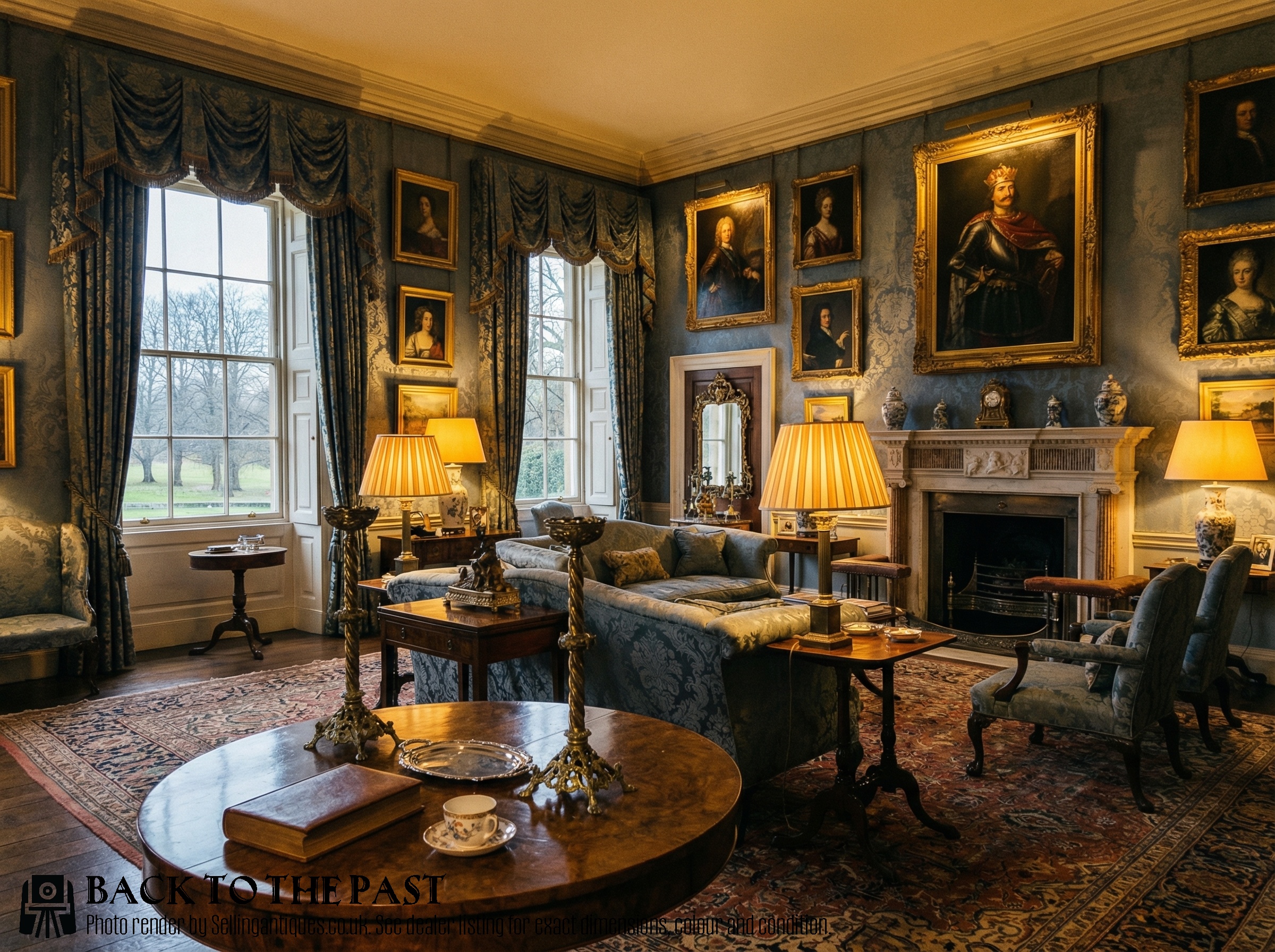
Brass Altar Prickets
Brass altar prickets are tall ecclesiastical candle holders designed to secure candles upon an upright spike rather than a socket. When you search for brass altar prickets, you encounter church furnishings drawn from centuries of liturgical tradition, including Victorian Gothic Revival pieces and earlier continental examples.
The selection on this page ranges from heavy nineteenth-century church candlesticks to seventeenth-century styles and twentieth-century interpretations like Amsterdam School designs. These objects primarily take the form of paired or single candlesticks, alongside occasional pieces adapted as table lamps.
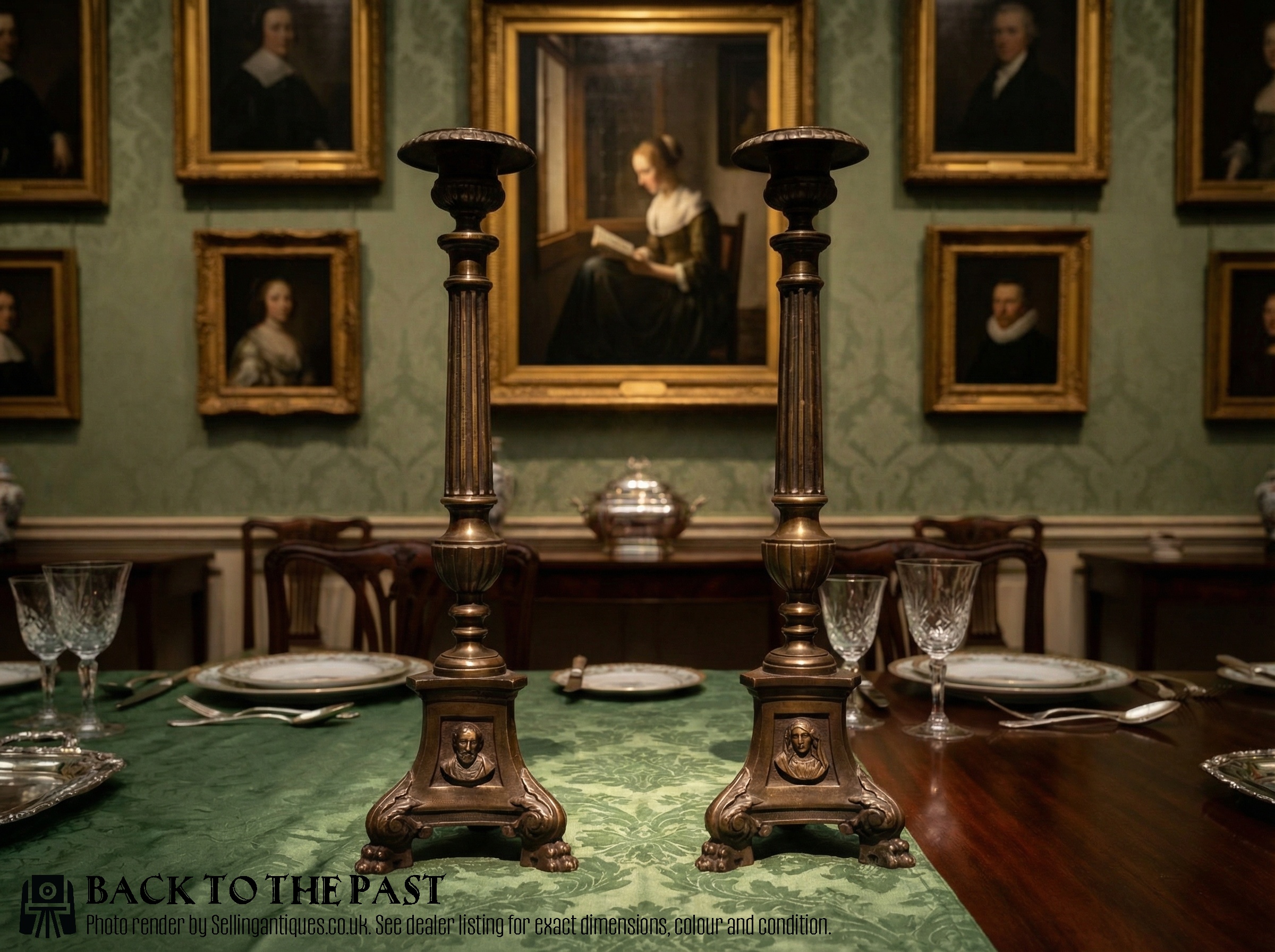
Materials and construction
These items are predominantly cast from brass, bronze, gilt bronze, and ormolu, sometimes incorporating wrought iron, glass, or wooden elements. Foundry casting creates the heavy, solid proportions required to support substantial church candles without tipping.
Surface finish varies through chased detailing, gilding, and patination achieved over decades of handling and liturgical use. Construction methods bridge traditional foundry work with period revival styling, particularly evident in nineteenth-century Gothic pieces.
Listings span periods from the 16th century through the Victorian era to the 1930s, utilising brass, bronze, gilt metal, and wrought iron.
Judging quality and proportion
Quality in these pieces rests upon the crispness of the casting, the original weight of the metal, and the architectural balance of the stem and base. Heavily cast examples with deep relief ornamentation display a superior standard of workshop production.
The integrity of the original pricket spike and the harmony of matched pairs further separate standard items from exceptional specimens. Subtle differences in surface chasing and the handling of period styles distinguish finer foundry output.
The Brass Altar Prickets Glossary
- Pricket
- A sharp metal spike set on the drip pan of a candlestick to impound the base of a candle. This form predates modern sockets.
- Gilt Bronze
- Bronze metal coated with a thin layer of gold using fire gilding or chemical methods. It yields a rich, metallic lustre.
- Ormolu
- Finely ground high-purity gold applied to a bronze base, historically common in French decorative arts. It provides a warm, golden surface.
- Gothic Revival
- An architectural and decorative style drawing on medieval forms, prominent during the Victorian period. It introduces pointed arches and quatrefoil motifs.
- Amsterdam School
- An early twentieth-century architectural and design movement known for expressive forms and unusual material combinations. It often pairs brass with iron.
Brass Altar Prickets: Frequently Asked Questions
What is a pricket candlestick?
A pricket candlestick uses an upward-pointing spike to secure a candle, differing from socket holders that surround the base of the wax.
This traditional ecclesiastical form allowed churches to burn large tapers securely during services.
How do I date an antique brass candlestick?
Dating relies on stylistic clues such as Gothic Revival motifs, casting techniques, and material combinations like brass and wrought iron.
Comparing the form to documented seventeenth, eighteenth, and nineteenth-century examples helps establish the period of manufacture.
Were these used only in churches?
Most of these pieces originated as ecclesiastical furnishings for altars, chapels, and monastic settings.
Today, they are frequently placed in domestic interiors to add sculptural height and historical character to a room.
Can converted lamp candlesticks be restored?
Many altar candlesticks were later wired as table lamps, altering their original profile.
Restoration depends on whether the original pricket and stem structure remain intact beneath the electrical fittings.