
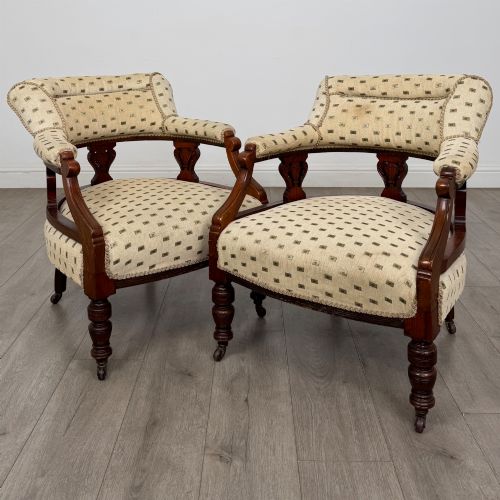
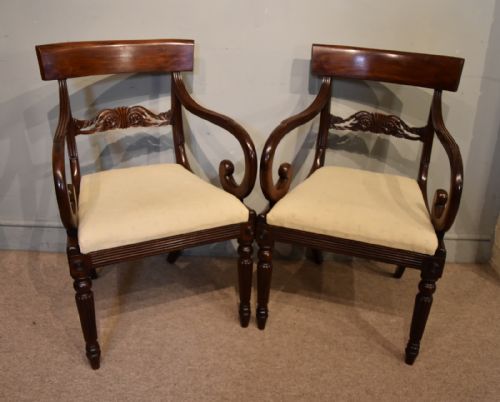
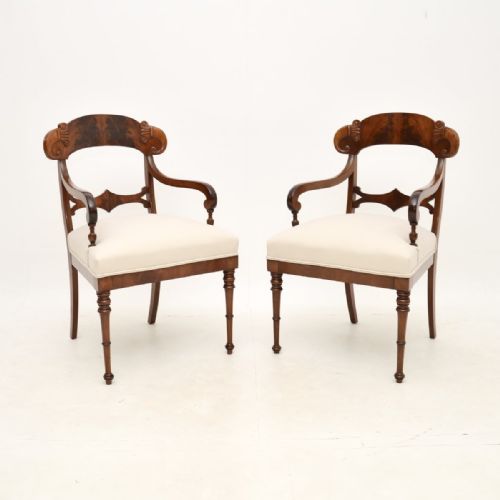
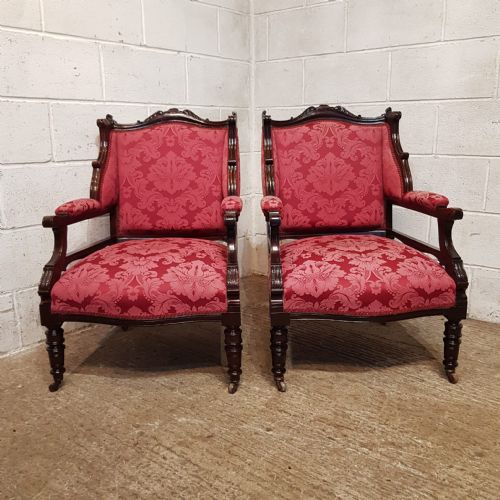
Pair Carved Mahogany Armchairs
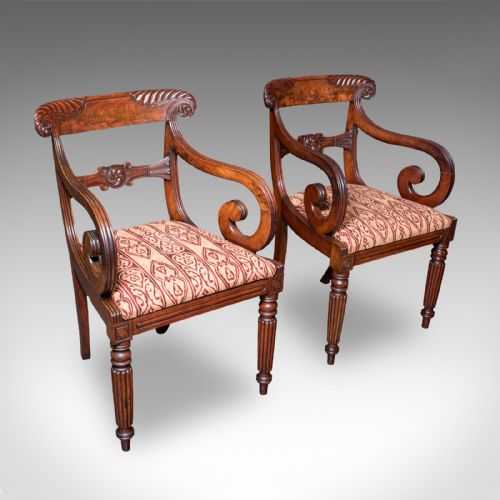
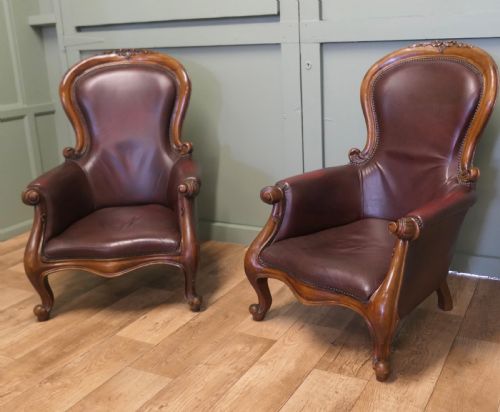
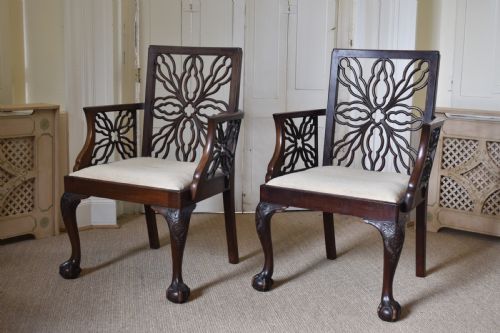
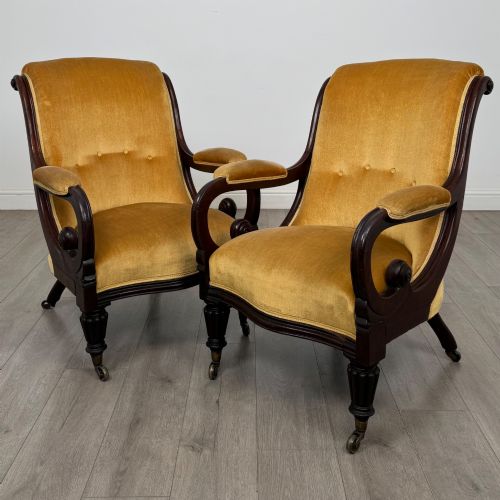
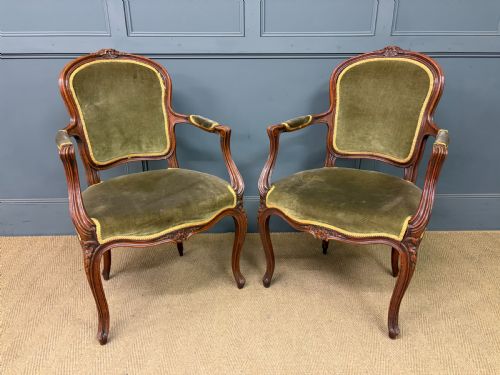
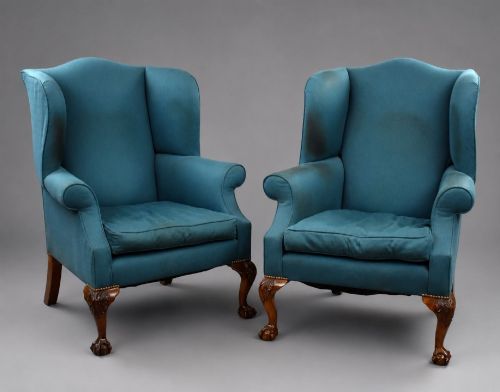
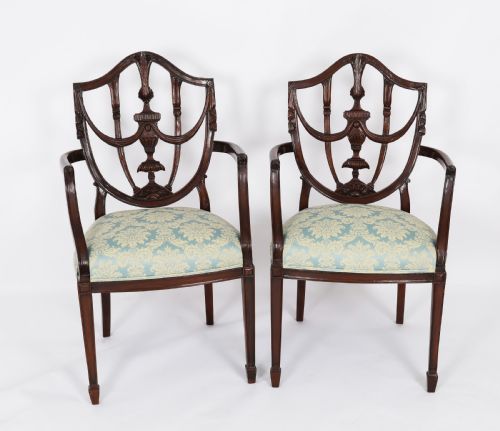
These pair carved mahogany armchairs combine robust timber frames with sculptural carving, offering symmetrical seating for a drawing room or library.
Pair Carved Mahogany Armchairs
When you search for pair carved mahogany armchairs, you encounter seating constructed in matching sets, intended for formal reception rooms, libraries, and parlours. These items emerge from various periods, ranging from the Georgian and Regency eras through to Edwardian revivals and early twentieth-century workshops.
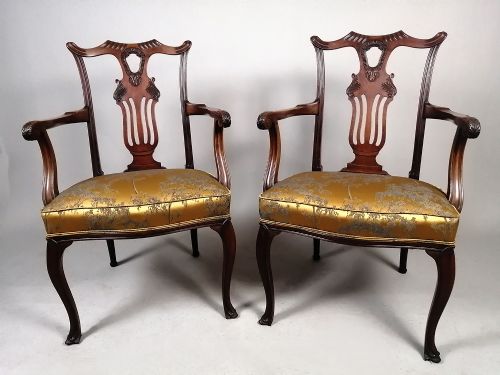
The most common formats on this page include open armchairs, carvers, and library chairs with upholstered elements or cane seats. Makers often drew upon Chippendale, Hepplewhite, and Regency styles to shape the arm supports and crest rails.
Beyond standard seating, the selection incorporates specific regional and continental interpretations, such as French Empire models, Swedish frames, and Italian Neoclassical pieces. These variations provide buyers with distinct decorative profiles while retaining the core timber framework.
Materials and construction
The primary material across these listings is mahogany, chosen for its density and suitability for detailed hand-carving along the arms, splats, and cabriole or reeded legs. Workshops frequently combined this timber with secondary structural woods and brass castors to ease movement.
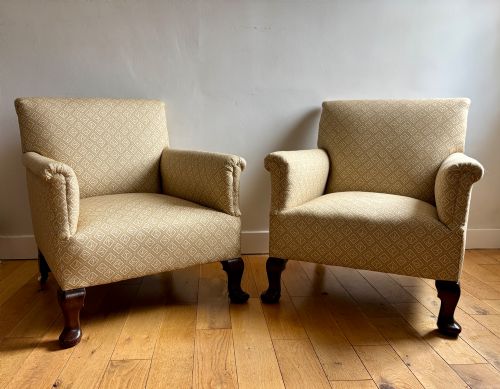
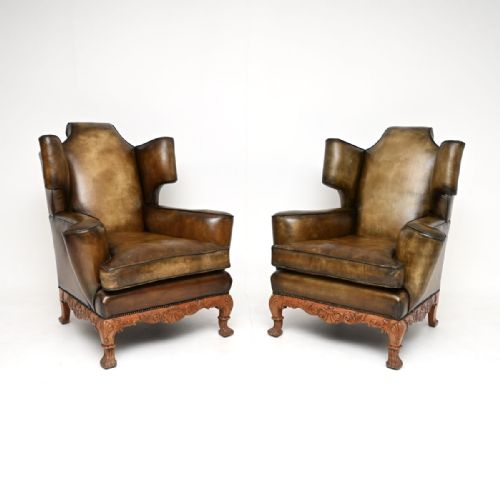
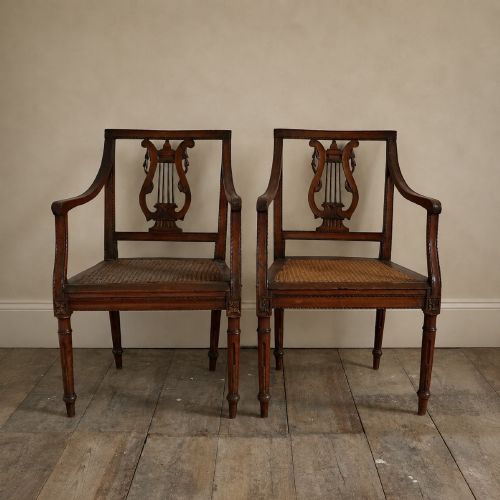
Upholstery completed the construction, utilising fabrics such as leather, velvet, and patterned textiles, often secured with brass buttoning or decorative studwork. Certain designs favoured cane panels set directly into the wooden frames for lighter support.
Upholstery options across the inventory include plain leather, patterned textile, buttoned velvet, and woven cane inserts.
Factors determining standard
Quality in these seating pairs rests upon the crispness of the hand-carved detail and the integrity of the timber joints. Pieces that retain sharp relief work on the scroll arms and legs demonstrate superior craftsmanship compared to softer, worn mouldings.
The proportion and symmetry between the two chairs dictate desirability, as matched sets require uniform grain and identical dimensions. Original upholstery subframes and period leather or fabric surfaces further distinguish finer examples from later reconstructions.
Whytock and Reid
The Pair Carved Mahogany Armchairs Glossary
- Carver chair
- An armchair designed with open sides, traditionally placed at the ends of a dining table or utilised as a reception seat.
- Spoon back
- A padded backrest shaped with an inward curve that follows the human spine, popular in Victorian seating.
- Lyre back
- A central splat shaped in the exact silhouette of an ancient musical lyre, frequent in Regency and nineteenth-century designs.
- Cane seat
- A woven panel made from split rattan, providing a resilient and breathable surface inserted directly into the mahogany frame.
- Scroll arm
- A structural armrest curving outward and downward into a tight spiral scroll, typical of library and easy chairs.
Pair Carved Mahogany Armchairs: Frequently Asked Questions
Where should I place these armchairs?
These matching seats suit formal drawing rooms, symmetrical fireplace arrangements, or grand libraries where twin furnishings create visual balance. Their sturdy timber frames also function well in large reception hallways.
Positioning them together highlights the matching carved details and grain patterns across both frames, enhancing the overall decorative scheme of the room.
How do I care for the mahogany frames?
Maintain the timber surfaces by applying a traditional beeswax polish periodically, rubbing it gently into the grain with a soft cloth. Avoid placing the chairs near direct heat sources or strong sunlight to prevent timber shrinkage.
Check the joints and legs regularly to ensure the structural stability remains firm under daily use.
Are these chairs comfortable for daily use?
Many examples feature deep padding, buttoned leather, or sprung seats designed for extended sitting in libraries and morning rooms. Open arm styles offer structured support while allowing ease of movement.
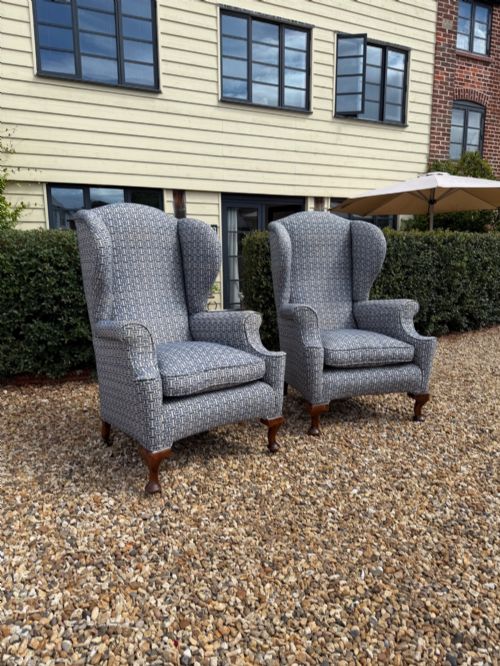
Comfort levels depend on the specific era and style, ranging from upright library chairs to relaxed wing-back designs.
How can I distinguish revival styles from earlier periods?
Revival pieces, such as Georgian or Chippendale revivals from the late nineteenth and early twentieth centuries, often display mechanical precision in the carving and lighter internal framing. Earlier Georgian and Regency originals show tool marks and timber ageing consistent with eighteenth and early nineteenth-century hand production.
Examining the secondary woods and construction fixings helps clarify the exact manufacturing date of each frame.