


Pair Carved Figures
When you search for pair carved figures, you find matching sculptural works shaped from timber, stone, and bone across centuries of global craftsmanship.
Pair Carved Figures
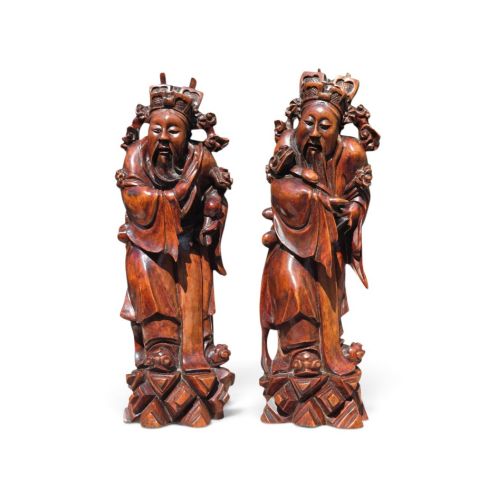
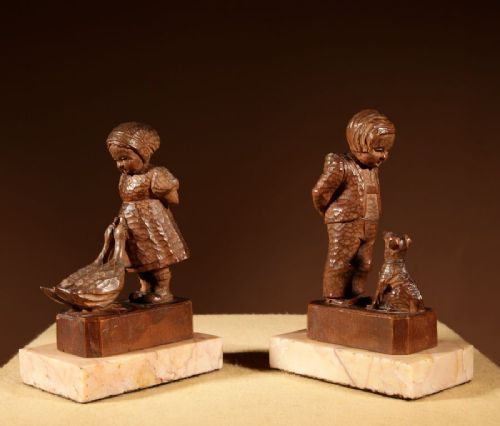
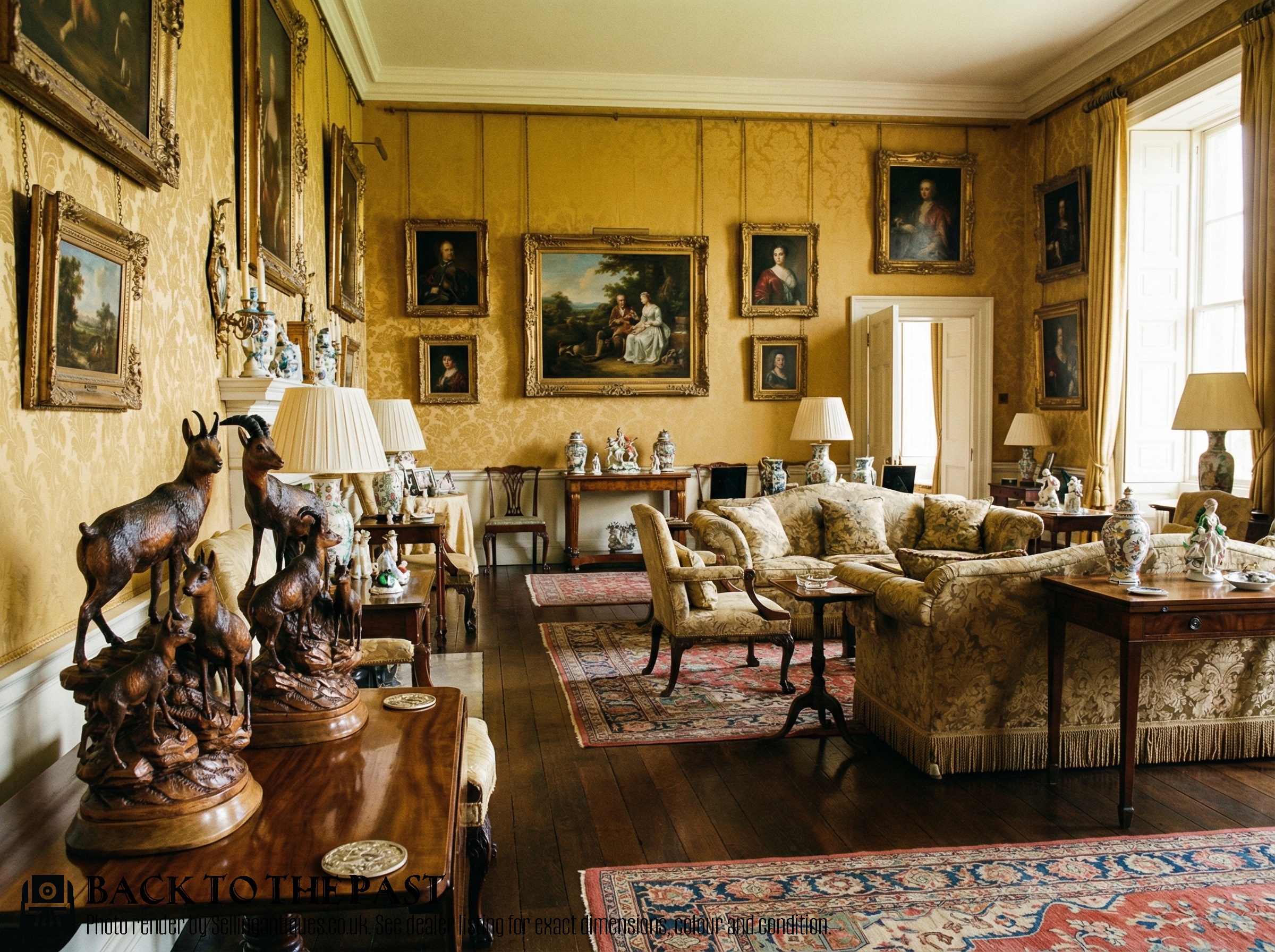
Pair carved figures encompass matching sculptural works designed to be displayed together as symmetrical or balanced decorative objects. You will frequently encounter nineteenth-century European carvings, such as Swiss Black Forest animals and figures, alongside Asian hardwood and bamboo pieces.
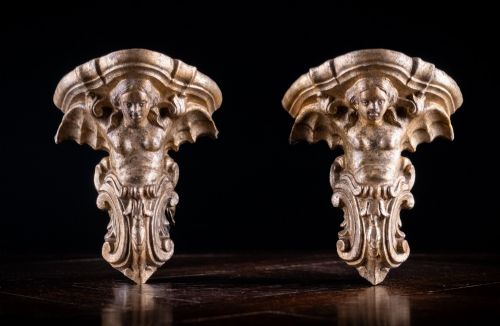
The form spans functional items like bookends and wall brackets to pure decorative sculptures, religious saints, and mythical beasts. Whether carved from oak in the eighteenth century or limewood around nineteen hundred, these works maintain a deliberate dialogue between left and right.
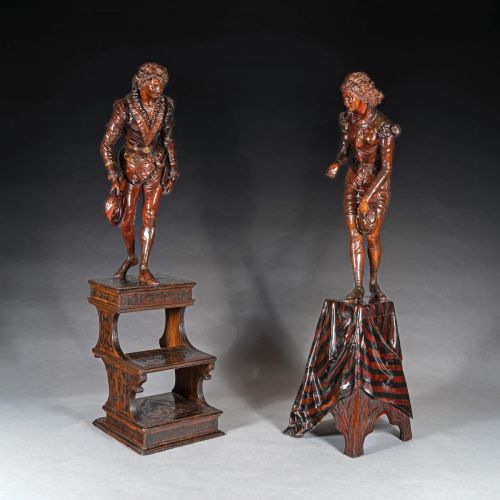
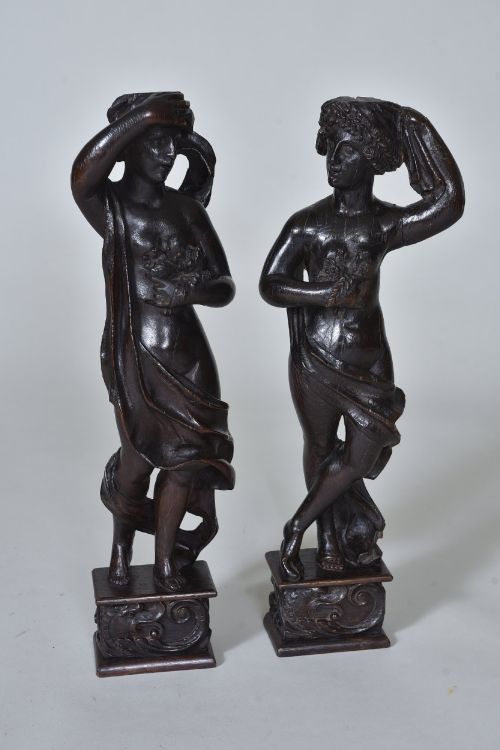
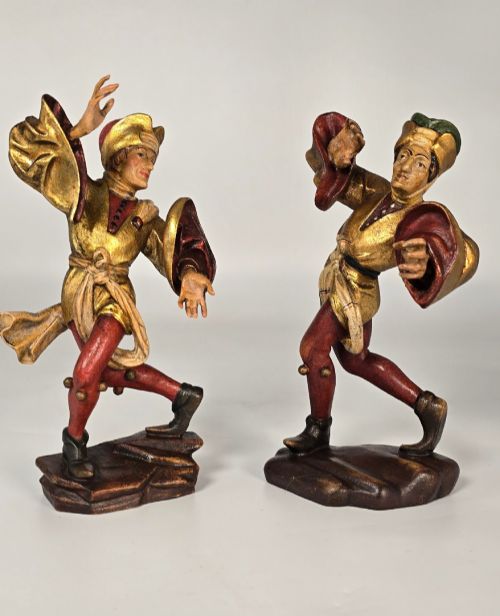
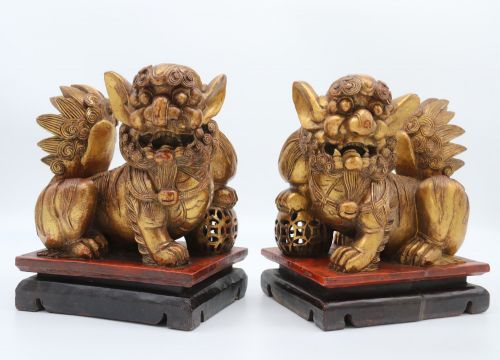
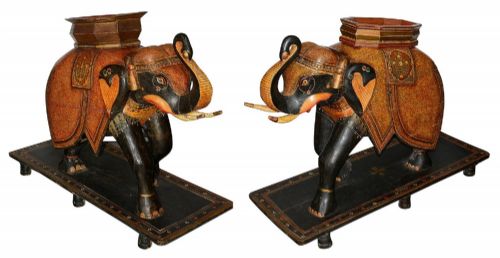
Makers ranged from European village workshops producing folk art fauna to skilled eastern carvers shaping intricate deities and animals. The pairing may represent architectural supports like caryatids, theatrical jesters, or domestic companion animals.
How they were made
Carvers shaped these objects primarily from dense timbers such as oak, walnut, limewood, and exotic hardwoods, often finishing surfaces with polychrome paint, gold leaf, or dark lacquer. Grain direction dictated the depth of relief, allowing artisans to carve intricate fur, drapery, and facial expressions without snapping delicate components.
Subtractive sculpture required master hands to translate preliminary sketches into three-dimensional symmetry, ensuring both halves of the pair balanced each other in weight and posture. Secondary materials like bone, ivory, and marble occasionally formed distinct mounts or inlay details.
Tool marks left by gouges and chisels reveal the manual labour behind each piece, distinguishing hand-carved surfaces from mechanical replication. Surface patination developed naturally through handling and age, deepening the tone of the underlying material.
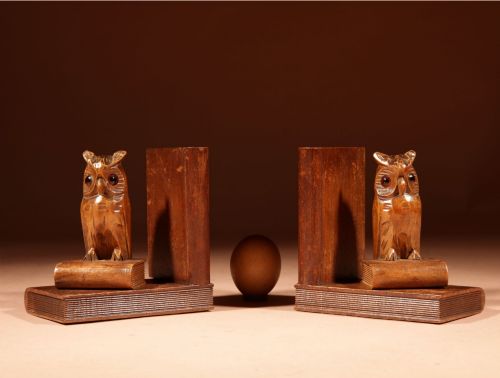
Owls reading tiny wooden books watch over dusty libraries from Victorian desks with glass eyes wide open.
What varies in quality
Quality rests in the anatomical accuracy, depth of undercut, and the symmetry achieved between the two separate pieces. Master carvers captured lifelike tension in muscles, fabric folds, and facial expressions, whereas lesser work remains stiff and shallow.
The preservation of original surface treatments - such as untouched patination on old oak or crisp polychrome paint - separates superior examples from those stripped or heavily restored over generations. Finer pairs retain their original bases, mounting blocks, or matched proportions without mismatched shrinkage or later replacement parts.
Valentino Besarel·Bright And Sons
The Pair Carved Figures Glossary
- Black Forest
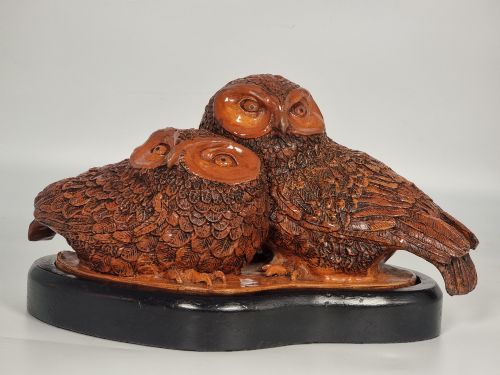
- A nineteenth-century Swiss and German style of wood carving known for realistic depictions of bears, owls, and forest fauna. These pieces often utilised limewood and walnut.
- Caryatid
- A sculpted female figure serving as an architectural support taking the place of a column or pilaster. They frequently appeared in classical and Renaissance revival interiors.
- Grand Tour
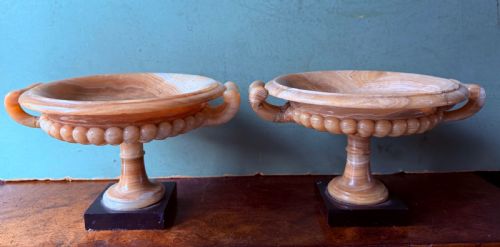
- Eighteenth and nineteenth-century travel souvenirs collected by wealthy Europeans, often featuring miniature alabaster, marble, or bronze sculptures after antique models. These brought classical antiquity into domestic studies.
- Okimono
- A Japanese decorative statue designed for display on a household altar or within a traditional room setting. They were carved from boxwood or ivory with meticulous attention to detail.
- Polychrome
- The practice of decorating architectural elements, wood, or terracotta in a variety of bright colours. This technique brought realistic warmth to carved figures.
- Socle
- A short plinth or pedestal used as a base to elevate a bust, vase, or small figure. They provided stability and visual grounding for classical sculptures.
Pair Carved Figures: Frequently Asked Questions
How do I date a carved wooden figure?
Dating involves examining the wood species, tool marks, and surface patination for clues consistent with known historical periods. Eighteenth-century pieces often show deep hand-adzed or gouged surfaces, while later nineteenth-century work reflects greater mechanical precision.
Wear patterns, shrinkage cracks, and the oxidation of exposed grain help confirm the true age of an antique carving compared to later reproductions.
Where should I display carved bookends?
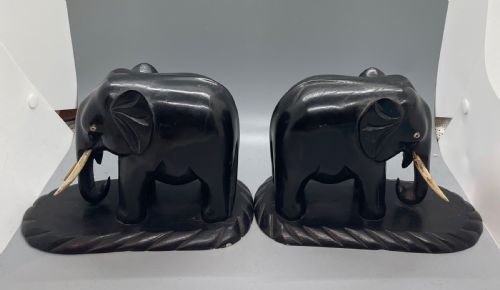
Carved bookends suit heavy library shelves, desks, or mantelpieces where their weight can secure rows of books. Placing them on sturdy hardwood surfaces prevents tipping and highlights the craftsmanship.
Keep carved figures away from direct sunlight and rapid temperature fluctuations to prevent the wood or ivory from splitting over time.
What is the Black Forest carving style?
The Black Forest style originated in central Europe during the nineteenth century, specialising in realistic animal carvings like bears, deer, and owls. These pieces were usually rendered in limewood or walnut with deep texturing.
Many of these works served practical household roles as umbrella stands, clocks, or bookends while maintaining high sculptural detail.
How do I care for antique carved timber?
Maintain antique carved timber by dusting regularly with a soft, dry brush to keep crevices clean without abrasive rubbing. Avoid liquid polishes and wax buildups that can darken the original grain and trap moisture.
Stable indoor humidity levels protect organic materials like wood and bone from warping or developing structural stress fractures.