
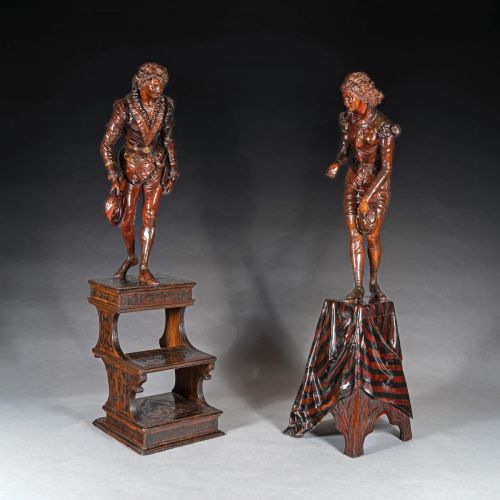


Italian Figurative Carving
These italian figurative carving pieces bring character and substance into a room, shaped by hands that understood walnut, marble and alabaster.
Italian Figurative Carving
When you search for italian figurative carving, you encounter sculptural works, furniture and decorative items spanning the nineteenth and early twentieth centuries. These objects range from freestanding alabaster and marble sculptures of children to walnut cabinets and benches touched by Venetian and Renaissance revival styles.
How they were made
Makers shaped these pieces primarily from walnut, white marble, alabaster and olivewood, often applying polychrome wood or giltwood finishes to accentuate sculptural depth. Carvers utilised dense hardwoods and stone to achieve intricate relief and freestanding human forms.
Techniques combined traditional cabinet making with skilled hand carving, visible in marquetry details on Sorrento ware and the undercut drapery of marble figures. Workshops relied on the distinct properties of dark grey marble and timber to give each sculpture or piece of furniture its structural integrity.
Materials in these listings include white marble, alabaster, dark grey marble, walnut, olivewood, polychrome wood and giltwood.
What varies in quality
The distinction between standard execution and finer work lies in the sensitivity of the carving and the ambition of the composition. Master hands achieved subtlety in facial expressions and fluidity in carved drapery, whereas lesser examples remain stiff and generalized.
Material selection also dictates the standing of a piece, from deeply figured walnut to flawless white marble free of heavy veining. The cohesion between the structural form and the applied figurative elements marks the upper tier of these works.
Valentino Besarel·Eduardo Giolli·P Emilio Fiaschi
The Italian Figurative Carving Glossary
- Sorrento ware
- A style of decorative woodworking originating from Sorrento, typically featuring detailed marquetry and olivewood construction.
- Polychrome wood
- Timber that has been painted in multiple colours, often to heighten the realism of carved figures.
- Renaissance revival
- A nineteenth century artistic movement that drew inspiration from the art and architecture of the fifteenth century Italian Renaissance.
- Grand Tour
- The nineteenth century custom of a traditional trip through Europe undertaken by upper class Europeans, acquiring art and sculpture as souvenirs.
- Blackamoor
- A decorative sculptural form depicting figures from African backgrounds, often rendered in dark wood or polychrome finishes as furniture supports.
Italian Figurative Carving: Frequently Asked Questions
What is italian figurative carving?
It encompasses sculptural figures, decorative bowls and carved furniture originating from nineteenth and early twentieth century Italy.
These pieces showcase the craftsmanship of regional workshops working in marble, alabaster and walnut.
Where were these pieces made?
The majority originate from Italian artistic centres, with notable production in Venice and Sorrento.
Specific regional styles range from Venetian revival seating to Sorrento olivewood marquetry.
How do I style a carved walnut bench?
A substantial walnut bench functions well in a hallway or drawing room as a striking architectural seating piece.
Allowing space around the carved elements ensures the woodwork remains a visual focal point.
How do I care for alabaster sculptures?
Alabaster is a softer stone that benefits from gentle dusting with a dry microfibre cloth.
Moisture and harsh cleaning agents must be avoided to preserve the polished surface of the stone.
How do I distinguish nineteenth century pieces?
Examination of tool marks, timber ageing and stylistic markers reveals the period of manufacture.
Nineteenth century examples often adhere to revival movements such as Renaissance or Baroque revivals.