
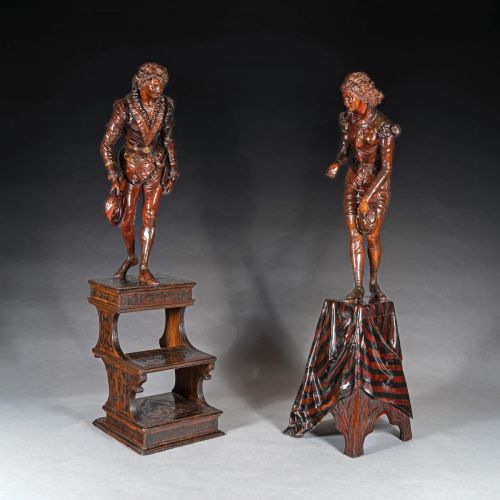


Antique Venetian Statues
Antique Venetian statues bring the dramatic theatricality of Italy into a room, capturing centuries of craftsmanship in carved wood and bronze.
Antique Venetian Statues
When you search for antique venetian statues, you enter a world of carved wood figures, grand tour bronzes, and decorative floor lamps spanning the nineteenth century. The most common form on this page is the carved wood blackamoor, often dressed in original gilt polychrome paint and mounted on a matching stand.
Beyond decorative figures, the selection includes serpentine marble lions, ebonised companion pieces, and bronze musicians cast in the mid-nineteenth century. These sculptures draw upon Venetian Baroque, Neoclassical, and Italian Renaissance Revival styles, reflecting the tastes of travellers on the grand tour.
Objects range from compact tabletop figures to large torcheres and waiters designed to hold objects in a hallway or drawing room. Each piece combines sculptural form with functional furniture elements such as pedestals and stands.
How they were made
Carvers shaped timber into expressive human and animal forms, applying layers of gesso to smooth the surface before adding gold leaf and polychrome paint. This build-up of materials creates the rich, layered colour seen on nineteenth-century blackamoors and gondoliers.
Metal pieces rely on bronze casting techniques, capturing fine details in winged lions and musician figures. Surface treatments such as ebonising and parcel-gilding complete the appearance of wood and metal objects alike.
A bronze lion holds its ground among the painted gondoliers, keeping watch over the Venetian canals of the imagination.
What varies in quality
Quality rests in the sculptural depth of the carving and the preservation of original painted surfaces. Figures with crisp facial expressions and intact polychrome decoration stand apart from heavily restored examples.
The sophistication of the stance and the quality of the gilding dictate the standing of a piece within the range. Works attributed to named workshops show superior anatomical proportion and surface finishing.
Valentino Besarel
The Antique Venetian Statues Glossary
- Blackamoor
- A decorative sculptural form depicting a dark-figured human figure, frequently rendered as a page, gondolier, or torchere in Venetian art. These figures often hold trays or light fittings.
- Polychrome
- Decorated in multiple colours, typically applied to wood or gesso surfaces. In these pieces, the paint is often original to the nineteenth-century creation date.
- Gesso
- A plaster-like mixture applied to carved wood to provide a smooth base for gilding and painting. It allows intricate details to hold crisp edges beneath metallic leaf.
- Grand Tour
- A cultural journey of Europe undertaken by wealthy young men in the eighteenth and nineteenth centuries. Souvenirs from these travels included bronze lions and small marbles.
- Torchere
- A tall stand or ornamental pedestal designed to carry a light source or figure. Many examples feature carved figures holding aloft torch arms or bowls.
Antique Venetian Statues: Frequently Asked Questions
What materials are used in antique venetian statues?
The listings show a strong reliance on carved wood enhanced with gesso, gold leaf, and polychrome paint. Bronze and serpentine marble also appear frequently in Grand Tour pieces.
Surfaces are often original, preserving the historical paint layers applied during the nineteenth century.
How do I identify a blackamoor figure?
These figures typically depict human forms dressed in exoticised historical garments, often acting as functional objects like waiters, torchers, or lamp stands. They date primarily from the nineteenth century and feature detailed polychrome paint.
The stance is usually upright, designed to support a tray or light fitting in an interior setting.
Where should I place a torchere in a room?
Torcheres and figures on stands work best in corners, hallways, or flanking doorways where their height and sculptural presence command attention. They function as both decorative art and functional furniture.
Ensure they stand on stable flooring away from heavy foot traffic to protect the carved wood and painted surfaces.
How can I tell the difference between periods?
Georgian and Neoclassical pieces lean towards classical bronze iconography like the winged lion of Saint Mark, reflecting earlier aesthetic revivals. Later nineteenth-century pieces often embrace ornate polychrome painted wood and theatrical blackamoor designs.
Stylistic cues such as ebonising and specific revival motifs help anchor pieces within the 1850 to 1910 window.