





Carved Walnut Statues
Carved walnut statues bring deep grain and figurative heft into a room, spanning centuries of continental workshop skill.
Carved Walnut Statues
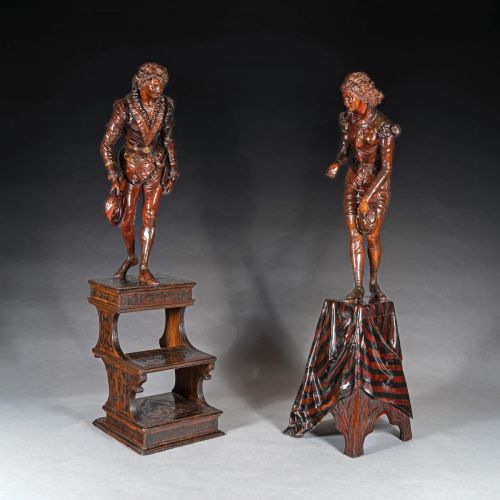
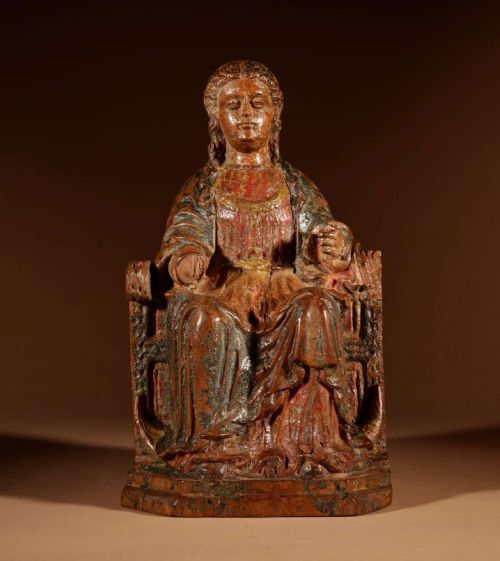
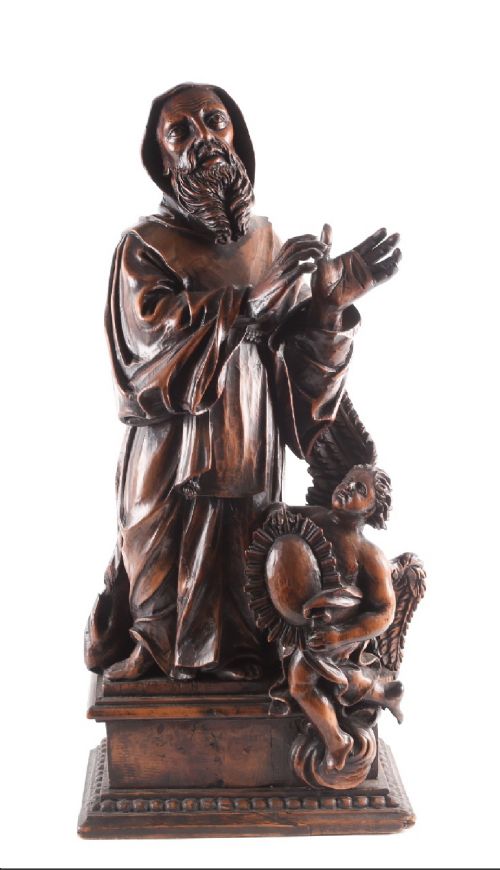
When you search for carved walnut statues, you encounter a varied group of figurative timber sculptures spanning centuries of European craftsmanship. These pieces range from monumental religious figures and Baroque ecclesiastical candlesticks to expressive Black Forest animals and detailed human studies.
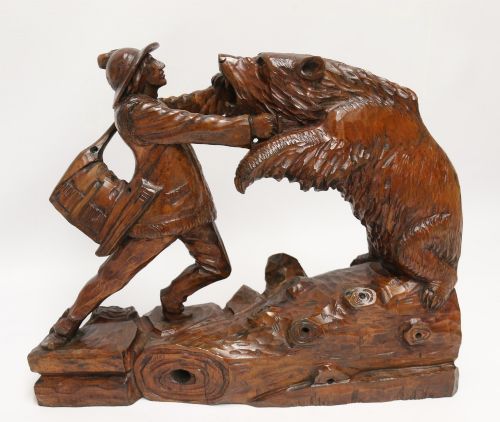
You are most likely to meet 19th-century Black Forest animal carvings alongside earlier continental religious subjects made from walnut, lindenwood, and polychrome wood. The forms vary from seated figures of saints and madonnas to bears, birds of prey, and human studies rooted in Renaissance and Baroque traditions.
How they were made
Carved walnut statues rely on the tight grain and warm tone of walnut timber, alongside lindenwood and mixed woods shaped with hand chisels and gouges. Artisans often applied gesso layers to prepare the surface for fine detail work or polychrome paint finishes.
Several statues double as lamps or candlesticks, proving that historic wood carvings love a practical second job.
What varies in quality
Proportion and anatomical accuracy separate simpler decorative items from superior workshop output, particularly in animal studies and human figures. The preservation of original surface treatments, such as gesso and polychrome highlights, also defines the standing of a piece.
Valentino Besarel
The Carved Walnut Statues Glossary
- Polychrome wood
- Wood sculpture decorated in multiple colours of paint. This technique adds visual depth and naturalism to historical figures.
- Gesso
- A plaster-like mixture applied to wood surfaces as a base for painting or gilding. It provides a smooth ground for intricate surface detailing.
- Black Forest
- A style of wood carving originating from the Swiss and German border regions. It is best known for realistic animal studies and woodland subjects.
- Baroque
- An artistic style characterised by dramatic movement and rich detail. Pieces from this tradition often feature theatrical drapery and dynamic poses.
- Ecclesiastical
- Relating to the Christian Church and its clergy. These items typically include statues of saints, madonnas, and altar figures.
Carved Walnut Statues: Frequently Asked Questions
What periods do these carvings come from?
The pieces span from the sixteenth century through the nineteenth and early twentieth centuries. Earlier examples often stem from religious traditions, while later works include Black Forest animal studies.
Continental workshops produced these items across distinct stylistic eras, including the Renaissance, Baroque, and Victorian periods. Each era brought specific approaches to wood selection and surface finishing.
How do I care for carved walnut?
Keep wooden sculptures away from direct heat sources and dramatic humidity shifts to prevent timber splitting. Dust them gently with a dry, soft cloth rather than using liquid polishes.
Wax finishes can be renewed occasionally using a suitable furniture wax to nourish the grain. Avoid placing pieces in direct sunlight to protect any surviving polychrome paint.
How are religious figures distinguished from decorative ones?
Ecclesiastical figures usually depict saints, monks, or biblical scenes such as madonnas on thrones or acolytes holding candlesticks. They often originate from church settings or private devotional shrines.
Secular or decorative works tend to feature wildlife, literary figures like William Tell, or general human studies. The subject matter and original function provide the clearest clues to their purpose.
What is Black Forest carving?
Black Forest carving refers to a specific regional style originating in Central Europe during the nineteenth century. It is defined by highly realistic depictions of local wildlife, particularly bears and birds of prey.
These pieces were produced both as decorative sculptures and functional objects like lamps or umbrella stands. They showcase deep, textured carving that mimics fur and feathers.