


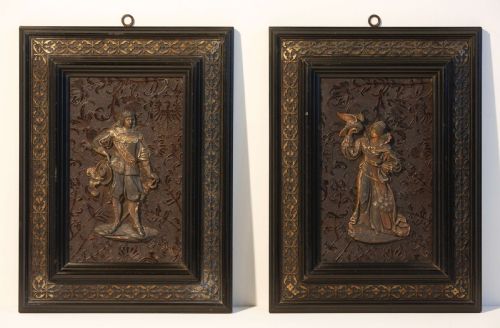


Renaissance Revival Figures
These renaissance revival figures bring sixteenth-century humanism and classical theatre into nineteenth-century drawing rooms with dramatic metalwork and carved wood.
Renaissance Revival Figures
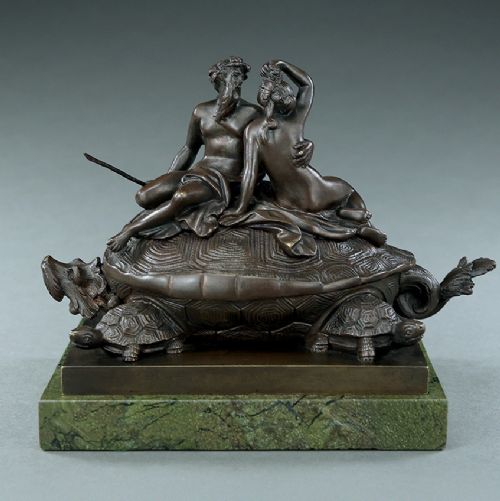
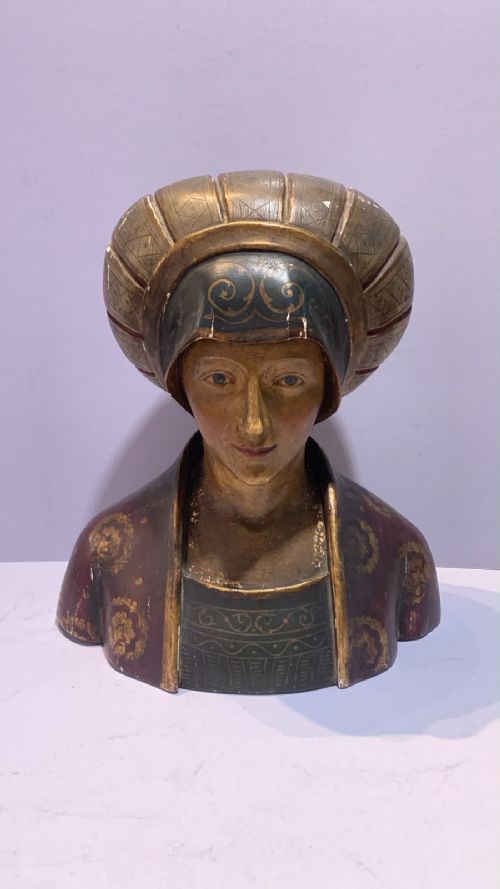
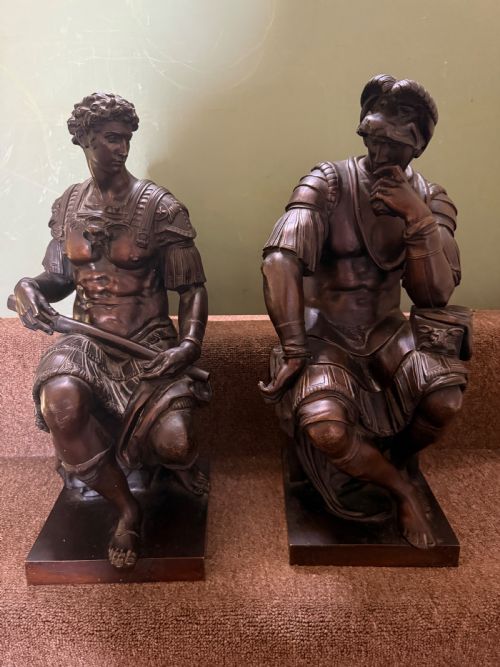
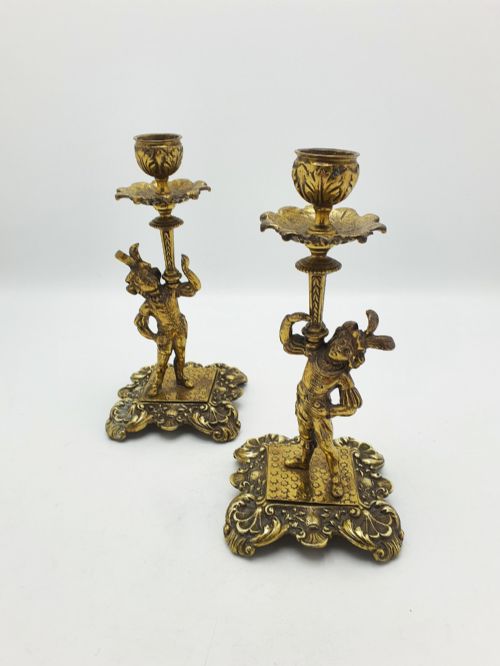
Renaissance revival figures encompass sculptural works, decorative objects, and architectural elements produced primarily during the nineteenth century, drawing direct inspiration from sixteenth-century Italian and French artistic traditions. Buyers encounter grand tour bronzes after Michelangelo, carved hardwood and lime wood figures, and figural candlesticks that echo the opulence of earlier courts.
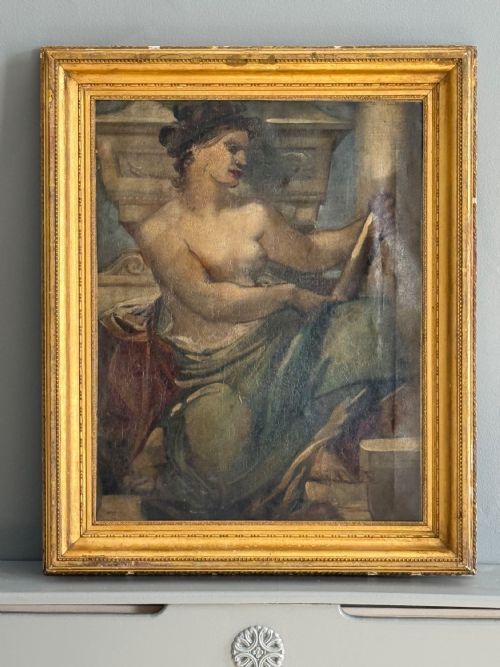
The selection on this page relies heavily on nineteenth-century interpretations, featuring French, Italian, and Flemish regional styles alongside Victorian iterations. Forms range from bronze busts of historical figures like Diana de Poitiers and Henry IV to carved oak caryatids, pedestals, and oil paintings depicting classical subjects.
How they were made
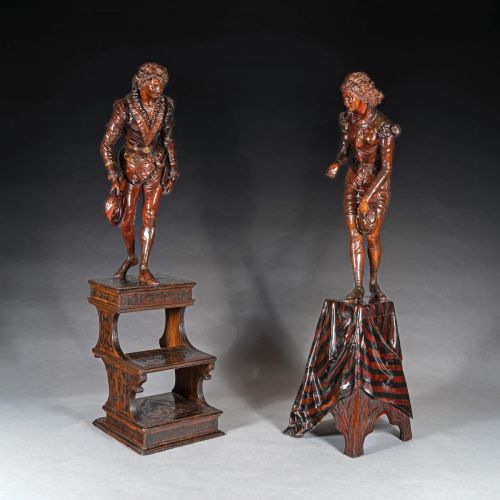
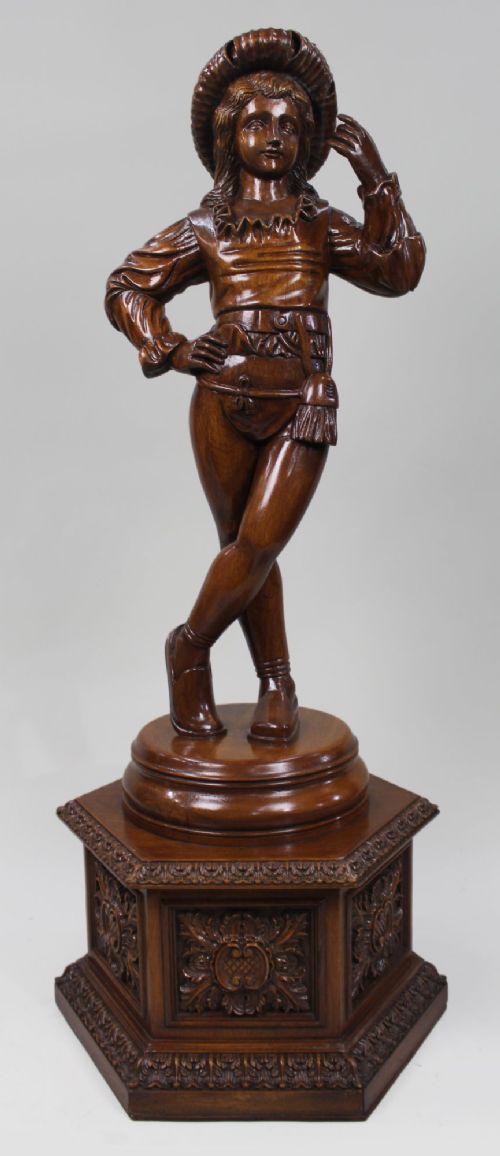
Woodworking forms a major pillar of construction, with craftsmen carving oak, walnut, hardwood, and lime wood to produce architectural terminals, pedestals, and hall stands. Master carvers applied deep relief work and surface detailing to create figures, putti, and mythical griffins that integrated directly into period furniture.
Listings feature works in bronze, oak, marble, brass, walnut, gilt bronze, gold leaf, and terracotta.
What varies in quality
Quality rests principally on the crispness of the casting or the depth of the carving, distinguishing skilled studio production from standard commercial output. Superior bronzes display clean finishing, well-defined patination, and careful chasing that preserves the subtlest contours of drapery and expression.
In wooden works, the distinction lies in the assurance of the hand, where master carvers such as Luigi Frullini or Valentino Besarel achieved anatomical precision and fluid movement in walnut and lime wood. Lesser examples show mechanical stiffness and a shallow approach to relief decoration.
Valentino Besarel·Barbedienne·Eurotrope Bouret·Duboy·Luigi Frullini
The Renaissance Revival Figures Glossary
- Grand Tour
- Souvenir objects acquired by wealthy travellers touring cultural centres in Italy and France during the eighteenth and nineteenth centuries. These miniature bronzes and carvings replicated classical and Renaissance masterpieces.
- Caryatid
- A sculpted female figure serving as an architectural support taking the place of a column or a pillar. They appear frequently on nineteenth-century pedestals and hall stands.
- Spelter
- An alloy of zinc and lead or copper used as a cheaper alternative to bronze for sculptural figures and candlesticks. It takes a bronze-like metallic finish but feels lighter and softer.
- Gien Faience
- Earthenware produced by the French pottery works, known for colourful mythological decorations and historical motifs. Pieces often incorporate Renaissance revival pictorial scenes.
- Putto
- A figure of a small chubby male child, often winged, derived from classical art and revived during the Renaissance. They populate architectural carvings and decorative metalwork.
Renaissance Revival Figures: Frequently Asked Questions
What periods do these figures represent?
The pieces on this page date primarily from the nineteenth century, including Victorian interpretations and Grand Tour souvenirs. They emulate the artistic styles of the sixteenth-century Renaissance.
Craftsmen looked back centuries to reinterpret historical subjects, noble figures, and classical mythology using contemporary casting and carving methods.
Are these pieces solid bronze?
Metal works vary across the listings, with some items cast in solid bronze or gilded bronze while others utilise brass, white metal, or spelter. Foundry stamps sometimes identify the metal composition and the workshop responsible for the casting.
Wooden items likewise span several types of timber, including oak, walnut, hardwood, and lime wood, chosen for their suitability to deep carving.
How were figural candlesticks used?
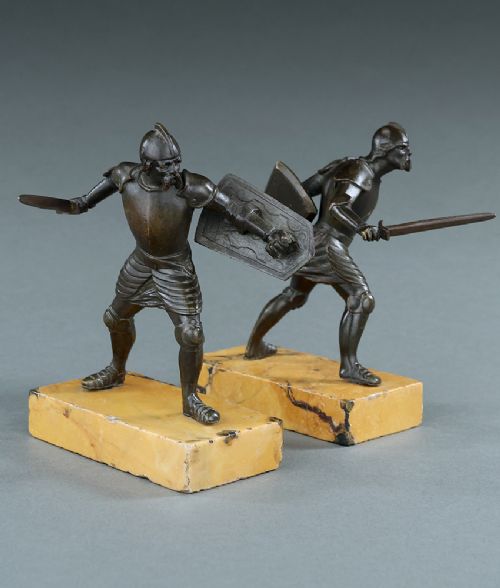
Figural candlesticks served both a practical illumination purpose and a decorative function in nineteenth-century interiors. Placed on mantelpieces or sideboards, they incorporated soldiers or classical figures into domestic lighting.
Their sturdy bases held candles securely while adding sculptural weight to the room's decorative scheme.
Who are the subjects depicted?
Many figures represent historical personages, royalty, and artistic masters such as Michelangelo, Henry IV of France, and Diana de Poitiers. Other works portray anonymous courtiers, duelling knights, and mythological characters.
These subjects reflect the nineteenth-century fascination with historical narrative and heroic biography.