

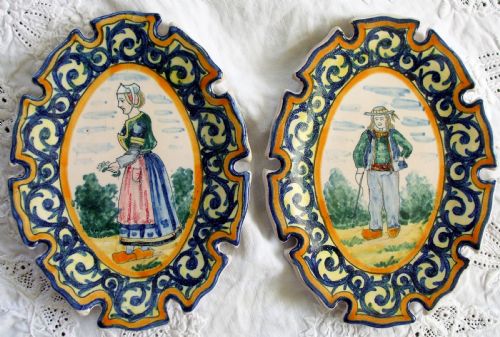


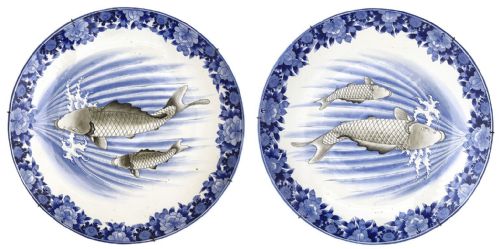


Pair Blue White Dishes
Pair blue white dishes bring symmetrical charm and historic pattern to a room, offering matching ceramic vessels shaped for serving or display.
Pair Blue White Dishes
A pair blue white dishes search reveals matched sets spanning Chinese Export porcelain, Japanese Arita Imari, and English Delftware. These vessels take the form of chargers, pin trays, saucers, and meat platters produced across the eighteenth and nineteenth centuries.
Buyers most frequently encounter Japanese Imari chargers and English earthenware plates from the Victorian and Georgian eras. These twin objects served utilitarian dining roles or purely decorative functions in period interiors.
The selection ranges from small side dishes and fan-shaped plates to large serving platters and soup tureens with ladles. Each pair demonstrates the enduring appeal of cobalt pigment applied to a white ceramic ground.
How they were made
Potters shaped porcelain, ironstone, and tin-glazed earthenware before applying cobalt pigment by hand or transfer printing. Clear glaze sealed the ceramic body during high-temperature firing.
Enamel colours sometimes augmented the cobalt pigment on Japanese Imari wares, adding rich iron red and gilt details. Tin glaze provided an opaque white surface suitable for English and European Delft plates.
Current listings span earthenware, porcelain, and ironstone across the eighteenth and nineteenth centuries.
What varies in quality
Execution of the cobalt brushwork distinguishes standard production from finer work, where freehand painting yields crisp botanical and figurative motifs. Potteries such as Worcester and Masons achieved superior paste consistency and refined surface finishes.
Completeness within a set, such as retaining original matched ladles with sauce tureens or crisp fluted edges on shallow dishes, elevates the standing of a pair. Uniformity in the white ground and depth of the cobalt pigment indicate careful kiln placement during firing.
HR Quimper·Masons·Ridgway·Spode
The Pair Blue White Dishes Glossary
- Cobalt pigment
- A metallic oxide used under the glaze to produce deep blue decoration on ceramics. It withstands high firing temperatures without losing colour.
- Tin glaze
- An opaque white glaze containing tin oxide, applied to earthenware to create a smooth surface for painting. This technique defines traditional Delftware.
- Ironstone
- A heavy durable ceramic patented in the nineteenth century, combining earthenware clay with slag iron. It resisted chipping better than standard porcelain.
- Transferware
- Pottery decorated by applying a printed paper design from an engraved copper plate onto the ceramic body. This method mechanised complex blue and white patterns in the nineteenth century.
- Imari
- A Japanese export style originating in Arita, characterised by underglaze blue combined with iron red and gilt highlights. European makers copied these vibrant designs extensively.
Pair Blue White Dishes: Frequently Asked Questions
How were these dishes used originally?
Many of these pieces functioned on dining tables for serving meats, sauces, and side dishes during formal meals. Others served as decorative chargers and pin trays displayed on walls or sideboards.
Larger platters and tureens accommodated communal dining, while smaller saucers and plates managed individual courses.
Can I use antique plates for daily dining?
Most antique earthenware and soft-paste porcelain benefit from gentle handling rather than heavy daily service. Glazes from earlier centuries can show age-related wear when subjected to modern detergents and cutlery.
Displaying them or reserving them for special occasions preserves the glaze and painted decoration.
What does the term Imari mean for these dishes?
Imari refers to Japanese porcelain exported through the port of Arita, featuring deep cobalt blue alongside contrasting iron red enamel. European factories frequently imitated these striking palettes on local earthenware.
Dishes in this style bring strong asymmetry and vibrant patterning to a collection.