
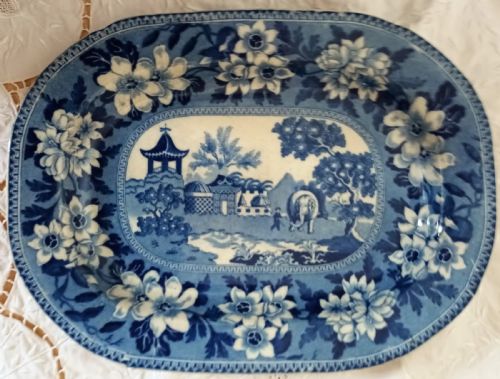


Antique Willow Pattern
These antique willow pattern pieces bring the timeless blue and white scenes of traditional ceramic design straight to your table.
Antique Willow Pattern
When you search for antique willow pattern, you are looking at blue and white transfer printed ceramics spanning from the eighteenth century into the twentieth century. The selection ranges from Victorian sets and decorative plates to early Georgian chargers, bread stands, and lidded tureens with ladles.
The most common pieces you will meet on this page are earthenware and pearlware plates and platters decorated with classic blue pigment designs. Alongside traditional willow scenes, you also find related transferware subjects such as elephant, zebra, net, buffalo, cowman, and tower patterns.
Origins stretch across English potteries, featuring pieces from makers like John Rogers and Son, Caughley, and Spode. Forms vary from simple utilitarian tableware and pepper pots to larger serving dishes, chestnut baskets, and pierced platters.
How they were made
Potters built these items using ceramic bodies such as earthenware and pearlware, often finished with a clear ceramic glaze or tin glaze. The iconic blue decoration relied on cobalt pigment applied via transfer printing techniques onto the clay body before firing.
Makers shaped various forms by hand or mould, ranging from heavy serving platters and soup ladles to delicate chestnut baskets and pepper pots. Firing processes fixed the cobalt pigment deep beneath the glaze, creating the durable surface characteristic of these wares.
Listings feature pieces spanning multiple centuries, with pearlware and earthenware forming the primary ceramic materials alongside traditional cobalt pigment.
What varies in quality
Quality in these ceramics depends heavily on the clarity of the cobalt transfer print and the crispness of the underlying ceramic form. Early pearlware examples with deep, rich pigment and minimal glaze pooling sit at the upper end of the range.
The sophistication of the moulded details, such as pierced rims on serving dishes or the delicacy of handles on tureens and ladles, dictates the distinction between standard tablewares and finer cabinet pieces.
John Rogers and Son·Spode·Caughley·E M Davies
The Antique Willow Pattern Glossary
- Transferware
- Pottery decorated by applying a printed design from a copper plate onto paper and then transferring it onto the ceramic body. This technique allowed for intricate pictorial scenes to be replicated consistently across multiple pieces.
- Pearlware
- A refined earthenware developed in the late eighteenth century featuring a subtle bluish tint in the glaze. It provided a whiter background that made the blue transfer prints stand out more clearly.
- Tin glaze
- An opaque white glaze containing tin oxide, used primarily on earlier delftware pieces. It creates a smooth, enamel-like surface that takes cobalt painting directly.
- Chinoiserie
- A European artistic style reflecting Chinese motifs and landscapes. This aesthetic heavily influenced the pagoda bridges, figures, and willow trees seen on these plates.
- Tureen
- A deep covered bowl used for serving soups or stews at the table. They frequently include matching ladles and decorative handles.
Antique Willow Pattern: Frequently Asked Questions
How do I care for antique willow pattern?
Wash these ceramic pieces gently by hand in warm water using mild soap rather than placing them in a dishwasher. Avoid harsh scrubbing brushes that might scratch the historical glaze.
Store them securely on stable surfaces or use dedicated plate hangers if displaying them on walls. Sudden temperature changes can stress old earthenware, so keep them away from direct heat sources.
Are these pieces safe for daily dining?
While many of these items were originally made as functional tableware, their age and historical value often lead owners to reserve them for display or light use. Glazes from earlier centuries can sometimes show wear or crazing that absorbs liquids.
If you choose to use them for food, inspect the surface condition first and avoid serving highly acidic foods that might affect vulnerable glazes. Hand washing remains essential for any piece you bring to the table.
How can I tell pearlware from standard earthenware?
Pearlware typically exhibits a faint bluish pool of glaze in crevices, such as the footrim or around handles. This formulation was designed by potters to mimic the whiteness of Chinese porcelain.
Standard earthenware tends to have a warmer, creamier tone without that distinct blue-tinted glaze appearance. Comparing pieces side by side under natural light helps reveal these subtle differences in the ceramic body.
What does transfer printing involve?
Transfer printing is a method where an engraved copper plate is inked with cobalt pigment and pressed onto tissue paper. That printed paper is then applied to the biscuity clay body to transfer the design before glazing and firing.
This innovation allowed potteries to produce detailed pictorial scenes rapidly while maintaining a consistent artistic style across large sets of plates and platters.