
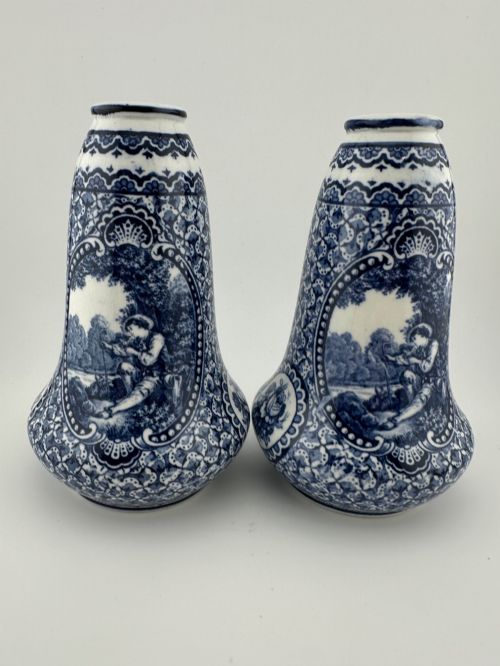
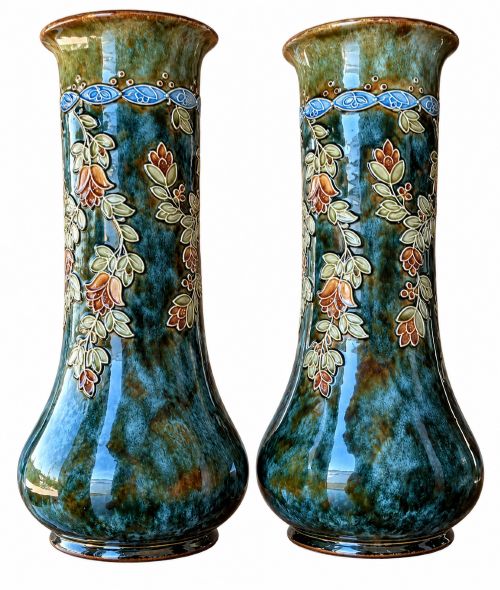
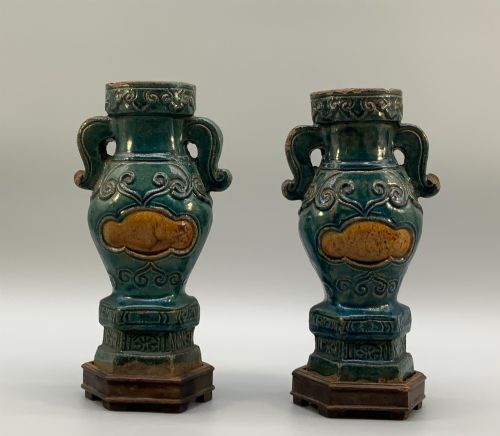
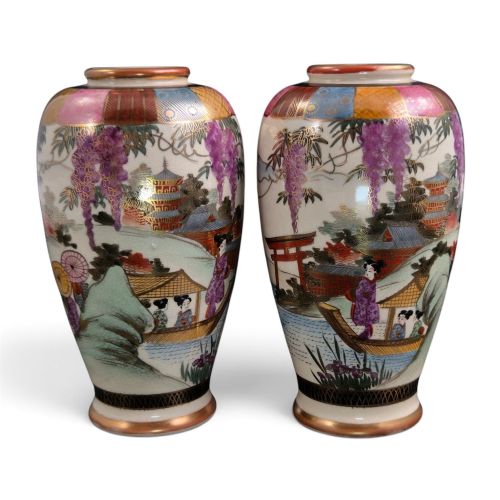
Pair Glazed Vases
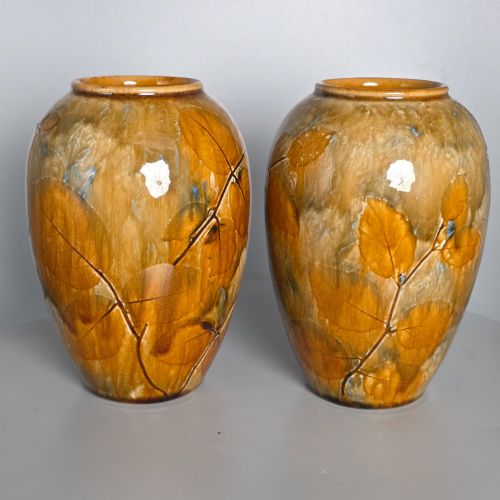
When you want a pair antique glazed vases for symmetry, you are looking at matched vessels shaped in earthenware, stoneware, or porcelain across the nineteenth and early twentieth centuries.
Pair Glazed Vases
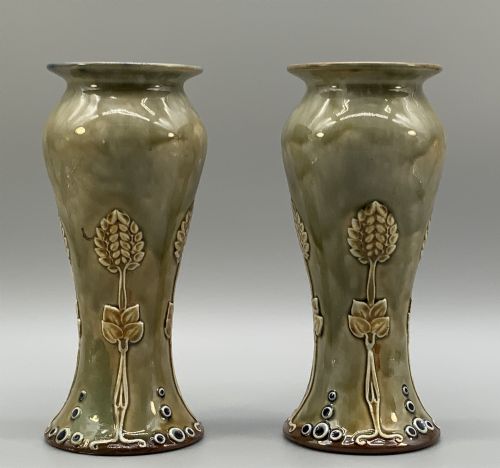
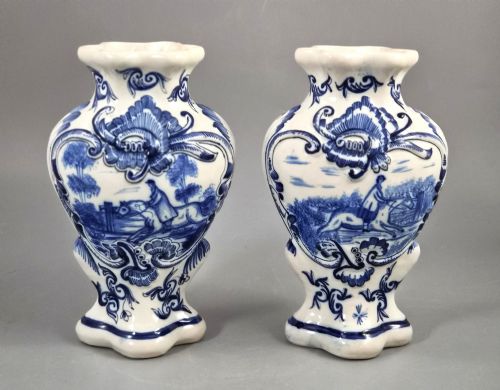
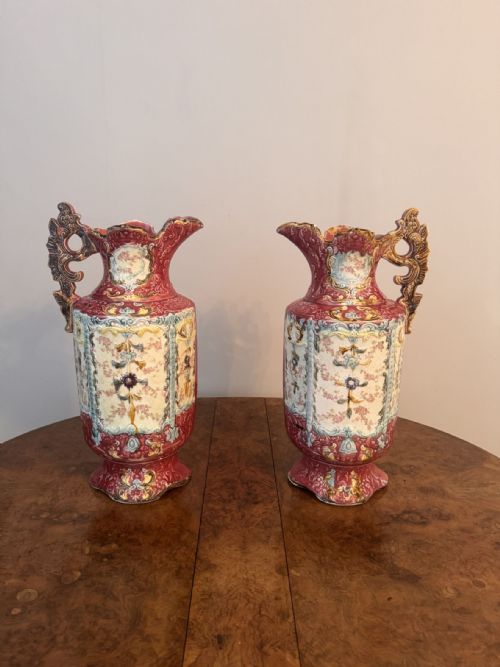
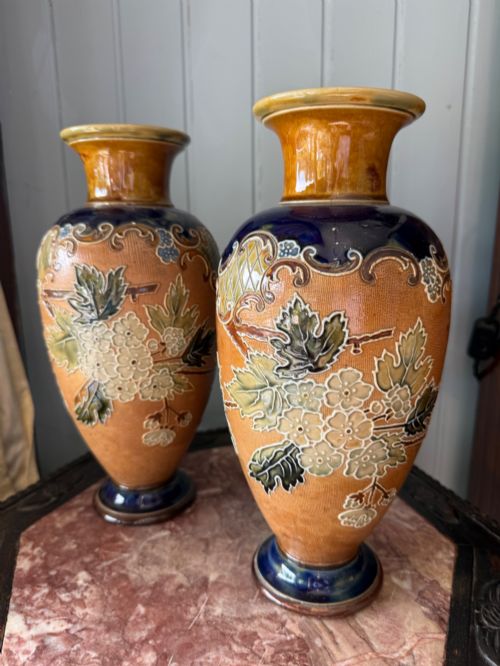
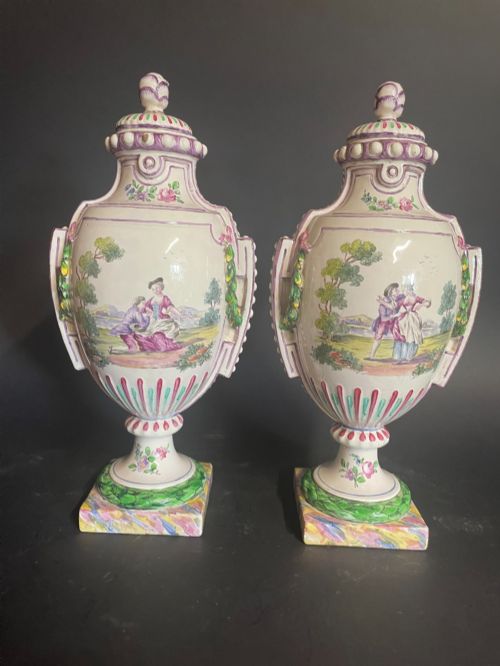
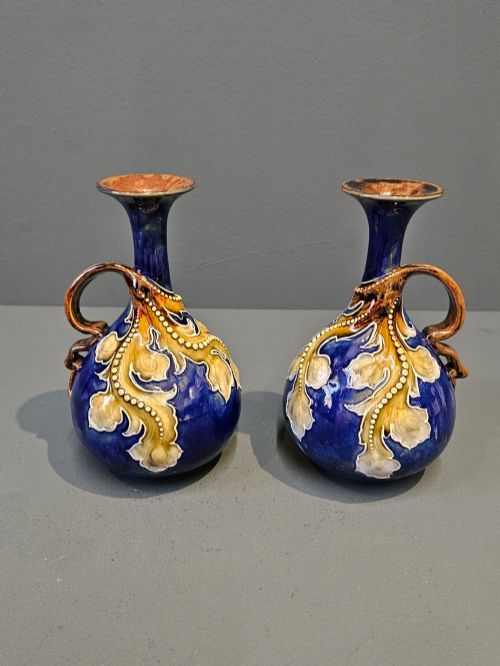
A pair antique glazed vases brings dual symmetry to a mantelpiece or side table, matching in form, palette, and decoration. These pieces span diverse cultural origins, encompassing British stoneware, French faience, Chinese crackled glazes, and Japanese earthenware.
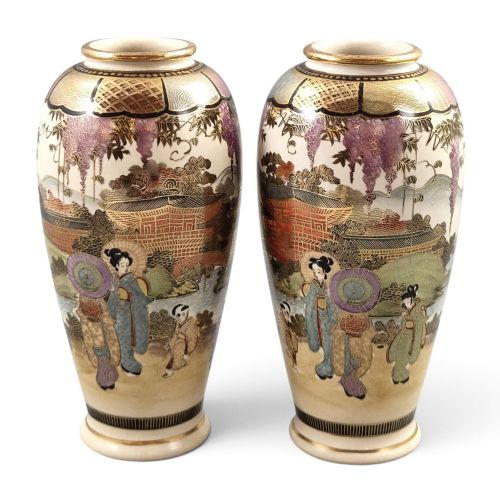
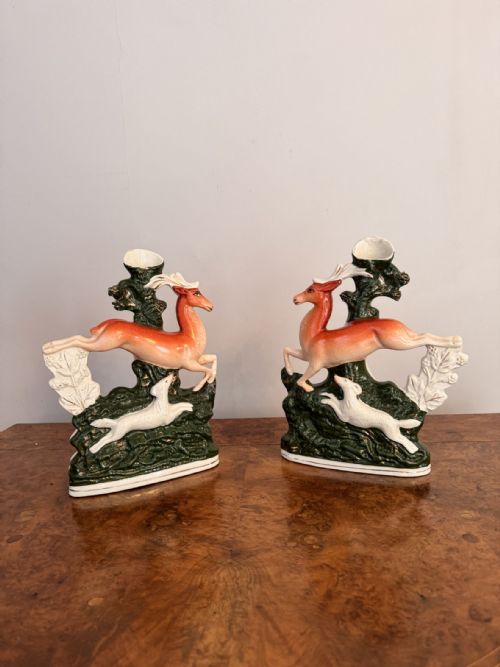
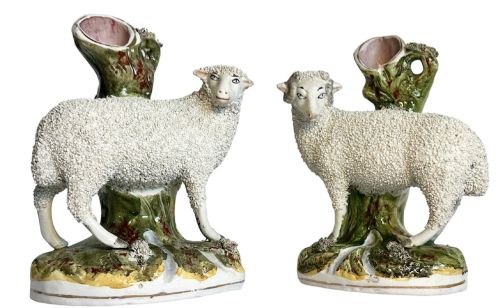
The selections on this page range from Victorian Staffordshire animal spill vases and Edwardian lustre ware to intricate Meiji period Satsuma balusters. Buyers meet both functional vessels and purely decorative urns, ewers, and lidded jars designed to punctuate a room.
Dated examples stretch from the nineteenth century into the early twentieth century, capturing distinct design vocabularies like Art Nouveau, Arts and Crafts, and French Rococo Revival. Each matching pair preserves a unified aesthetic vision intended for symmetrical display.
How they were made
Potters shaped these vessels from ceramic bodies such as earthenware, stoneware, and porcelain, applying liquid clay slips or metallic oxides to create coloured surfaces. Subsequent kiln firings vitrified the body and fused the liquid coat into a protective glassy layer.
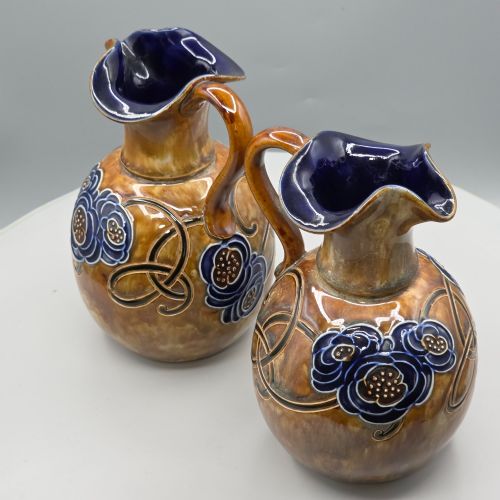
Decorators enriched many pieces using hand-painted enamel colours, cobalt blue underglazes, and applied gold leaf accents or gilt bronze trim. Certain workshops utilised moulded relief patterns, transfer printing, or specialised lustre glazes that shimmered with iridescent metallic sheens.
Styles span from Victorian and French Rococo Revival to Art Nouveau, Arts and Crafts, and the Meiji period.
What varies in quality
The distinction between ordinary production and superior craftsmanship rests in the execution of the painted or modelled details. Master artisans rendered hand-painted motifs with crisp precision and subtle tonal shading, whereas lower tiers relied on repetitive stencilling or hasty application.
The complexity of the glaze chemistry dictates visual depth, separating flat monochrome surfaces from rich crackle effects, multi-layered lustres, or deep cobalt richness. Furthermore, the crispness of moulded relief work and the successful alignment of a matched pair determine artistic standing.
Royal Doulton Lambeth·Fourmaintraux-Courquin·Boch Freres·Walter Slater·Minton·Kato Sanhei
The Pair Glazed Vases Glossary
- Spill Vases
- Small upright vessels designed to hold thin tapers of rolled paper used for lighting candles or fires. These earthenware or porcelain holders often depict domestic animals or rustic figures.
- Faience
- Tinned-glazed earthenware originating in Europe, known for its opaque white surface that accepts painted decoration. French workshops at Desvres and Sceaux produced notable examples.
- Baluster
- A vertical architectural form featuring a rounded, bulging lower body that tapers upward toward the neck. Many ceramic vases adopt this graceful profile for stability and visual balance.
- Lustre Ware
- Pottery finished with a metallic glaze that produces an iridescent sheen when fired in a reduced oxygen environment. English factories utilised this technique to create shimmering rainbow effects.
- Satsuma
- Japanese earthenware pottery distinguished by a finely crackled ivory glaze and elaborate polychrome and gilt decoration. These pieces frequently depict historical figures, landscapes, or butterflies.
Pair Glazed Vases: Frequently Asked Questions
How are matching pairs displayed?
Matched pairs are traditionally placed symmetrically on either side of a central fireplace, mirror, or architectural feature. This arrangement creates visual balance within a room's interior scheme.
Collectors often position them on console tables, cabinets, or matching pedestals to maintain equal visual weight across the space.
What is a spill vase?
Spill vases are small ceramic holders created to store rolled paper spills used to transfer flames from a hearth to candles or pipes. Nineteenth-century examples often feature sculptural animal figures like deer or sheep at the base.
Potters cast these items in earthenware before applying coloured glazes, combining everyday domestic utility with decorative folk art appeal.
How do I identify Satsuma ware?
Satsuma ware is characterised by its distinctive warm ivory or cream earthenware body covered in a network of fine microscopic crackles. Decoration typically incorporates dense hand-painted enamel patterns enhanced with gold leaf.
These pieces frequently originate from the Meiji period and often bear artist signatures or workshop seals on the underside.
What is the difference between stoneware and earthenware?
Earthenware is a porous, opaque ceramic fired at lower temperatures, requiring a glaze to achieve impermeability to liquids. It forms the body for many decorative Victorian and majolica pieces.
Stoneware is fired at significantly higher temperatures until the clay body vitrifies and becomes dense, hard, and naturally waterproof without relying solely on surface glazing.