

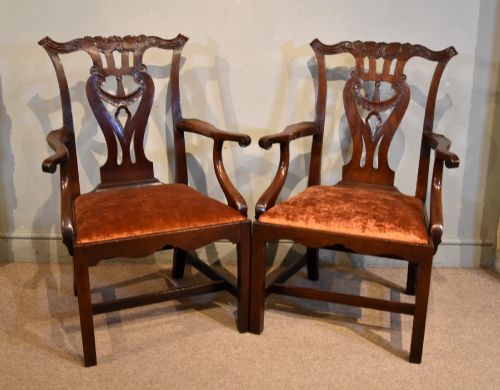
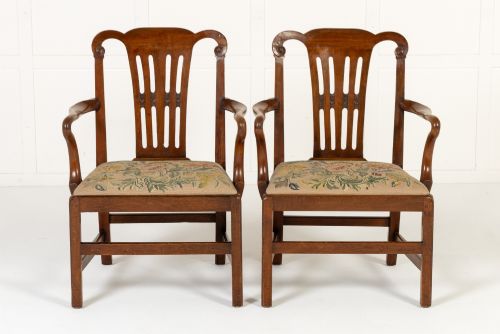
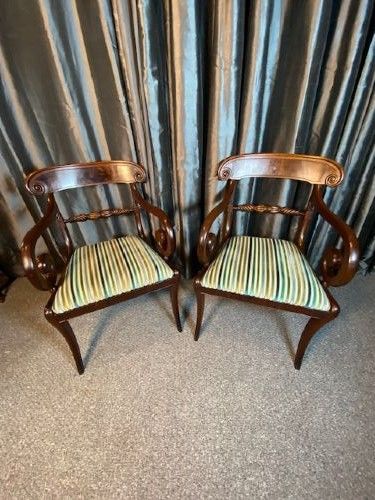
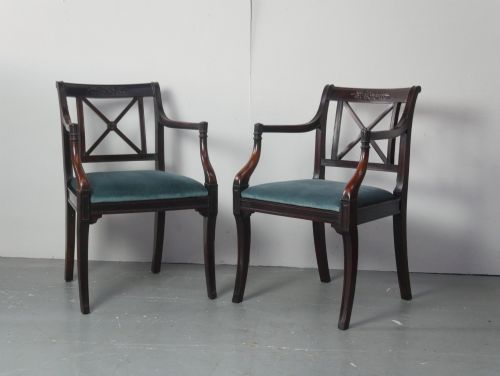
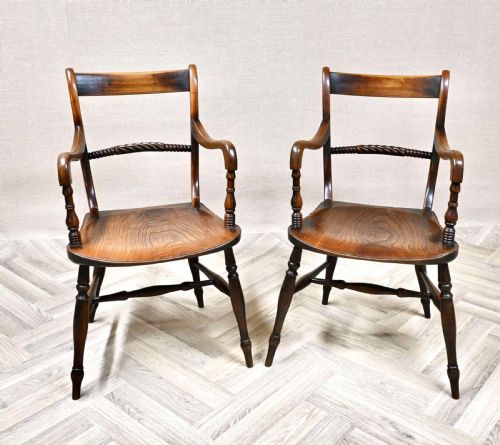
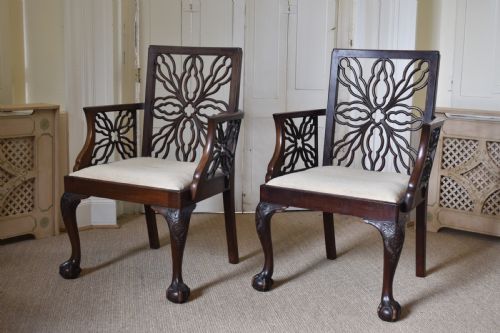
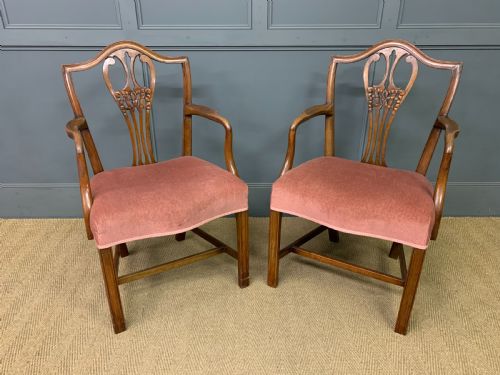
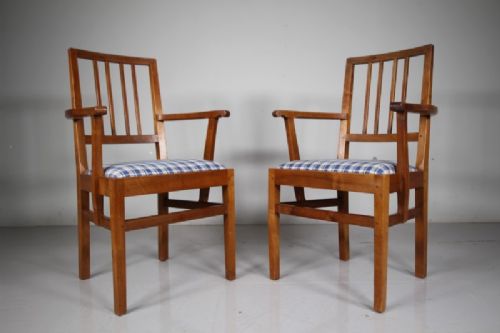
Pair Dining Carvers
When you set out to acquire pair antique dining carvers, you are looking for matched seating designed to sit at the head and foot of a dining table.
Pair Dining Carvers
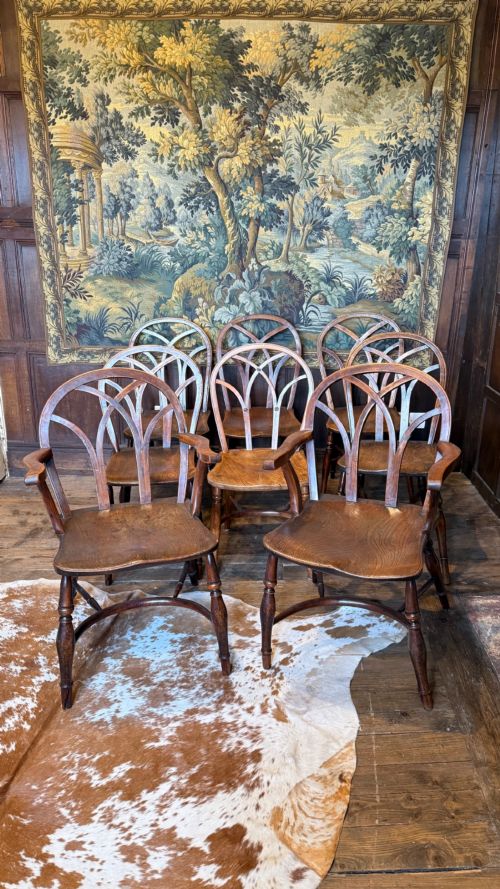
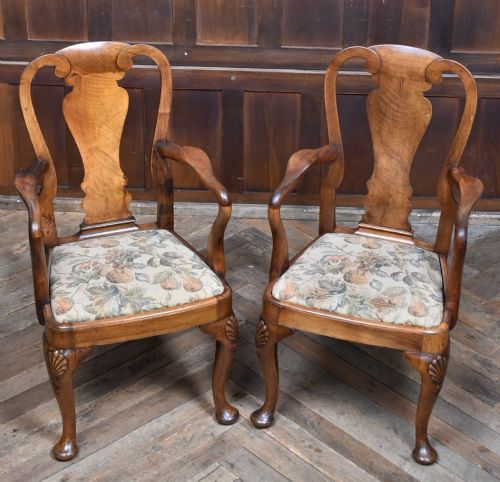
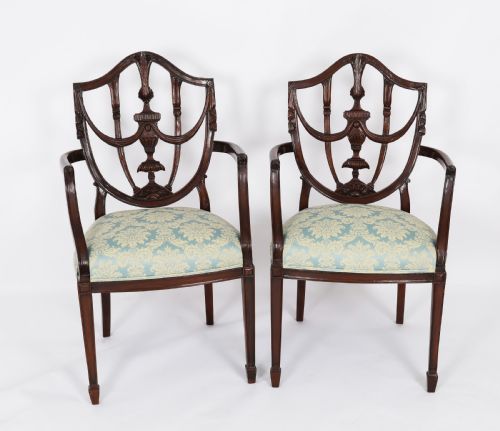
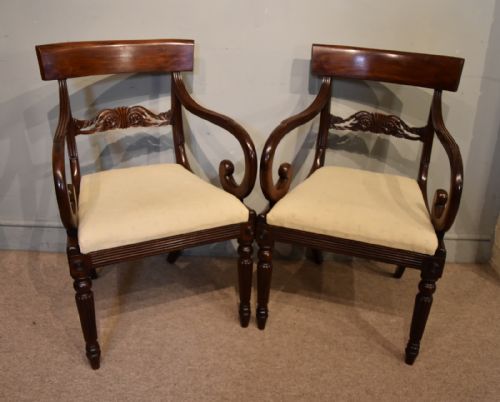
Pair antique dining carvers comprise matched pairs of armchair seating traditionally positioned at the head and foot of a dining table. The selection spans periods from the Georgian and Regency eras through to the Victorian, Edwardian, and 19th Century, alongside later revival styles.
The primary forms appearing on this page include armchairs, dining chairs, carver chairs, dining armchairs, and salon chairs. Materials range widely across mahogany, elm, oak, walnut, fabric, brass, leather, and velvet.
Stylistic influences recorded in the evidence cover Regency, English Country, Chippendale Style, Edwardian, Georgian, Arts & Crafts, George III, and William IV. Buyers meet everything from formal mahogany elbow chairs to country-made elm and ash framed carver chairs.
Materials and construction
Timber selection dictates the character of these carvers, with dense tropical hardwoods like mahogany and walnut dominating formal urban pieces. Country and regional variations rely upon native British timbers such as elm and oak, often chosen for their resilience.
Joinery techniques combine traditional frame construction with decorative embellishments like string inlay, carved details, and caned panels. Upholstered versions utilise materials including leather, velvet, and fabric fixed to seats with traditional studding.
Pair Dining Carvers Retail Price Guide 2026
Typical asking prices for pair dining carvers among the pieces listed under this phrase on Sellingantiques today, from the lower quarter to the upper quarter. They describe what is for sale here now, not the wider market.
Listings feature carvers spanning the 18th century through to the Edwardian period, utilising mahogany, elm, oak, and walnut.
Distinctions in quality
The upper tier of carvers displays crispness in carved mahogany details, superior timber selection with rich figuring, and precise cabinetmaker joinery. Lower tiers tend to show softer timber choices, simpler construction, or later revival detailing.
Proportion and matching also separate standard examples from finer ones, particularly where pairs exhibit consistent patination and balanced open-arm architecture. The integration of original upholstery elements or appropriate period replacement materials further distinguishes the range.
Edward Barnsley·Gillows·William Morris
The Pair Dining Carvers Glossary
- Carver chair
- An armchair designed to match a set of dining chairs, traditionally placed at the ends of a dining table. These pieces feature open arms to accommodate formal dress.
- Elbow chair
- An alternative term for an armchair, often used interchangeably with carver in historical dining furniture contexts. It highlights the supportive armrests intended for dining comfort.
- Chippendale style
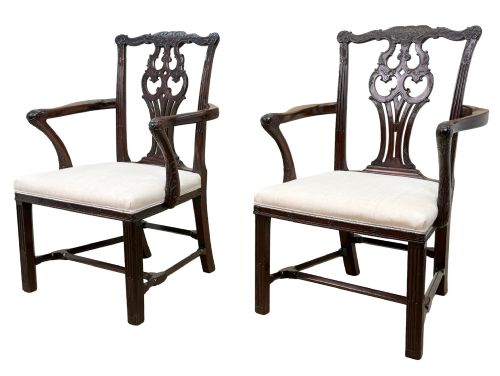
- A design influence derived from the 18th-century cabinetmaker Thomas Chippendale, characterised by interlaced ribbon backs, carved cabriole legs, and claw-and-ball feet. Later revivals frequently emulate these motifs.
- Regency
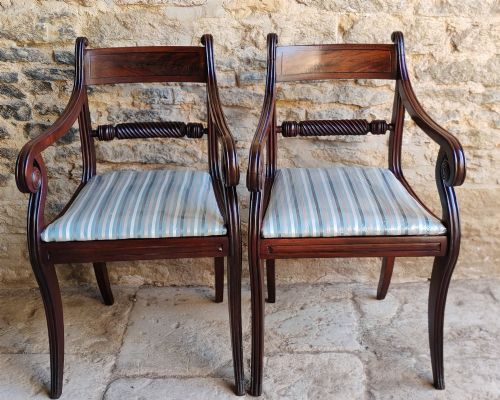
- A style period spanning the early 19th century, drawing inspiration from classical Greek and Roman forms. Pieces often feature saber legs, reeded members, and brass inlay.
- Windsor
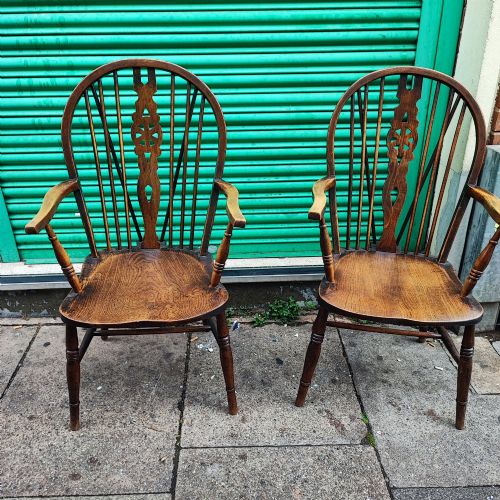
- A traditional chair construction method featuring a solid wooden seat into which the legs and spindled back are wedged and pinned directly. Examples often incorporate bentwood bows and elm or ash frames.
Pair Dining Carvers: Frequently Asked Questions
How do I use carvers at the dining table?
Carvers traditionally occupy the head and foot positions of a dining table, providing wider seats and armrests for the hosts. Their scale requires adequate table clearance to ensure the arms slide comfortably underneath.
When pairing them with standard side chairs, look for matching wood tones, compatible leg styles, and similar seat heights to maintain visual harmony around the dining room.
What is the difference between a carver and an armchair?
While both terms describe seating with armrests, a carver specifically denotes an armchair designed to accompany a set of dining chairs. They are proportioned to fit standard dining table heights while offering the extra width of open arms.
General armchairs often encompass lounge, salon, or desk seating that may not match the strict dining dimensions or pairing requirements of a proper dining carver.
How do I distinguish Georgian from Victorian carvers?
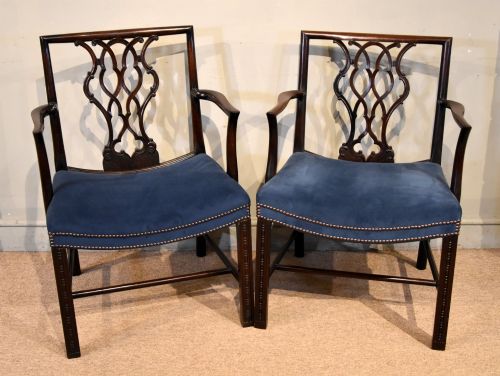
Georgian carvers, particularly those from the George III period, exhibit lighter proportions, refined carved mahogany details, and classical stylistic influences like Hepplewhite or Chippendale backs. Their construction prioritises elegant restraint and slender framing.
Victorian carvers generally present heavier proportions, deeper wood tones such as walnut or darker mahogany, and sturdier frames that reflect the industrial manufacturing shifts and changing domestic fashions of the 19th century.
Are country-made carvers less durable than urban ones?
Country-made carvers utilise sturdy native timbers like elm and ash, constructed by regional craftsmen to withstand rigorous daily use. Their simpler joinery and robust framing often make them exceptionally resilient.
While urban formal pieces prioritised refined mahogany carving and delicate lines, country alternatives focused on functional strength, resulting in sturdy survivals that suit active contemporary dining spaces.