


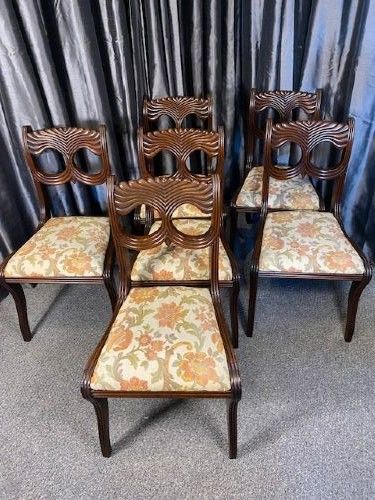


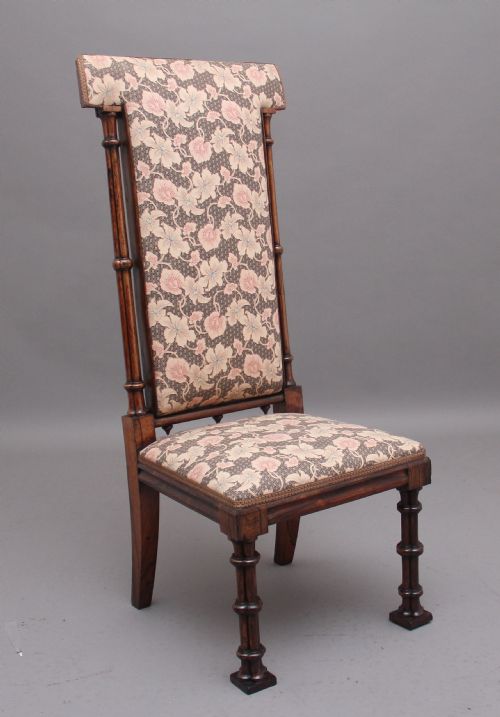


Regency Floral Seat Chairs
Regency floral seat chairs bring together crisp timber framing and needlework upholstery, offering a proper period seat that anchors a room with understated form.
Regency Floral Seat Chairs
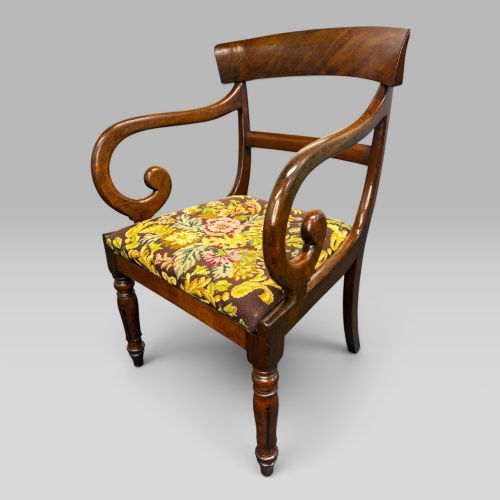
Regency floral seat chairs are classic seating forms rooted in the early nineteenth century, combining architectural timber frames with textile or needlework covers. These pieces arrive in various configurations, from single side chairs and matched sets of dining chairs to substantial armchairs and elbow chairs.
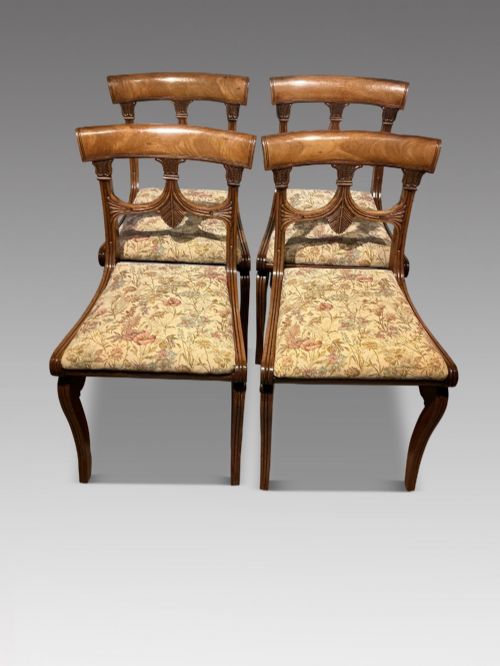
The versions most commonly found here date from the Regency period and the wider nineteenth century, alongside later revivals stretching into the twentieth century. Makers of these pieces utilised established forms like the bar back, sabre leg, and Gothic revival styling to create durable seats for dining rooms, salons, and halls.
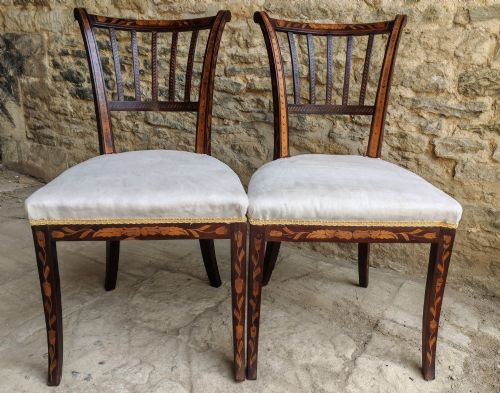
Evidence across the current selection shows a strong preference for mahogany and rosewood structures, frequently paired with wool work, tapestry, or standard fabric upholstery. Buyers encounter single items, pairs, and larger sets designed to suit period interiors or to contrast cleanly within modern spaces.
How they were made
Carpenters and cabinet makers constructed the frames primarily from dense hardwoods like mahogany, walnut, and rosewood, often employing brass details or intricate marquetry inlay for visual contrast. Timber sections were shaped using traditional turning and carving techniques, producing crisp lines on bar backs and sabre legs.
Seats were built up using webbing, stuffing, and traditional canvas foundations before being finished with decorative covers. Needlework, wool work, and tapestry upholstery were hand-applied or stitched directly to accommodate the specific dimensions of each wooden frame.
Regency Floral Seat Chairs Retail Price Guide 2026
Typical asking prices for regency floral seat chairs among the pieces listed under this phrase on Sellingantiques today, from the lower quarter to the upper quarter. They describe what is for sale here now, not the wider market.
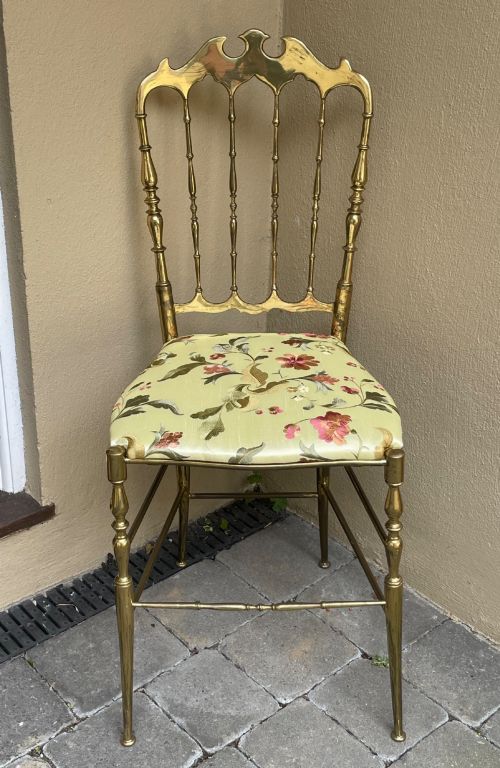
Materials documented across the available selection include solid mahogany, rosewood, walnut, polished brass, and various forms of tapestry and wool work upholstery.
What varies in quality
The distinction between standard examples and superior pieces rests on timber selection and the crispness of the carving. Dense, well-figured mahogany or rosewood with tight grain structures yields a sturdier frame than softer woods.
Upholstery execution and needlework density define the upper tier of these chairs. Finely worked tapestry and wool work demonstrate greater skill and durability than plain fabric covers, matching the structural integrity of the underlying woodwork.
The Regency Floral Seat Chairs Glossary
- Regency
- A design period spanning the early nineteenth century, characterised by classical revival motifs, elegant proportions, and influenced by ancient Greek and Roman forms.
- Sabre leg
- A curved furniture leg that tapers toward the foot, spreading outward from the seat rail in imitation of a cavalry sword.
- Marquetry
- The art and craft of applying pieces of veneer to a structure to form decorative patterns, pictures, or designs.
- Needlework
- Decorative stitching executed on canvas or other textile grounds, frequently utilised for durable historical chair seat covers.
- Bar back
- A chair back featuring a horizontal splat or wooden rail shaped like a flat bar, common in nineteenth-century dining seating.
Regency Floral Seat Chairs: Frequently Asked Questions
Are these chairs suitable for daily dining?
Most pieces from this group function well for regular seating provided the frame joints remain tight and secure.
Buyers often select sets of six or pairs specifically for dining tables, though checking the seat height and depth relative to your table is advisable.
How do I identify a true Regency period piece?
Authentic items from the early nineteenth century display specific timber patination, traditional joinery methods, and proportions typical of the Regency style.
Comparing the listed materials, such as solid mahogany or rosewood, against later nineteenth-century or twentieth-century revivals helps clarify the manufacturing date.
What is the difference between side chairs and armchairs here?
Side chairs are built without arms, designed primarily for dining tables, side placement in halls, or bedroom use.
Armchairs include structural elbow supports or enclosed arms, offering a broader seating area suited for salons and studies.
How should I care for the upholstery?
Wool work and tapestry seats require gentle treatment, avoiding direct sunlight to prevent textile fading and fibre degradation.
Periodic professional cleaning preserves the historical integrity of needlework panels without damaging the underlying stuffing and frame.