

Painted Wall Table
These painted wall table pieces bring decorative colour and period presence to a room, functioning as architectural consoles fastened to the wall.
Painted Wall Table
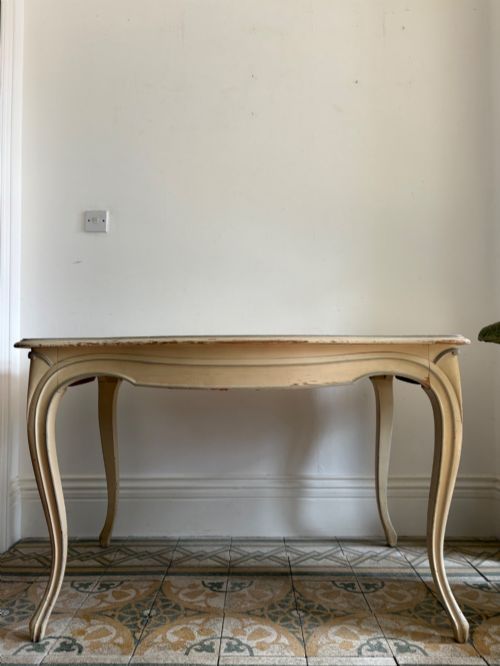
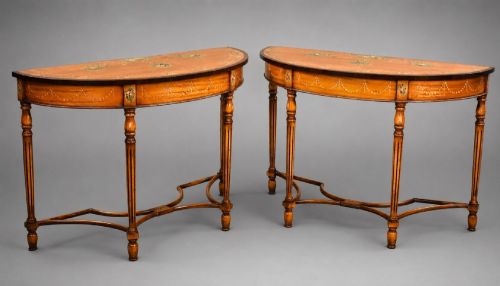
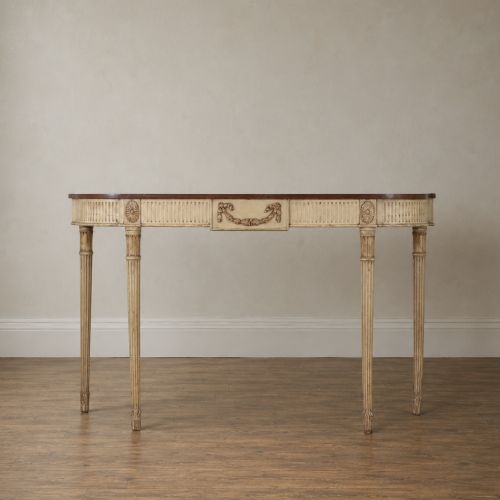
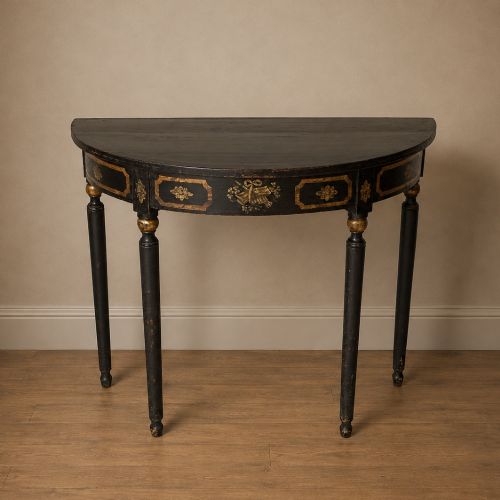
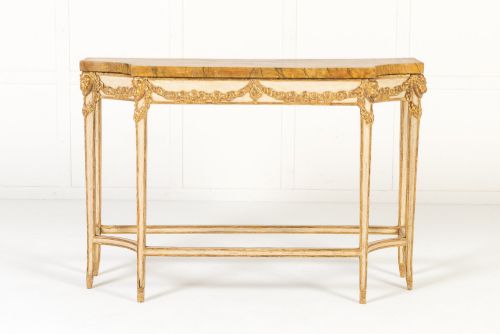
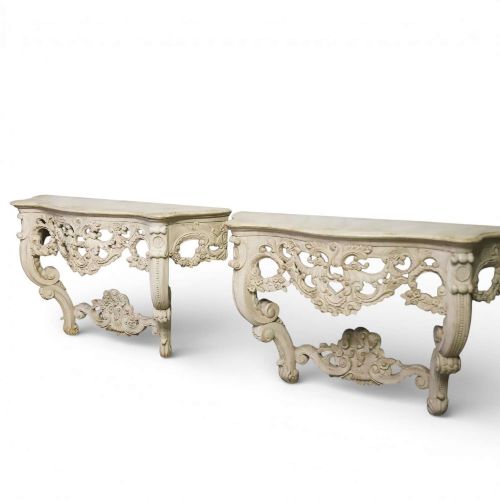
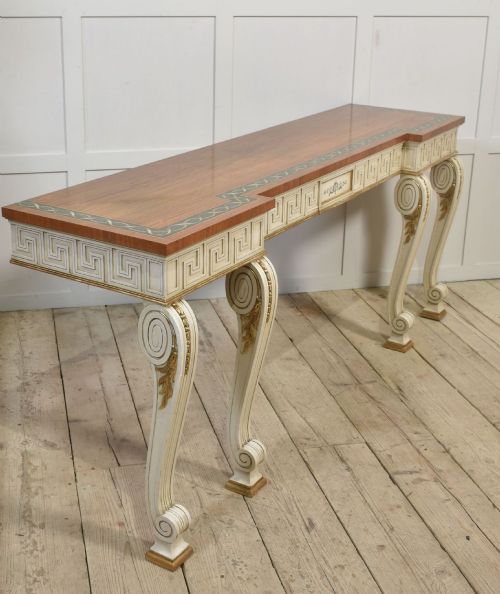
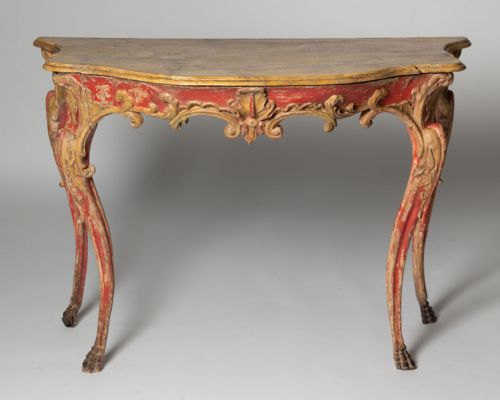
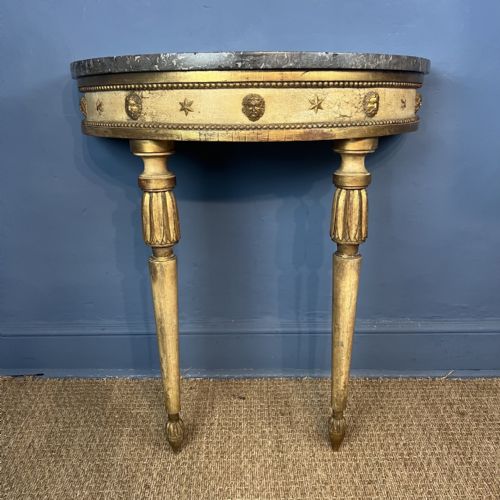
A painted wall table is primarily a console table designed to stand against a wall, frequently supported by brackets or front legs while securing directly to the masonry or panelling behind it. The evidence shows these pieces appearing in forms such as demi-lune hall tables, pier console tables, and serving tables from the eighteenth, nineteenth, and early twentieth centuries.
The styles recorded span from Gustavian and Italian Rococo to French Neoclassical, English Georgian, and Sheraton Revival. Buyers looking at this page will most commonly encounter nineteenth-century examples and early twentieth-century French or Swedish interpretations finished in antique white, cream paint, or parcel gilt.
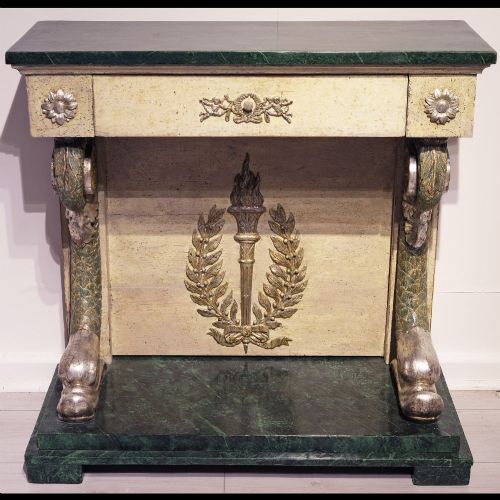
Beyond standard console tables, the selection incorporates regional variations such as Swedish folk-made designs and Italian faux porphyry surfaces. These items serve to anchor a room visually, often positioned beneath pier mirrors or paintings.
Materials and construction
The foundational carcase is constructed from wood, including satinwood and carved timber, shaped into straight or demi-lune formats with cabriole or tapered legs. Artisans applied layers of gesso and paint to create smooth or distressed finishes, frequently incorporating gold leaf and parcel gilt detailing to highlight carved motifs.
Many high-status examples integrate heavy stone elements, combining painted wooden frames with inset marble or specimen marble tops. Regional makers also utilised hand-carved elements, applying antique white finishes and faux porphyry effects to emulate luxurious materials.
The listings span from the eighteenth century to the mid-twentieth century, featuring Italian, French, Swedish, and English origins.
Judging quality in a painted wall table
Quality depends upon the harmony of the proportion and the integrity of the original surface decoration. Pieces featuring hand-carved woodwork, layered gesso, and genuine parcel gilding demonstrate a higher grade of craftsmanship than simpler commercial adaptations.
The distinction also lies in the execution of the painted finish and the selection of the top. Tables retaining their early or original paint schemes alongside fitted marble or specimen marble slabs represent the upper tier of the range.
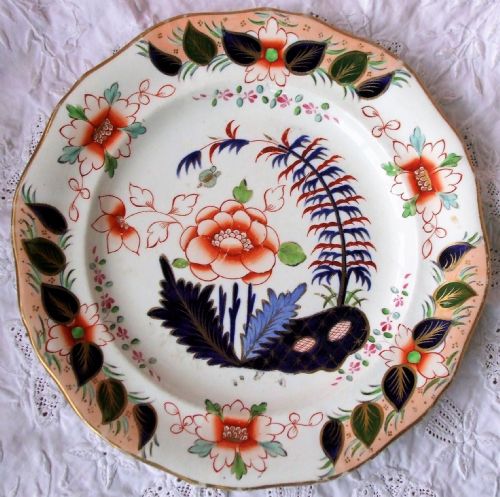
John Davenport of Longport
The Painted Wall Table Glossary
- Console table
- A table designed to be fixed against a wall, often supported by front legs and secured with wall brackets.
- Demi-lune
- A half-moon shape characteristic of many eighteenth and nineteenth-century console and serving tables.
- Gesso
- A plaster-like mixture applied to wood as a smooth base for painting or gilding.
- Parcel gilt
- Portions of an object highlighted with gold leaf over a painted or wood ground.
- Specimen marble
- A decorative top composed of various coloured marbles arranged in geometric or mosaic patterns.
Painted Wall Table: Frequently Asked Questions
Were these tables used in specific rooms?
Historically, console tables occupied prominent reception rooms, grand hallways, and drawing rooms. They served as decorative surfaces beneath large pier mirrors or paintings.
In modern interiors, they function effectively in entrance halls and narrow spaces where depth is restricted.
How can I tell a Gustavian table from an English Georgian one?
Gustavian pieces typically display lighter Scandinavian colour palettes, including cream and antique white finishes, with restrained neoclassical carving. English Georgian examples often incorporate rich timber grains, satinwood, and inlay work.
Regional proportions and decorative motifs provide the clearest indicator of origin.
How should I clean a painted and gilt surface?
Painted and gilt surfaces require gentle maintenance using a dry, soft microfiber cloth to remove dust. Moisture and modern chemical cleaners can damage aged gesso and lift fragile gold leaf.
Preserving the original painted patina is essential for maintaining the character of the piece.