

Painted Top Tripod Table
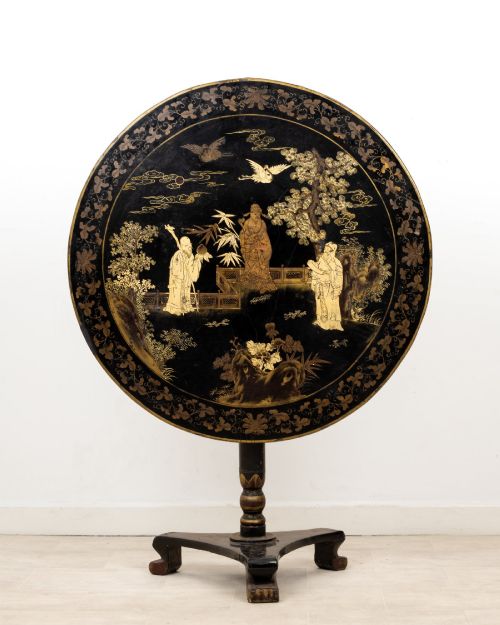
A painted top tripod table brings surface decoration and three-legged portability into a room, spanning Victorian floral motifs to Chinese lacquer.
Painted Top Tripod Table
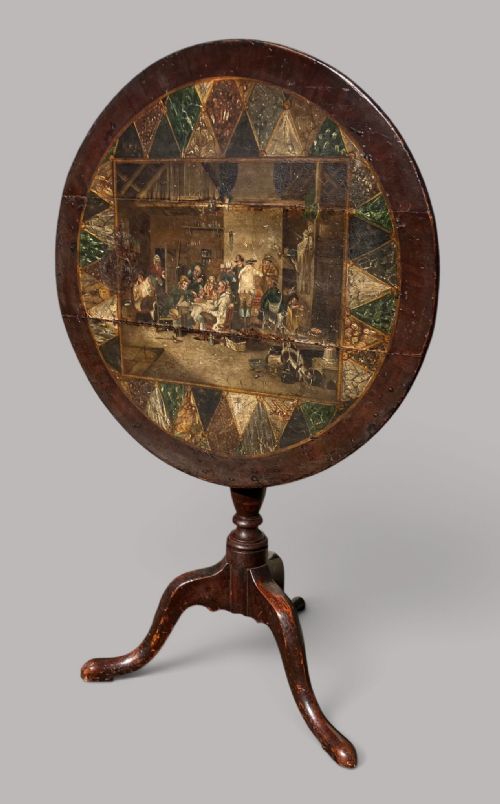
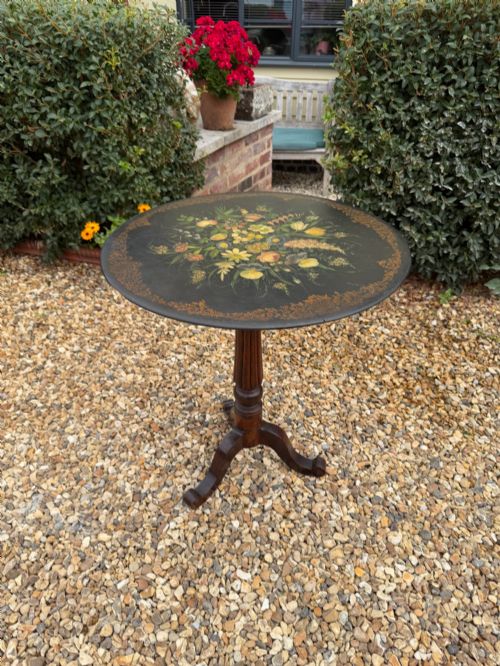
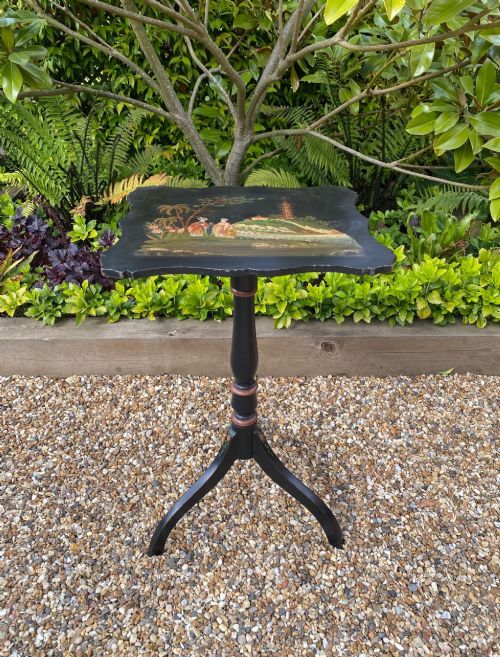
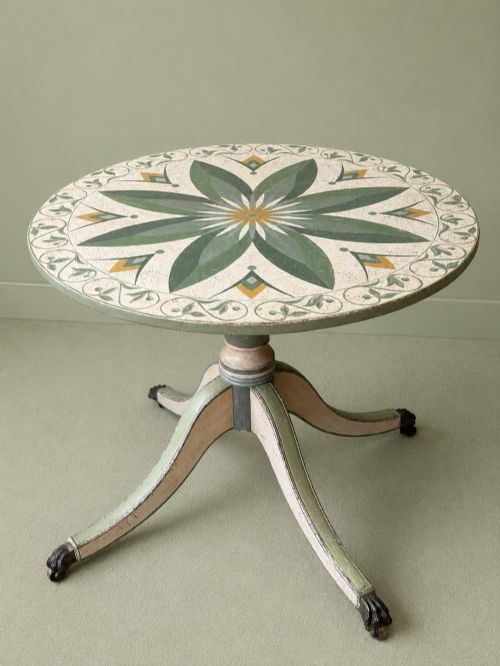
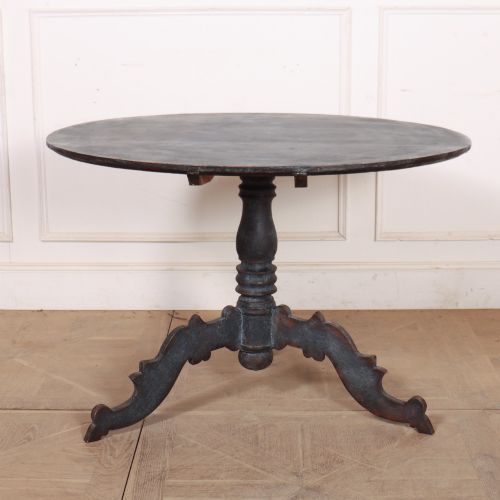
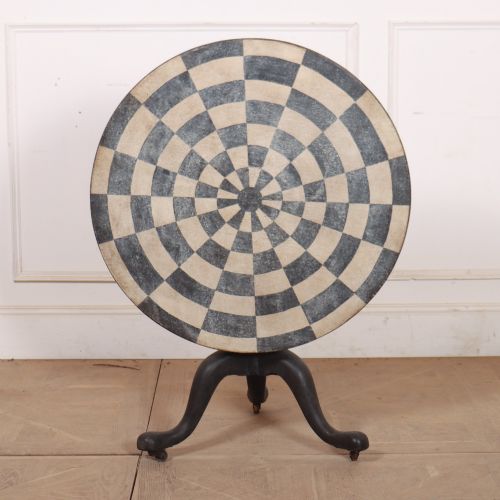
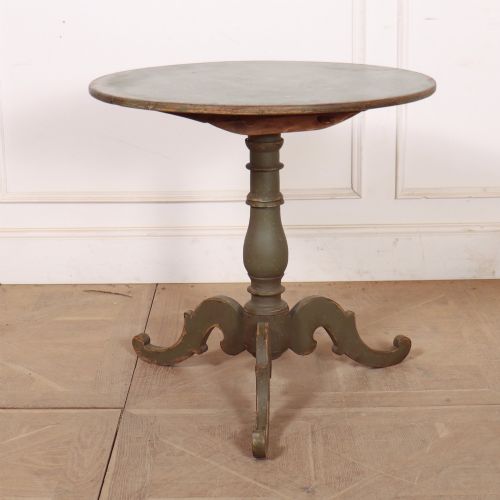
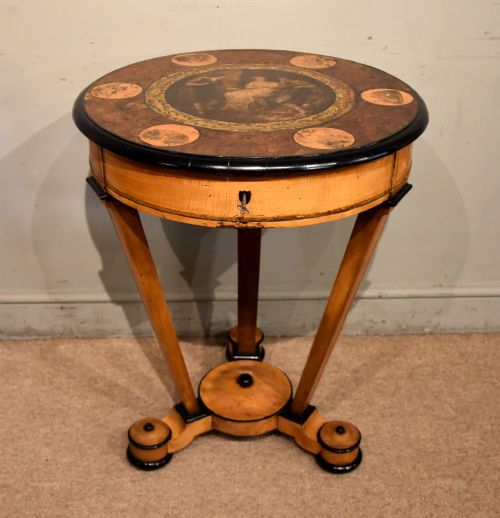
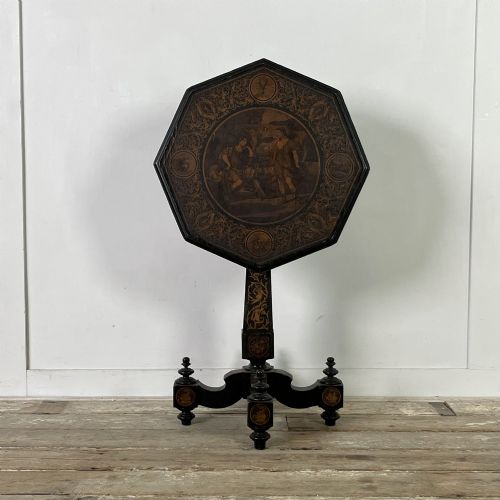
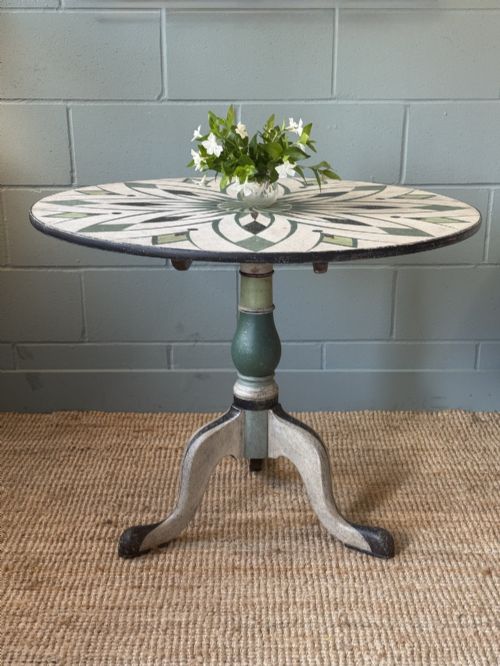
A painted top tripod table stands on three legs supporting a decorated surface, appearing frequently in Victorian and nineteenth century iterations across this selection. These pieces function as occasional, side, tilt top, and lamp tables, designed for flexible placement in a sitting room or hallway.
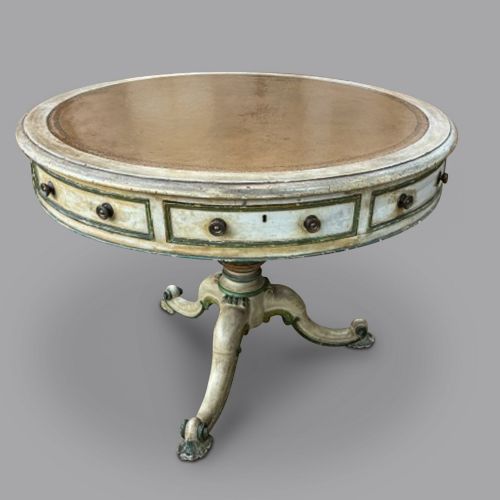
The evidence shows forms ranging from small occasional tables and wine tables to larger centre tables and tilt top dining tables. Swedish and English examples predominate, alongside French, Italian, and Chinese pieces.
Makers and workshops produced these tables in various regional vernaculars, incorporating styles such as Chinoiserie, Regency, Biedermeier, and Scandinavian country. The painted top tripod table remains a versatile antique type defined by its central pedestal and surface ornamentation.
Materials and construction
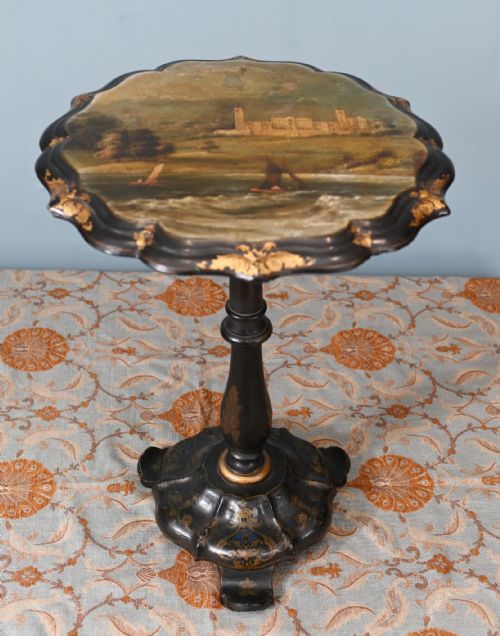
Wood serves as the primary substrate, incorporating pine, mahogany, and satinwood beneath decorative finishes. Artisans applied paint, lacquer, and japanning directly to timber surfaces, occasionally pairing them with brass accents, mother of pearl inlay, or marble tops.
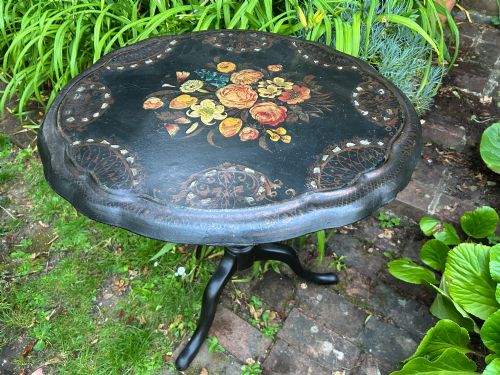
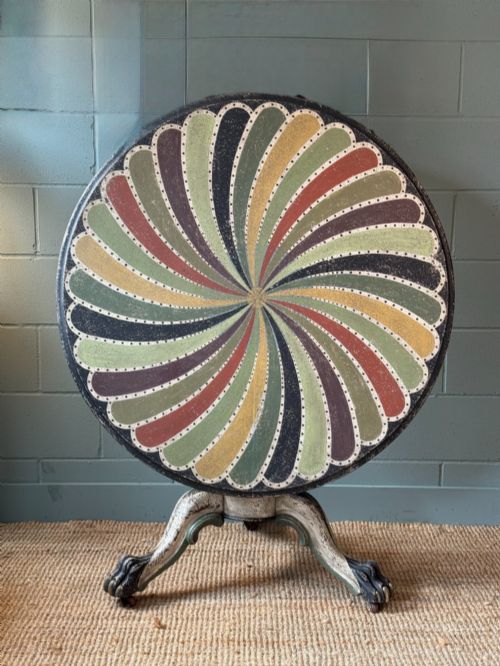
Surface decoration relies on hand-painted botanical or figurative designs, ink work, and parcel silvering. Many nineteenth century tables utilise a tilt top mechanism, allowing the decorated surface to fold vertically when not in use.
Listings include nineteenth century, Victorian, and eighteenth century periods, utilising paint, wood, lacquer, gilt, brass, and pine.
Distinctions in quality
Quality rests in the execution of the painted surface and the stability of the tripod base. Fine hand-painted detail, intricate Chinoiserie lacquer, or delicate ink work elevates a piece above simpler floral applications.
The structural integrity of the central pillar and the smoothness of any tilt top mechanism demonstrate the original cabinet maker's skill. Period accuracy in the paintwork, whether original or later decoration, shapes the character of each piece.
The Painted Top Tripod Table Glossary
- Tripod table
- A small table supported by a pillar on three legs. This format allows the table to stand steady on uneven floors.
- Tilt top table
- A table with a hinged top that pivots to a vertical position. This design saved space when the table was stored against a wall.
- Japanning
- A European imitation of East Asian lacquerwork using resin varnishes. Artisans applied this technique to simulate oriental surfaces on furniture.
- Chinoiserie
- European artistic style reflecting Chinese motifs and techniques. It appears frequently on nineteenth century lacquered furniture.
- Gueridon
- A small French table supported by a column or figures. These pieces often feature painted or marble tops.
Painted Top Tripod Table: Frequently Asked Questions
How do I use a tilt top table?
Release the catch beneath the top to pivot the surface vertically against the central column. This allows the table to rest flat against a wall when not in use.
Return the top to the horizontal position and secure the catch before placing items on the surface.
What is the difference between a side table and a centre table?
A side table typically stands against a wall with one finished side or back. A centre table is designed to be viewed from all angles in the middle of a room.
Both forms appear with painted tops and tripod or pedestal bases in nineteenth century interiors.
How do I care for a painted table top?
Keep painted and lacquered surfaces away from direct sunlight and heat sources to prevent cracking. Dust gently with a dry cloth and avoid chemical polishes.
Use coasters under glasses and mats under hot or damp objects to protect the historic paintwork.
Are painted floral designs always original?
Some nineteenth century tables feature later painted floral or petal designs added over older timber surfaces. Close inspection of the pigment and wear patterns helps distinguish original decoration from subsequent embellishment.
Both period-original and later painted surfaces appear across surviving examples.