
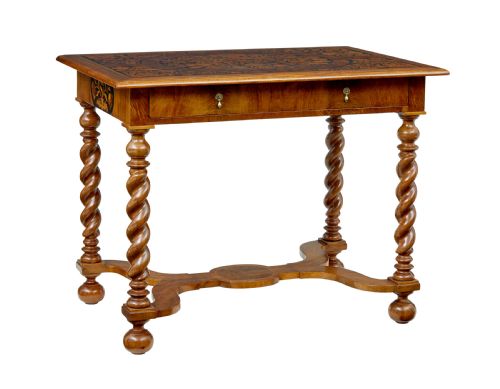
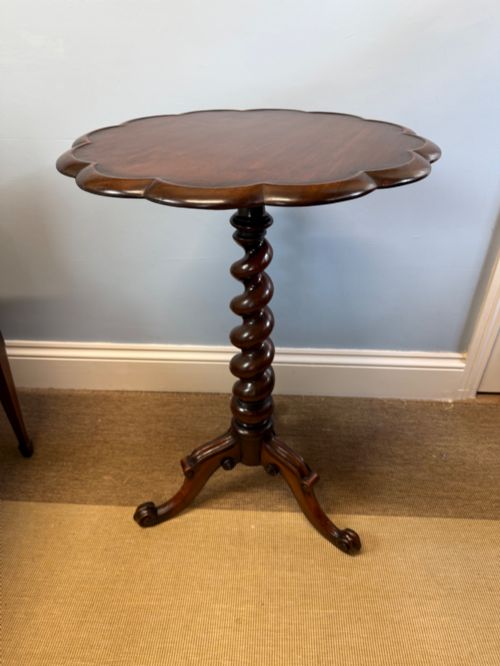
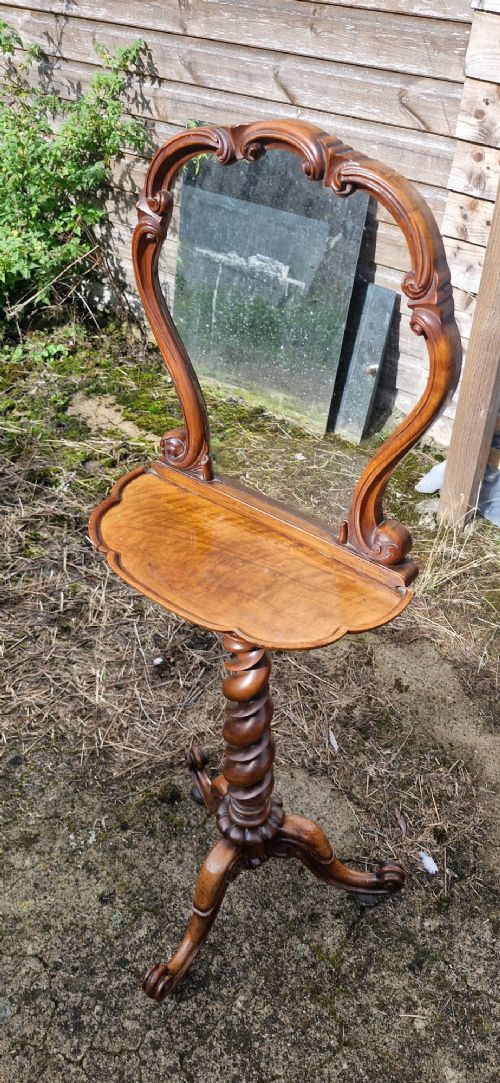
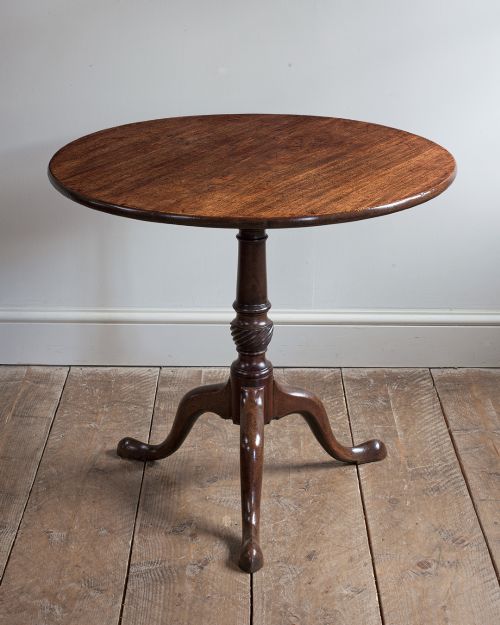
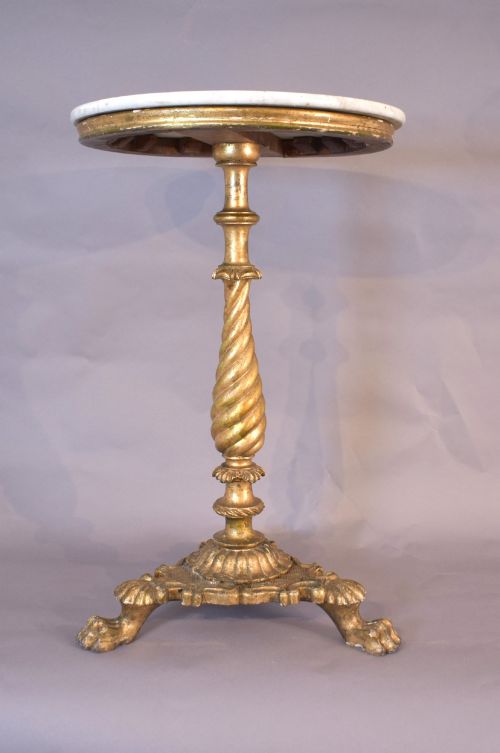
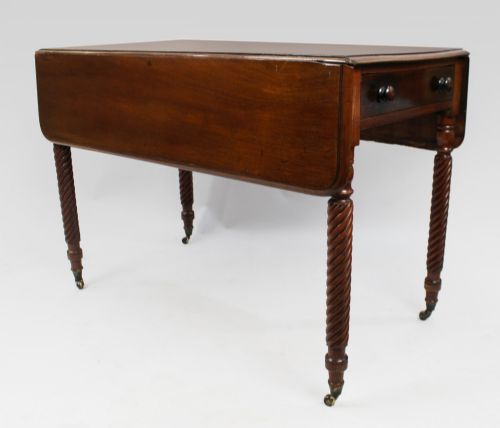
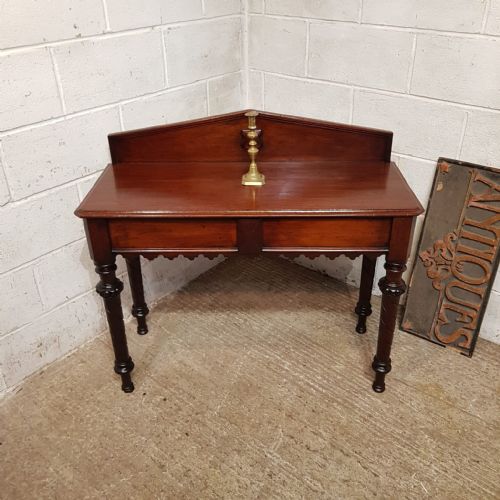


Spiral Carved Side Table
A spiral carved side table brings architectural turning and rich timber grain to a room, offering a sturdy surface for lamps and small objects.
Spiral Carved Side Table
A spiral carved side table appears in forms such as occasional tables, tripod lamp tables, and console tables across various historic periods. Buyers seek these pieces for their distinctive twisted stems and practical proportions.
The selection here includes examples from the eighteenth and nineteenth centuries, spanning Georgian, Regency, and Victorian eras. Mahogany and walnut dominate the offerings, alongside occasional rosewood and painted finishes.
How they were made
Cabinet makers utilised dense hardwoods like mahogany and walnut, turning stems on a lathe to create crisp spiral or bobbin profiles. Tops frequently feature figured timber veneers, solid mahogany boards, or inlaid boxwood stringing.
Joinery techniques include traditional mortise and tenon construction for frames, alongside sturdy tripod bases secured with central blocks. Brass fittings and glass elements appear on specific display and wine table variants.
Listings span the eighteenth, nineteenth, and early twentieth centuries, featuring mahogany, burr walnut, rosewood, and painted finishes.
What varies in quality
The crispness and depth of the timber turning dictate the visual strength of the piece, with sharper spiral fluting marking superior craftsmanship. Timber selection also matters, as highly figured burr walnut or rich mahogany elevate the visual impact.
Proportion and structural integrity separate standard utility pieces from finer examples, particularly in tripod bases where leg placement affects overall balance. Original surface patination and minimal timber replacement preserve the historical character of the furniture.
The Spiral Carved Side Table Glossary
- Tripod table
- A small freestanding table supported by a central pillar resting on three legs. This form gained popularity during the Georgian period for tea and occasional use.
- Pembroke table
- A drop-leaf table with hinged flaps on either side, introduced in the eighteenth century. It typically includes a single drawer and slender legs.
- Sutherland table
- A narrow drop-leaf table where the leaves fold down almost vertically, supported by swinging gate legs. The Victorian era favoured this design for compact spaces.
- Boxwood-strung
- Inlaid with narrow strips of pale boxwood to create contrasting geometric borders on table tops or drawer fronts. This detail appears frequently on Regency furniture.
Spiral Carved Side Table: Frequently Asked Questions
How do I clean mahogany table tops?
Dust the surface regularly with a soft, dry cloth to prevent dirt accumulation. Avoid harsh chemical sprays that strip historic finishes.
Apply a traditional beeswax polish occasionally to nourish the timber and maintain a soft sheen.
Are these tables sturdy enough for daily use?
Most examples are constructed from dense hardwoods like mahogany or walnut designed for practical household service. Tripod bases require level flooring to remain stable.
Avoid placing excessive weight on drop leaves or tilting mechanisms to preserve the original joints.
How do I identify a Victorian example?
Victorian pieces often utilise burr walnut or dark mahogany, featuring heavier proportions and machine-assisted turning techniques. Details like Sutherland frames and inlaid walnut tops frequently point to this era.
Compare the timber colour and construction methods with dated pieces from the same mid-nineteenth-century window.