
Carved Column Table
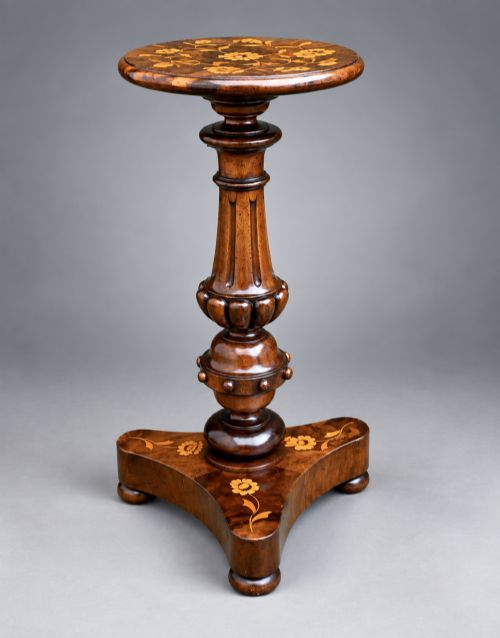
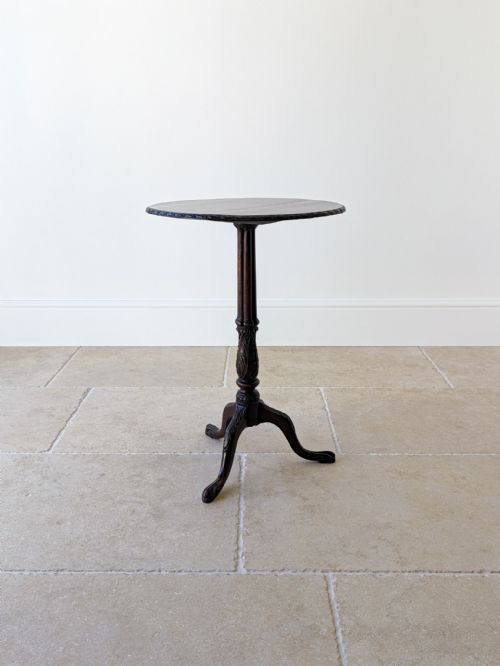
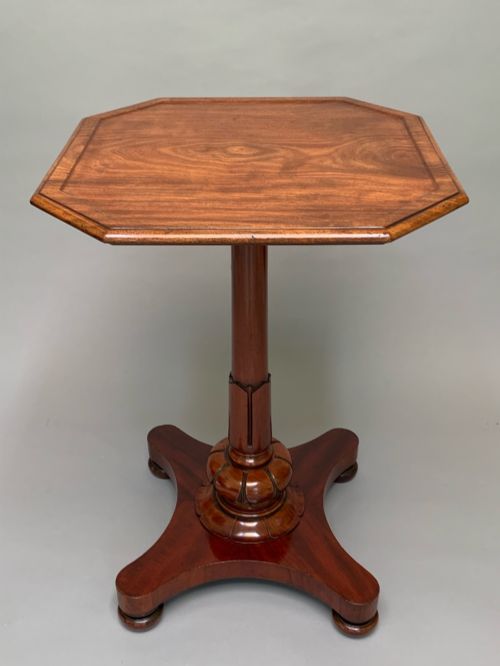
A carved column table brings architectural presence and distinct vertical proportion to a room through turned and sculpted wooden pedestals.
Carved Column Table
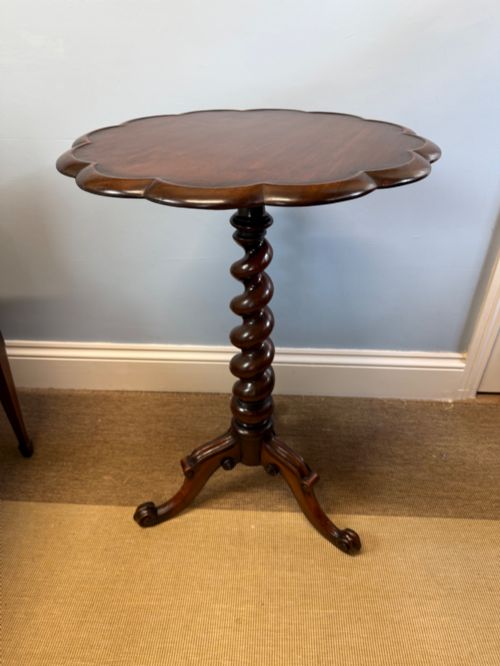
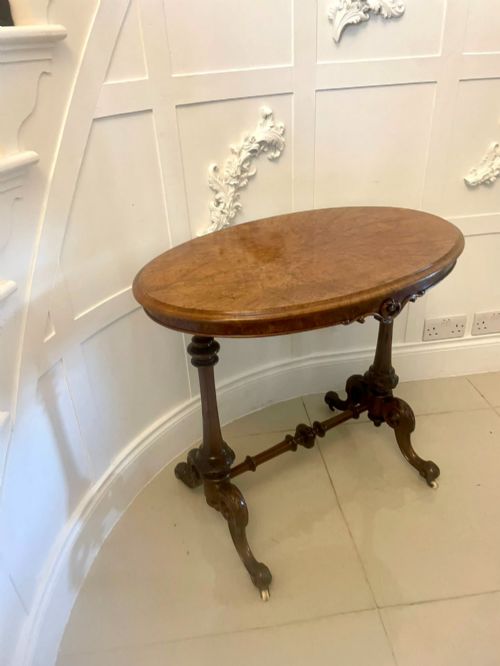
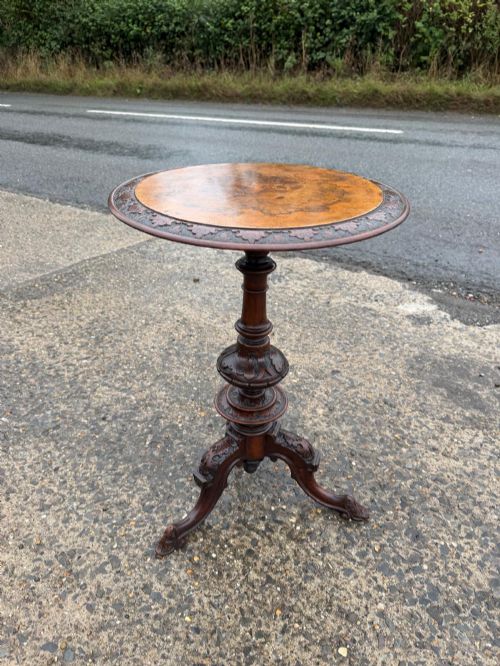
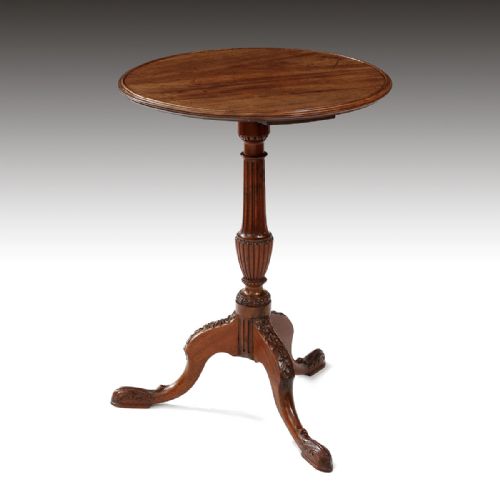
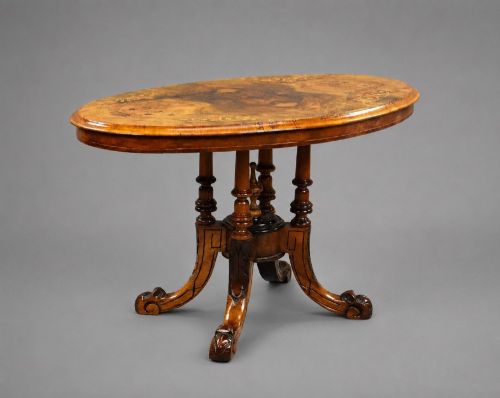
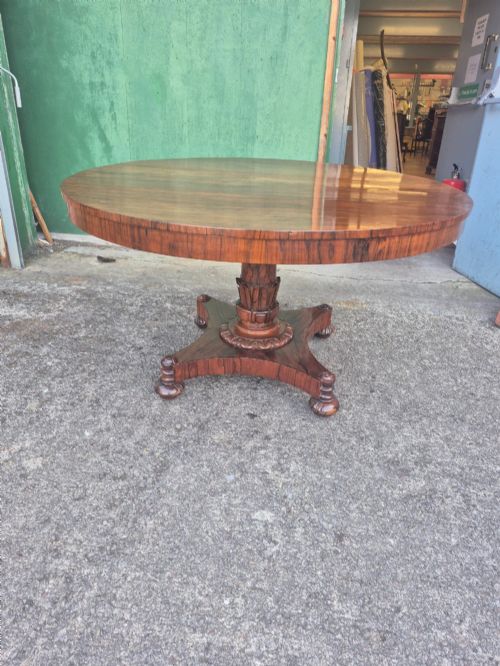
A carved column table centres on a central turned, fluted, or sculpted pillar supporting a surface, spanning forms from occasional and wine tables to breakfast and centre dining tables. These pieces emerge across the 18th and 19th centuries, drawing on Georgian, Regency, Victorian, and revival idioms.
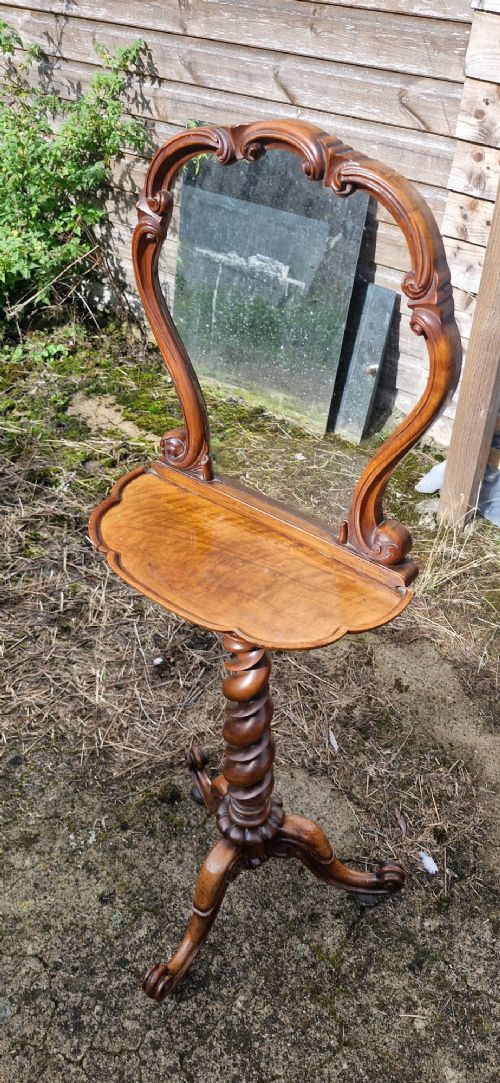
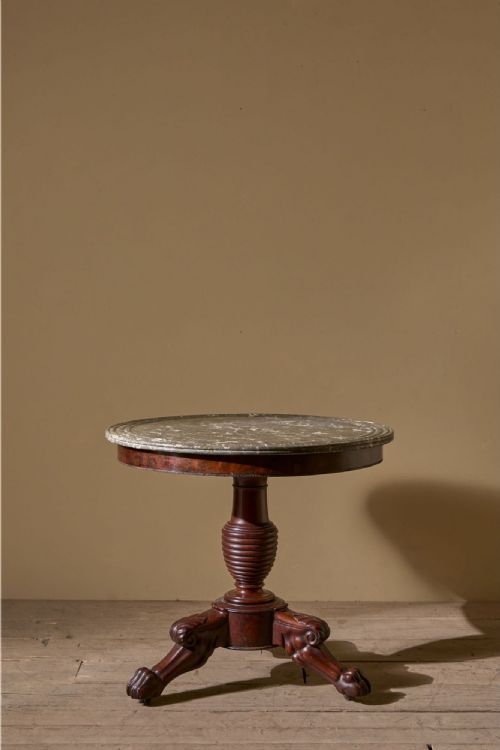
Occasional tables, tripod wine tables, and lamp tables dominate the selection, often featuring circular or shaped tops resting on sturdy pedestals. Heavier dining and centre tables appear alongside smaller stands, incorporating architectural columns into domestic furniture.
Materials and construction
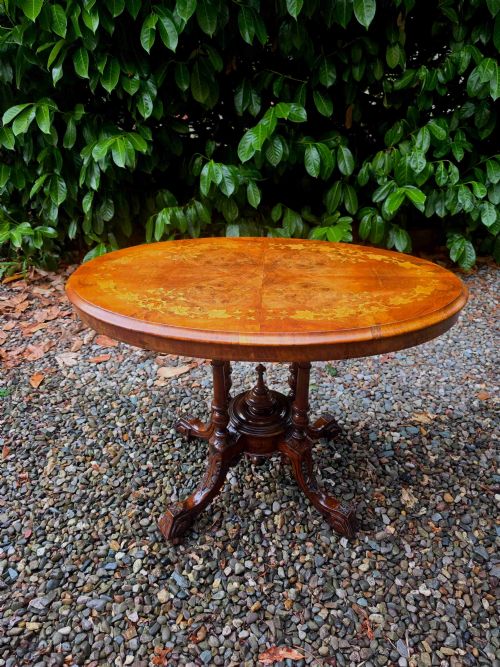
Timbers such as mahogany, oak, walnut, and rosewood form the structural foundation, frequently paired with burr wood veneers on the table tops. Solid woods allow artisans to carve deep relief patterns, fluting, and figural details directly into the central pillars and tripod bases.
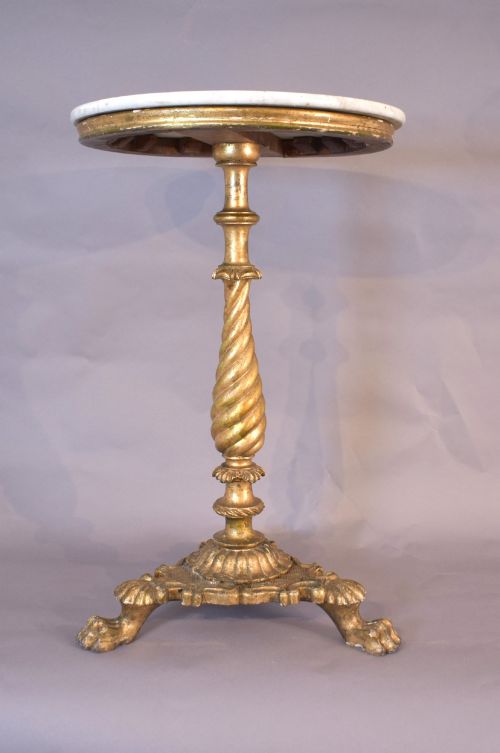
Secondary materials like marble insert into table tops or serve as lamp bases, while brass fittings, gilt wood finishes, and boxwood stringing add decorative contrast. Joinery combines traditional turning on a lathe with hand-carved ornamentation on the capitals and pedestals.
A cunning tilt-top mechanism lets your table double as room art when resting flat against the wall.
Distinctions in quality
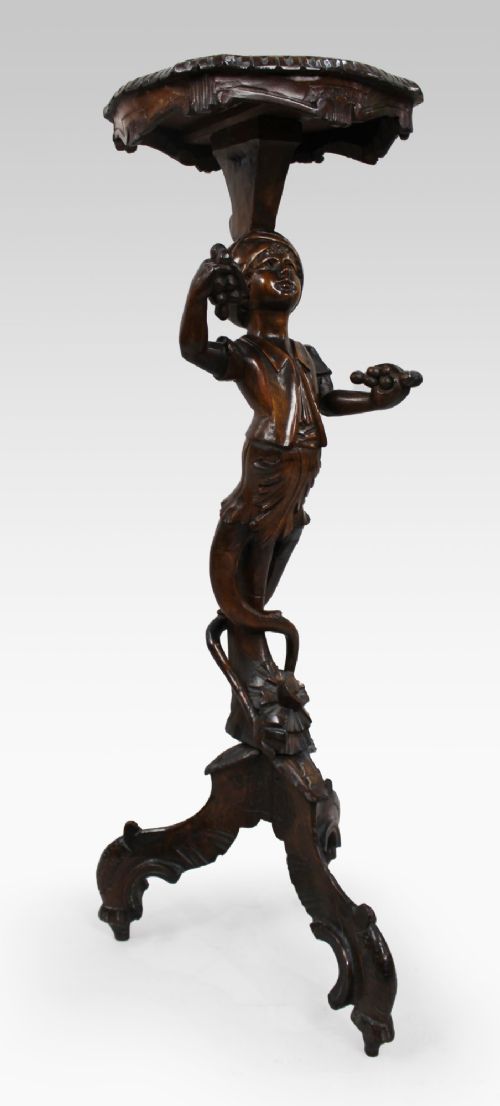
The crispness and depth of the hand-carving on the central column distinguish standard production from finer workshop output. Crisp fluting, well-defined acanthus leaves, and meticulously formed figural elements show superior artisan control.
Timber selection dictates the visual depth of the piece, where rich burr walnut or figured mahogany tops with harmonious grain patterns elevate the overall design. Stable tripod or quadruple base construction ensures the central column bears weight securely without wobble.
Gillow
The Carved Column Table Glossary
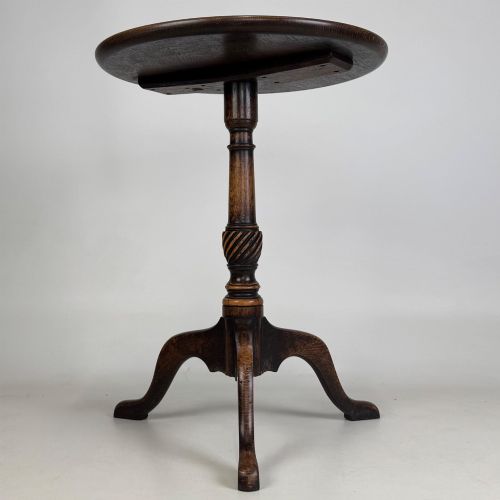
- Tripod base
- A three-legged support system commonly found on wine and occasional tables to ensure stability on uneven floors. These legs often terminate in pad feet or scroll details.
- Tilt top
- A mechanism allowing the table top to pivot into a vertical position for storage against a wall when not in use. It relies on a birdcage or catch mechanism beneath the surface.
- Fluted column
- A vertical pillar decorated with parallel shallow grooves carved along its length. This classical architectural feature derives from ancient Greek and Roman stone building traditions.
- Snap-top
- An alternative term for a tilt-top table where a spring catch locks the horizontal surface securely onto the pillar. It enables quick folding of the table top.
- Gueridon
- A small ornamental stand or table, typically round and supported by a single central column or figural pedestal. The form originated in seventeenth-century France.
Carved Column Table: Frequently Asked Questions
What is a carved column table used for?
These tables serve primarily as occasional surfaces for lamps, drinks, or decorative objects, taking up minimal floor space thanks to their central pedestal design.
Larger versions function as breakfast or centre tables, providing a solid platform with generous knee room around the carved pillar.
How do I identify a Victorian carved column table?
Victorian examples frequently utilise dark dense timbers like mahogany and walnut, often featuring robust tripod bases and heavy carved ornamentation on the central pillar.
Details such as burr wood veneers and applied mouldings help separate these mid-to-late 19th-century pieces from lighter Georgian designs.
Can I use a wine table for a lamp?
Wine tables with sturdy tripod bases and solid tops accommodate small table lamps securely, provided the weight is balanced over the centre.
Their compact footprint makes them suitable for corners or beside armchairs where space is limited.