
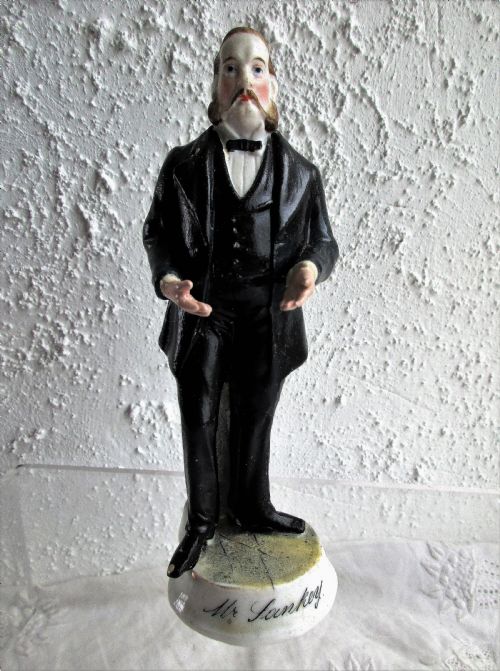
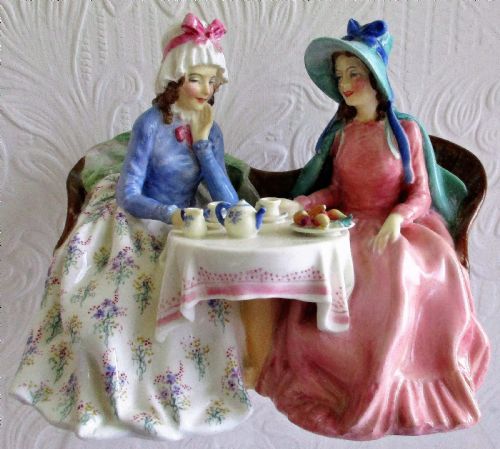
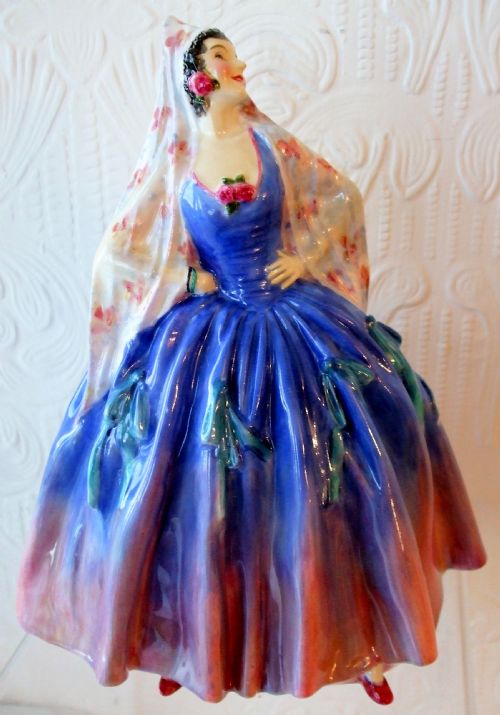


Painted Porcelain Statuettes
Painted porcelain statuettes bring lively figures and animals to the cabinet shelf, shaped in soft and hard paste and finished with enamel and gilt.
Painted Porcelain Statuettes
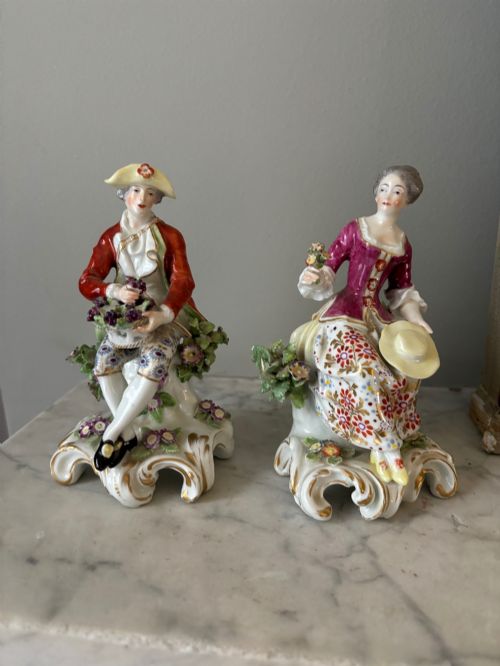
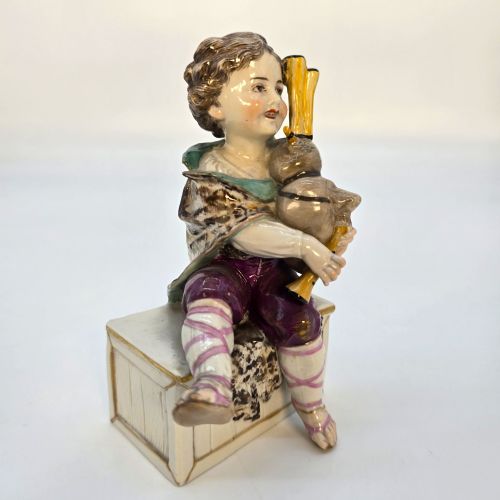
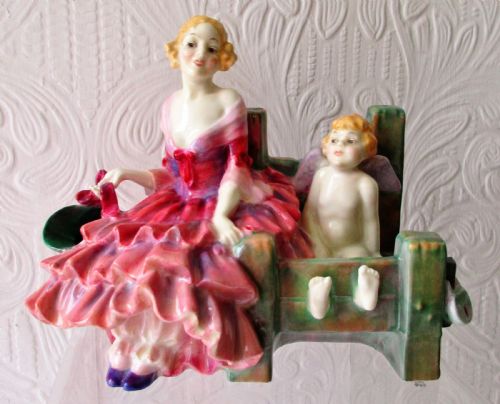
Painted porcelain statuettes encompass figurines, pairs, and groups depicting human characters, animals, and putti across several centuries of ceramic production. A buyer exploring this category encounters forms ranging from eighteenth-century Meissen street traders and Chelsea garden figures to nineteenth-century French pairs and twentieth-century Royal Doulton or Royal Copenhagen pieces.
The selections span distinct aesthetic movements, including Rococo revival subjects, Victorian figures, Georgian vendor models, and Art Deco works. Makers across England, Germany, France, and Japan shaped these objects into everything from single miniature dogs to large pairs standing over sixty centimetres high.
How they were made
Manufacture relies upon hard-paste or soft-paste porcelain and bone china bodies, shaped into figures and animals through specialised moulding techniques. Artisans then applied enamel pigments by hand to coat the surfaces with detailed colour before a high-temperature firing.
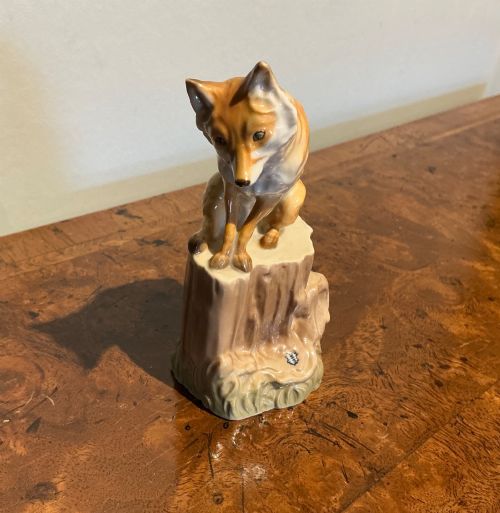
Among the human vendors and musicians, a fox and a pair of miniature dogs quietly hold their ground.
What varies in quality
Quality rests upon the crispness of the porcelain modelling and the control evident in the hand-painted enamel work. Earlier eighteenth-century pieces from factories like Meissen or Bow demonstrate fine sculptural definition in drapery and facial expressions.
Nineteenth-century revival pieces and later editions diverge according to the precision of the gilding and the delicacy applied to fine details like flowers and musical instruments.
Nymphenburg·Edme Samson·Volkstedt Rudolstadt Factory·Royal Doulton·Meissen·Longton Hall·Chelsea·Triebner Ens and Eckert·Derby·Royal Worcester·Bow·La Coutille Factory·Letu and Mauger·Royal Copenhagen·Kutani·Chantilly·Wedgwood and Co·Ludwigsburg·Dressel Kister and Cie·Helena Wolfsohn
The Painted Porcelain Statuettes Glossary
- Hard-paste porcelain
- A durable ceramic composition fired at high temperatures, composed of kaolin and petuntse. It provides a dense, vitreous body ideal for intricate figures.
- Soft-paste porcelain
- An artificial porcelain mixture fired at lower temperatures, common in eighteenth-century European factories. It yields a warm texture and a smooth glaze well-suited to early enamel painting.
- Enamel
- Vitreous coloured paints applied to fired porcelain surfaces. These pigments fuse with the glaze during a subsequent low-temperature firing.
- Gilt
- A thin layer of gold applied to highlights, clothing, or bases of porcelain figures. It adds metallic lustre to the painted design.
- Biscuit porcelain
- Unglazed ceramic fired to a matte, porous finish. It resembles white marble and was frequently utilised for French and continental figures.
Painted Porcelain Statuettes: Frequently Asked Questions
How were porcelain figures used historically?
Figures served as ornamental centrepieces for dining tables during dessert courses in the eighteenth century before moving to mantelpieces and display cabinets.
Victorian and later collectors arranged them in drawing rooms to display taste, culture, and engagement with pastoral or theatrical themes.
How do I live with porcelain figures?
Display these statuettes in enclosed cabinets away from direct sunlight to protect the hand-painted enamel colours and delicate gilding.
Keep them on stable surfaces where vibrations cannot risk tipping slender forms or delicate floral appendages.
How can I tell periods apart?
Eighteenth-century examples often display softer glazes and hand-modelled botanical elements specific to early English and German factories.
Nineteenth-century revival pieces tend toward brighter enamel palettes and sharper mould lines, while twentieth-century works reflect streamlined styles like Art Deco.