


Painted Porcelain Garniture
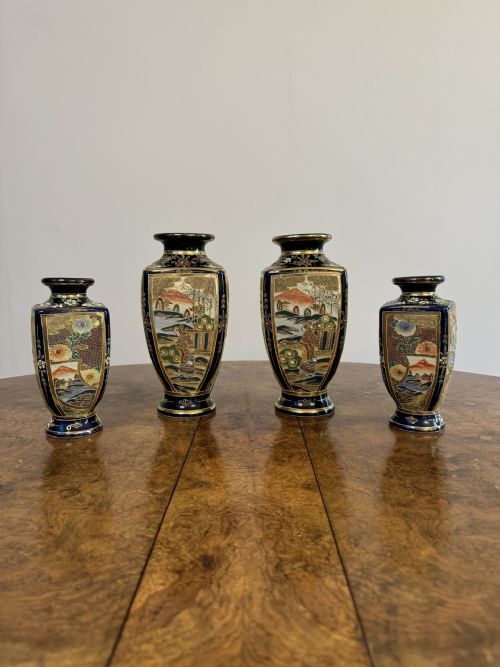
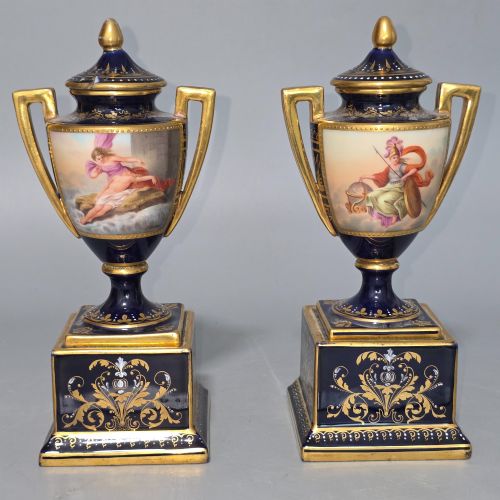
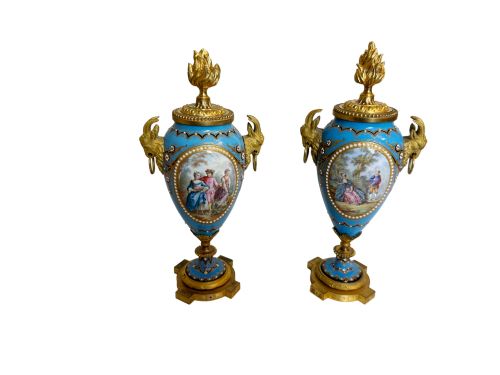
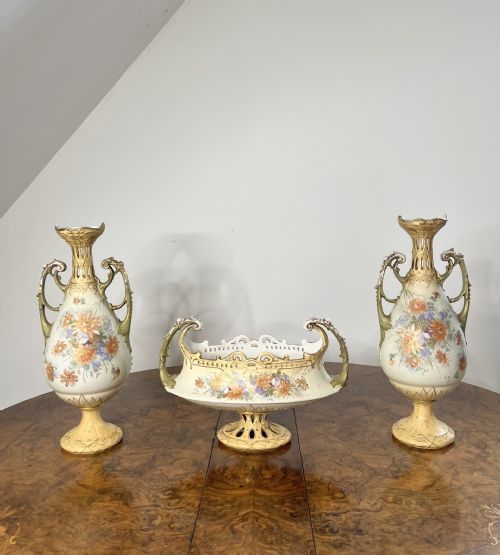
These painted porcelain garniture sets unite matching vases and clock sets decorated with colourful enamel scenes.

Painted Porcelain Garniture
A painted porcelain garniture brings together matched sets of three or more vases, urns or clock sets designed to sit in symmetry on a mantelpiece or centre table. These arrangements stem primarily from the nineteenth century, drawing on French Sevres style, Vienna porcelain, and Japanese imari or satsuma production.
Buyers encounter everything from simple pairs of lidded vases to substantial three-piece clock garnitures mounted in ormolu and gilt bronze. Forms range from classical amphora vases and cassolettes to grand centrepieces accompanied by side vases.
Origins stretch across European factories in Berlin, Vienna, Paris and Worcester alongside Asian export wares imported during the Meiji period. Sets survive in varying configurations of two, three or four matching vessels intended for display.
What varies in quality
The fineness of the hand-painted enamel decoration separates standard factory output from pieces produced for exhibitions or royal patrons. Delicacy in brushwork, depth of colour and the complexity of figural scenes determine the upper tier of works.
The weight and crispness of the ormolu or gilt bronze mounts also dictate the overall standard of a garniture set. Heavy, finely chased bronze mounts indicate superior workshop production compared to lighter, simpler brass fittings.
Listings feature porcelain pieces from nineteenth-century European factories including Sevres, Vienna, Berlin and Worcester, alongside Japanese imari and satsuma wares.
Flight Barr and Barr·KPM Berlin·Minton·Vincenti of Paris
The Painted Porcelain Garniture Glossary
- Garniture
- A set of matching vases, urns or clock sets designed to be displayed together on a mantelpiece or sideboard. These matched groups typically comprise three or more matching pieces.
- Ormolu
- Gilded bronze mounts applied to furniture, clocks and porcelain vessels. This technique involves coating a bronze base with a mercury and gold amalgam before heating.
- Cassolette
- A decorative vase or urn designed with a reversible lid that functions either as a closed vessel or a candle holder. These dual-purpose pieces appear frequently in nineteenth-century French sets.
- Amphora
- A two-handled jar with a narrow neck used in classical antiquity, copied by nineteenth-century European porcelain factories. These tall vessels form prominent centrepieces in garniture displays.
Painted Porcelain Garniture: Frequently Asked Questions
What is a porcelain garniture?
A porcelain garniture is a matching set of decorative vases or a clock accompanied by side vases. These groups were designed to create a symmetrical display on mantelpieces or large tables in period homes.
Most surviving sets date from the nineteenth century and combine hand-painted ceramic bodies with gilded metal mounts. They served primarily as status symbols and decorative focal points for formal rooms.
How do I date a garniture?
Dating relies on factory marks stamped or painted on the base of the porcelain, alongside the stylistic clues of the metal mounts. Nineteenth-century pieces often reflect revival styles such as French Rococo, Empire or classical Neoclassical designs.
Examining the firing methods, glaze consistency and wear on the gilt bronze provides further clues to the period of manufacture. Comparing the forms to documented factory patterns helps narrow down the exact decade.
Where should I place a garniture?
These sets suit wide mantelpieces, large sideboards or dedicated console tables where symmetry can be maintained. The tallest vase or the clock traditionally sits in the centre, flanked by the matching side vases.
Because many pieces feature delicate hand-painted enamel and protruding ormolu mounts, placement should avoid direct sunlight and areas of heavy foot traffic to prevent accidental damage.
How do I care for painted porcelain?
Dust the porcelain and metal mounts gently with a soft, dry brush to prevent the accumulation of dirt in recessed areas. Avoid using liquid cleaners, abrasive cloths or chemical solvents, which can damage hand-painted enamels and strip the gold leaf.
Lift garniture pieces by their main body rather than by handles, lids or delicate ormolu mounts, as these auxiliary parts can detach under strain.