


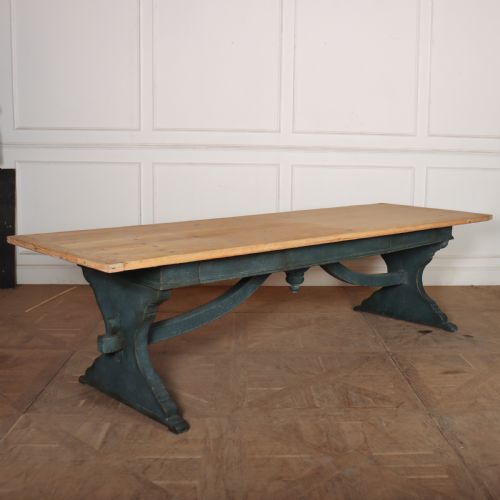


Painted Pine Trestle Table
These painted pine trestle table pieces bring honest vernacular utility and time-softened colour to domestic dining.
Painted Pine Trestle Table
A painted pine trestle table offers robust utility derived from rural vernacular traditions across England, Wales, and Scandinavia. These hardworking surfaces served demanding domestic, tavern, or dairy roles before finding a second life in modern dining rooms.
Most examples appearing here belong to the nineteenth century, including Victorian and Edwardian iterations. Buyers frequently encounter forms featuring plank tops, cleated ends, and distinct structural supports like X-frames.
Origins range from English and Welsh country workshops to Swedish farmhouses, each region imbuing the basic trestle form with local character. Forms span from compact two-seater drop-leaf formats to long refectory tables suited for communal gatherings.
How they were made
Construction relies upon softwood pine timber, utilised for its availability and workability in forming substantial two-plank tops and sturdy structural bases. Iron and brass hardware occasionally reinforce joints, while oak appears selectively in related vernacular builds.
Surfaces bear historical coatings ranging from traditional Falu red paint to muted grey and original multi-layered pigment. These protective and decorative finishes aged alongside the timber, accumulating patina through decades of daily kitchen and work use.
The inventory records vernacular dining, tavern, and preparation tables utilising structural forms like X-frames and sturdy trestle bases.
What varies in quality
Quality rests in the integrity of the original paint layer and how gracefully the pine timber has weathered over the centuries. Untouched historical pigment surfaces hold greater character than later repainting efforts.
Structural honesty defines the better specimens, where trestle bases and X-frames remain tight and true to their nineteenth-century origins. Proportion and timber thickness also distinguish utilitarian workshop pieces from finer country house examples.
The Painted Pine Trestle Table Glossary
- Trestle table
- A table consisting of two or more supports carrying a horizontal top. This design allows for maximum legroom and efficient dismantling.
- Falu paint
- A traditional Swedish red paint containing copper sludge from the Falun mine. It provides durable protection for pine timber in Scandinavian country furniture.
- Cleated ends
- Wooden battens fixed across the grain at the short ends of a table top. This technique helps minimise warping in wide pine planks.
- Refectory table
- A long dining table traditionally used for communal meals in monastic or large domestic settings. Nineteenth-century country variants often adopt this generous proportion.
- Vernacular country
- Style reflecting local building traditions and available materials rather than formal academic design. These pieces prioritise practical function over ornament.
Painted Pine Trestle Table: Frequently Asked Questions
Where should I place a trestle table?
These tables suit spacious kitchens, dining rooms, or open-plan living areas where their generous length can be fully appreciated. Their sturdy trestle bases allow flexible seating arrangements without awkward table legs.
Pair them with mismatched country chairs or benches to echo the utilitarian origins of the piece.
How do I care for original paint?
Maintain painted pine surfaces by dusting gently with a dry cloth and avoiding harsh chemical cleaning agents. Moisture should be wiped away promptly to protect both the historic pigment and the softwood beneath.
Applying a gentle beeswax can nourish exposed pine without harming surrounding original colour layers.
Are these tables suitable for daily dining?
Nineteenth-century pine tables were built for heavy domestic labour, making them well-equipped for modern family meals. The soft timber and historic paintwork will continue to record daily use through natural wear.
Use placemats and coasters to protect vulnerable areas while letting the seasoned character of the top show through.
How can I tell English and Scandinavian pieces apart?
English and Welsh examples often display traditional tavern or farmhouse proportions with dark or muted painted finishes. Scandinavian pieces frequently feature brighter regional pigments, such as Falu red or pale grey.
Construction details and timber selection also hint at the local workshop traditions that shaped each table.