




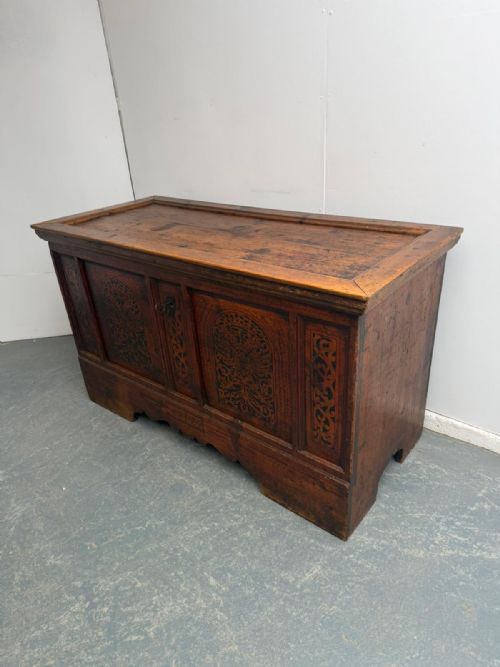


Painted Pine Storage Trunk
A painted pine storage trunk brings robust utility and vernacular charm to a room, offering hard-wearing domestic storage wrapped in layered pigment and folk artistry.
Painted Pine Storage Trunk
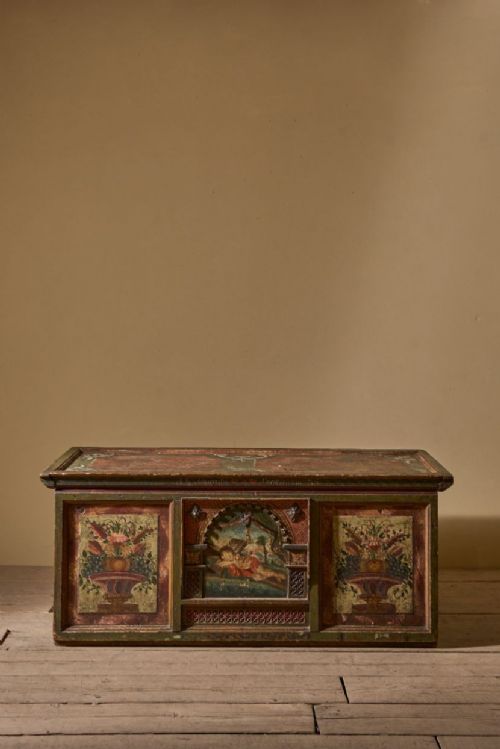
A painted pine storage trunk serves as a capacious receptacle for household textiles and personal possessions, drawing on forms such as blanket boxes, mule chests and marriage coffers. These objects originate largely from nineteenth-century rural households across Britain, Scandinavia and Central Europe, where domestic storage needed to be both practical and decorative.
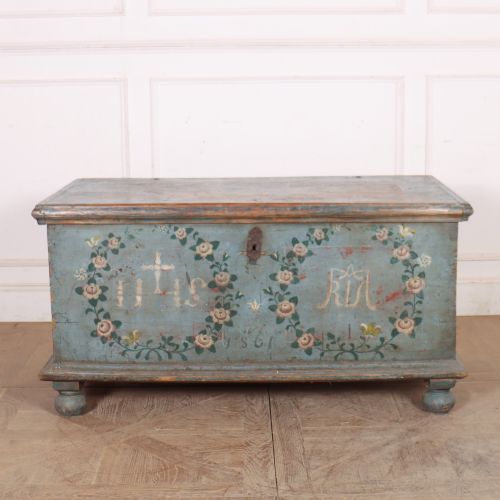
The pieces appearing most frequently on this page span the Victorian and Georgian eras alongside mid-nineteenth-century continental workshops. Buyers encounter everything from small Hungarian coffer boxes to large Swedish marriage chests decorated with original floral motifs and regional colour palettes.
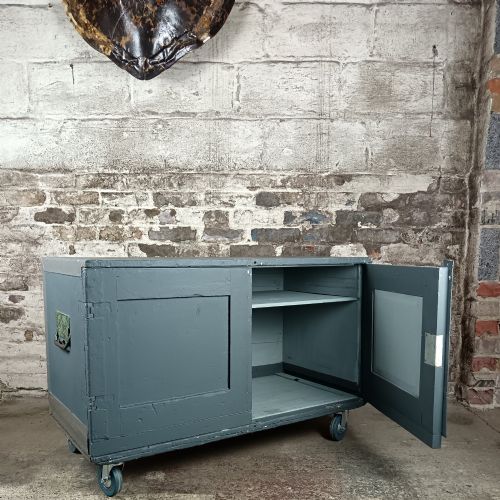
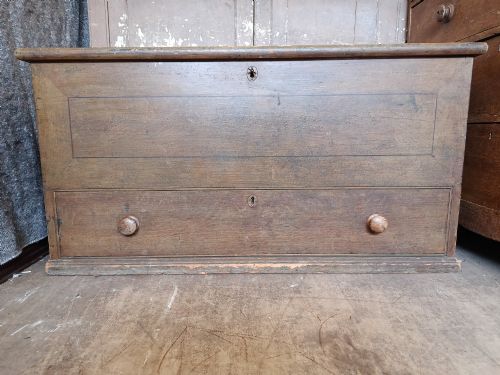
Mule chests and dome-top trunks add functional variety by incorporating internal drawers or curved lids designed to shed water during transit. Each example relies on soft wood construction finished with hand-applied pigments, scumble glazes or iron strapwork.
Materials and construction
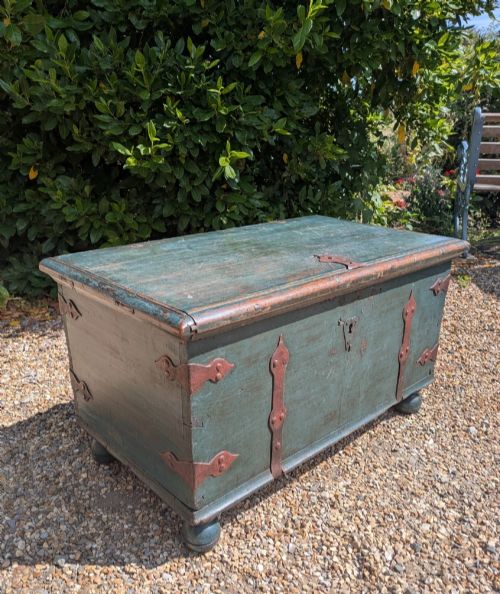
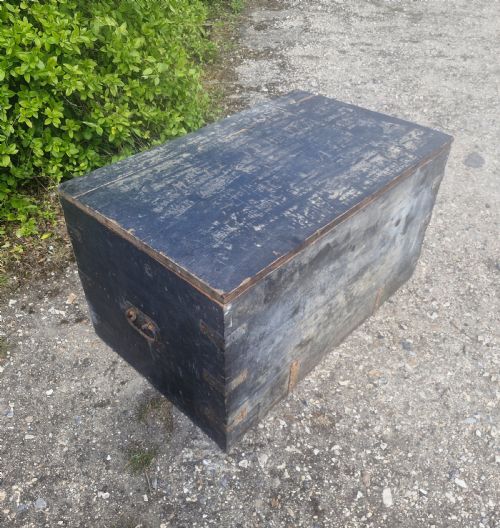
Carpenters constructed these boxes primarily from solid pine planks joined with dovetail or rebate corners to withstand heavy domestic use. Wrought iron or brass hinges, strapwork and carrying handles reinforced the structural integrity of lids and side panels.
Surfaces were prepared with ground layers before receiving oil or water-based pigments, occasionally finished with scumble glazing to simulate richer timbers or patterned with folk art motifs. Paper linings sometimes survived inside lids, adding a secondary decorative layer to the utilitarian interior.
Some nineteenth-century marriage chests feature secret internal compartments designed to guard love letters and small family treasures.
Distinctions in quality
The distinction between ordinary utility boxes and superior pieces rests upon the integrity of the original paint surface and the sophistication of the folk decoration. Trunks retaining their untouched, first-applied pigment without extensive overpainting command greater interest from collectors.
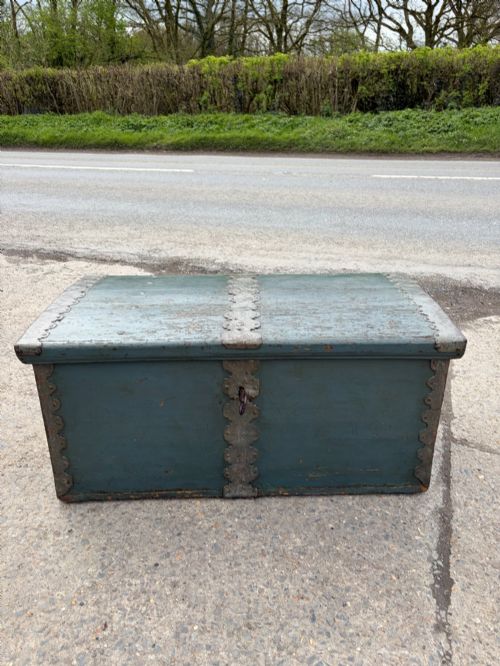
Hand-forged ironwork, such as elaborate strap hinges and original working locks with keys, elevates a piece beyond standard utilitarian carpentry. Proportion, scale and regional decorative flourishes also divide simple domestic containers from exceptional marriage chests.
The Painted Pine Storage Trunk Glossary
- Mule chest
- A storage chest fitted with one or more drawers beneath the main internal compartment. This form bridges the gap between the simple blanket box and the chest of drawers.
- Scumble
- A decorative painting technique involving a translucent glaze dragged or wiped over a lighter opaque base colour. This method created simulated wood grains or mottled textures on plain pine furniture.
- Strapwork
- Flat metal bands, typically of wrought iron, fixed across the exterior of a box or chest to reinforce corners and joints. It served both a structural purpose and a decorative function.
- Coffer
- A heavy, robust box traditionally used for storing valuables or documents. These pieces often feature secure locking mechanisms and reinforced iron hardware.
- Marriage chest
- A celebratory storage trunk commissioned to mark a wedding, frequently inscribed with dates, initials and symbolic folk art motifs. These pieces were central to rural dowry traditions.
Painted Pine Storage Trunk: Frequently Asked Questions
How were painted pine storage trunks originally used?
These trunks served as heavy-duty receptacles for household blankets, winter garments and valuable domestic linens in rural homes. Many functioned as travel luggage or dowry chests commissioned for marriage.
In tighter living quarters, closed trunks doubled as extra seating benches or side tables at the foot of a bed. Their sturdy construction allowed them to withstand the rigours of transit during military campaigns or migration.
How do I maintain the original paint finish?
Keep painted pine trunks away from direct sunlight and excessive heat fluctuations to prevent the surface pigment from drying out or flaking. Dust gently with a dry, soft cloth rather than utilising liquid polishes or chemical cleaners.
Applying microcrystalline wax can protect exposed wooden areas, but older painted surfaces are best left untouched to preserve their historical patina. Ensure the room maintains stable humidity levels to protect both the pine timber and the historic pigment.
What is the difference between a coffer and a blanket box?
A coffer traditionally refers to a heavily constructed storage box designed for valuables, often featuring more complex locking mechanisms and reinforced iron strapwork. These pieces carry a greater sense of architectural weight and security.
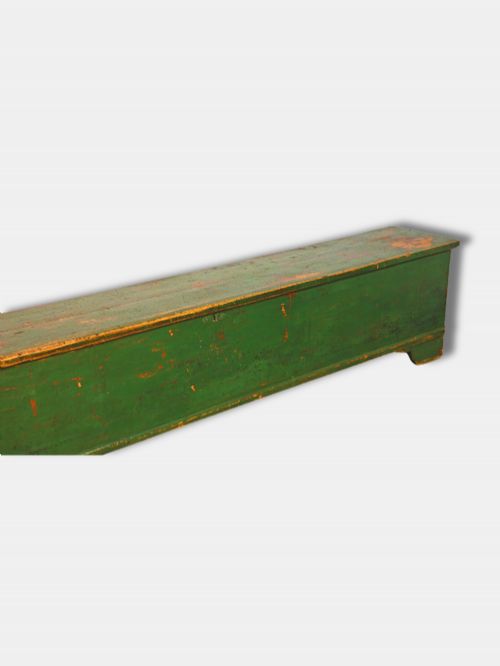
A blanket box typically describes a simpler domestic receptacle intended specifically for soft textiles and domestic linens. While both share hinged lids and rectangular pine carcasses, their intended household roles dictated their build.
How can I tell if the paintwork is original?
Original paint surfaces show natural wear patterns, micro-craquelure and softening around edges where hands repeatedly touched the wood over generations. Pigments should sit harmoniously within the grain of the pine rather than masking modern underlying repairs.
Inspect the interior and underside for consistency in colour ageing and layer buildup. Trunks with untouched surfaces often reveal subtle traces of earlier decorative schemes beneath worn top layers.