

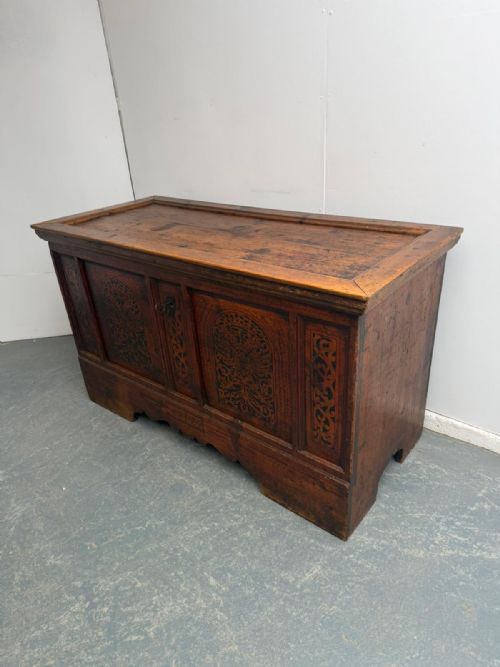


Hungarian Painted Trunk
A hungarian painted trunk brings bright folk art colour and practical storage into a room.
Hungarian Painted Trunk
When searching for a hungarian painted trunk, buyers encounter sturdy pine boxes decorated with European folk art traditions. These pieces served practical storage roles in homes across Central Europe before entering the antique market.
The selections available here range from small decorative boxes to massive coffers and mule chests. Pieces date across several periods, notably the Georgian, Regency, and Victorian eras, alongside early twentieth-century examples from nineteen ten.
Smaller variants share space with large mule chests featuring interior compartments. Most examples display traditional painted finishes that define their regional character.
How they were made
Makers built these pieces primarily from solid pine, utilising timber planking joined to form deep rectangular storage bodies. Iron and brass hardware such as hinges, handles, and locks provided structural reinforcement and security.
Surfaces received layers of decorative paintwork executed in floral motifs and folk art styles. This painted decoration distinguishes continental folk art boxes from plain utilitarian furniture of the period.
What varies in quality
The distinction between ordinary storage boxes and finer examples rests in the preservation and complexity of the original painted surface. Pieces retaining vibrant floral decoration and undisturbed early paint command greater attention from collectors.
Proportion and scale also separate the items, ranging from simple small boxes to massive coffer boxes and fitted mule chests. The survival of original iron or brass fittings further influences the character of each piece.
The Hungarian Painted Trunk Glossary
- Coffer
- A large wooden chest used for storing valuables, linen, or documents. These heavy boxes typically feature hinged lids and sturdy construction.
- Mule chest
- A storage chest equipped with one or more drawers beneath the main compartment. This form combines the deep storage of a coffer with drawer accessibility.
- Folk art
- Artistic work produced from an indigenous culture or peasant tradition. In these pieces, it refers to the regional hand-painted floral motifs applied to pine bodies.
- Regency
- An English stylistic period dating from the early nineteenth century. Pieces from this era reflect classical influences adapted to regional craft traditions.
Hungarian Painted Trunk: Frequently Asked Questions
What is a hungarian painted trunk used for?
These boxes provided secure storage for household textiles, clothing, and valuables in historical domestic settings. Today they function as living room coffee tables, blanket storage at the foot of a bed, or hallway statement pieces.
Their deep interiors swallow bulky items while the flat lids offer convenient surface space. The decorative painted exteriors allow them to sit comfortably in both traditional and contemporary interiors.
How old are these painted trunks?
The available pieces span multiple eras, including Georgian, Regency, and Victorian periods, as well as nineteen ten. Each era brings subtle shifts in scale and decorative emphasis.
Dating relies on construction methods, timber characteristics, and the style of the painted folk art decoration. Georgian and Regency examples sit alongside later Victorian and early twentieth-century works.
What wood are they made from?
Pine serves as the primary timber for the construction of these continental storage boxes. This softwood was abundant, easy to work with, and provided a smooth surface for paint application.
Iron and brass components like hinges and locks were added for durability and security. The combination of pine and metal hardware is standard across the entire group.
How do I care for the painted surface?
Protect the original paint by keeping the piece away from direct sunlight and excessive moisture fluctuations. Dust gently with a dry, soft cloth rather than using liquid polishes or chemical cleaners.
Maintaining a stable indoor climate prevents the pine timber from shrinking or expanding. This gentle approach preserves the delicate floral folk art details for the future.