
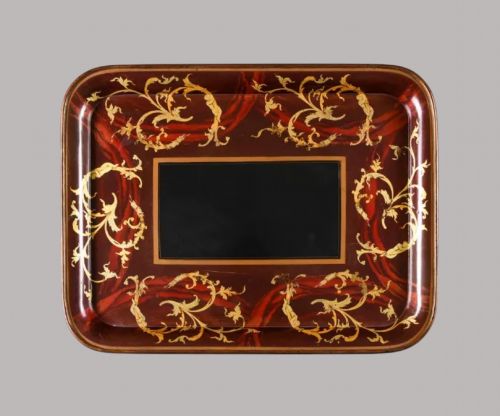
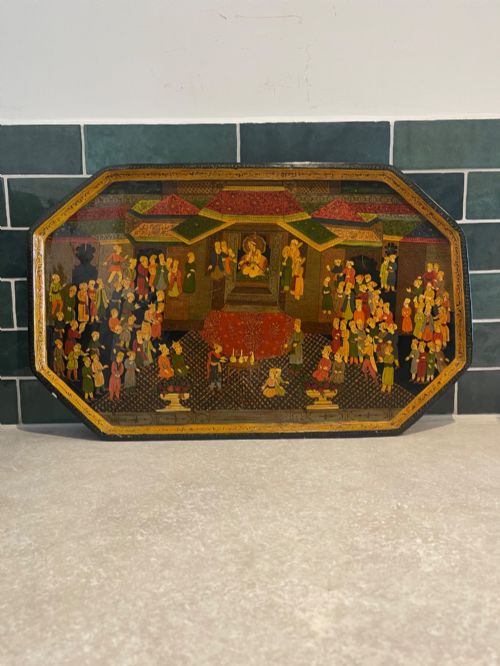
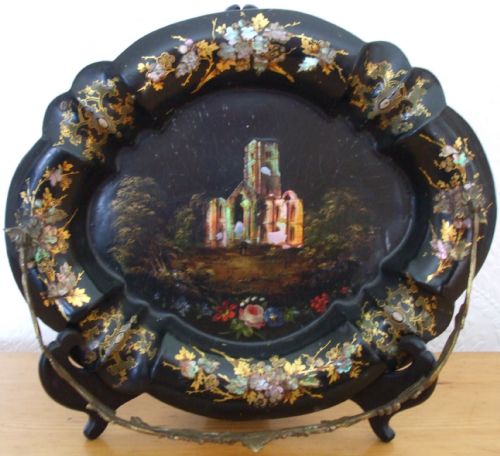
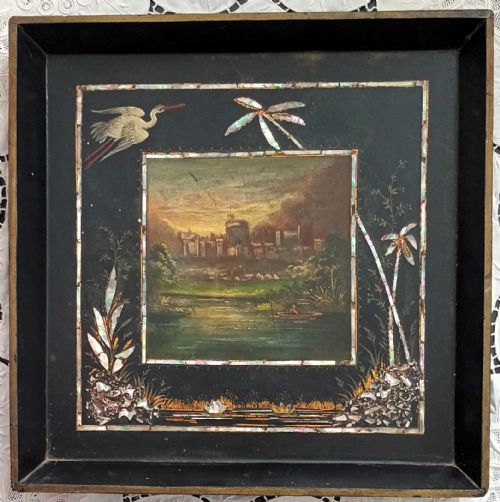


Painted Papier Mache Tray
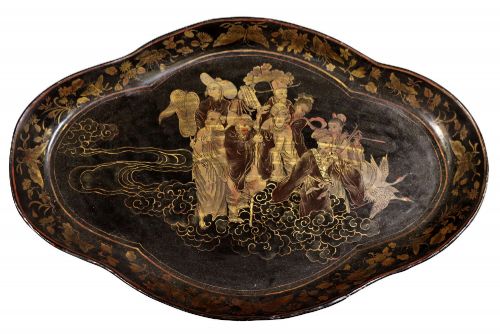
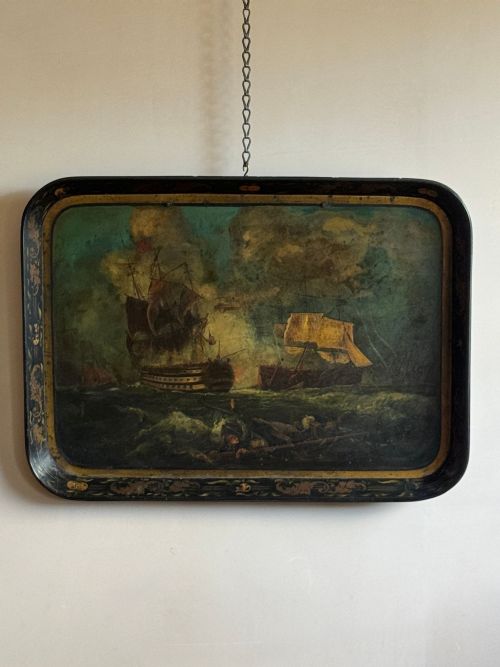
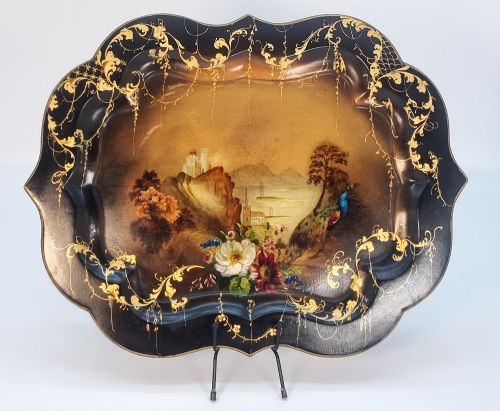
A painted papier mache tray brings brilliant lacquerwork and hand-painted scenes to a room, serving equally well on a stand or a table.
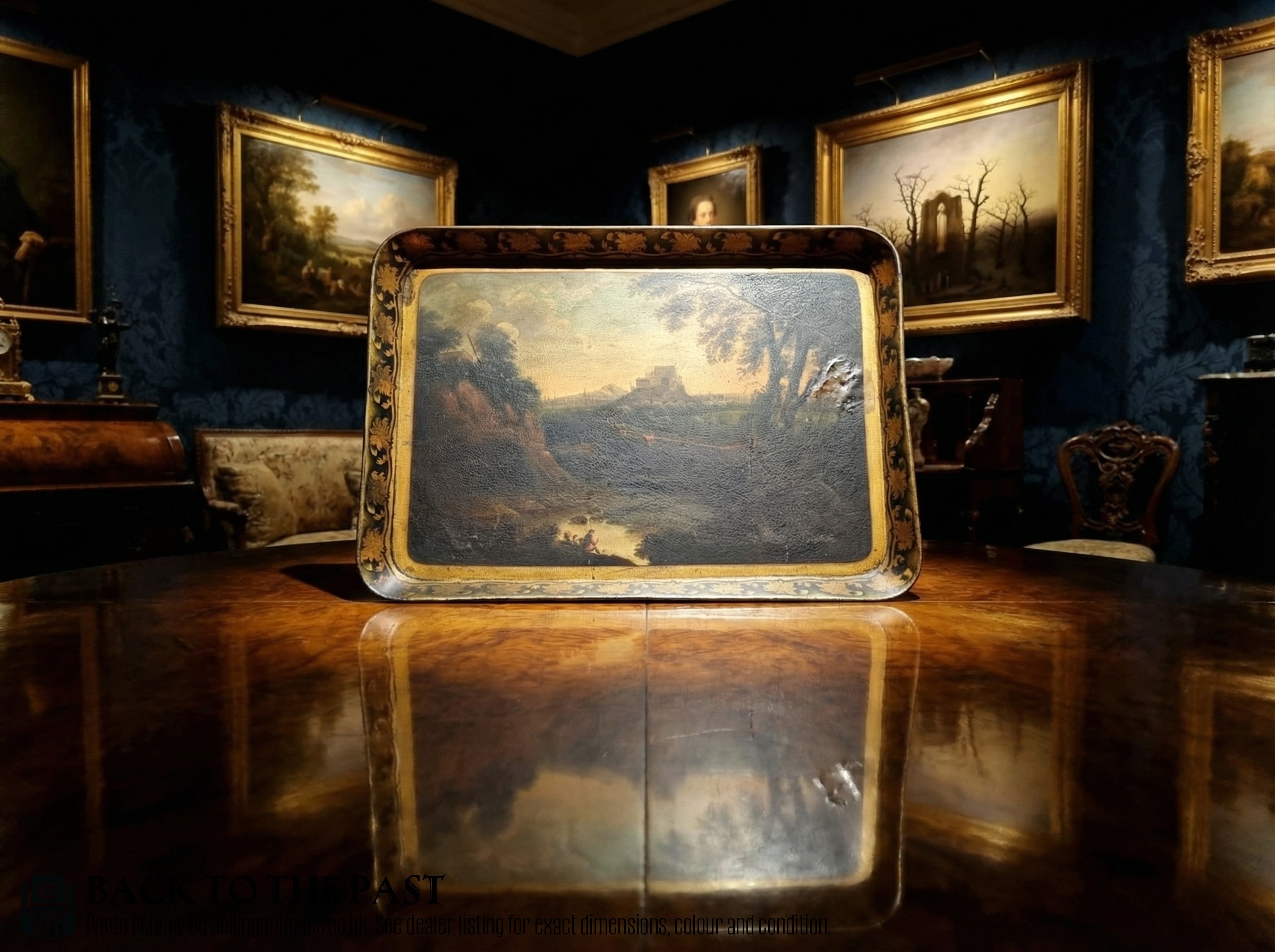
Painted Papier Mache Tray
A painted papier mache tray is a sturdy serving vessel or decorative object shaped from pulped paper, finished with lacquer, and decorated by hand. These pieces emerge chiefly from the Georgian, Regency, and Victorian eras, alongside later Kashmiri examples.
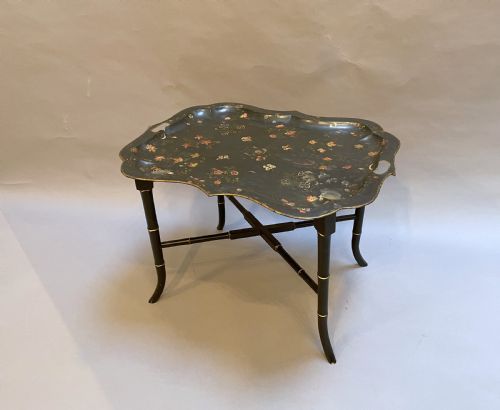
Most items on this page take the form of serving trays, decorative trays, or card baskets, while others are mounted on bases to serve as occasional tables or coffee tables.
The decorative schemes range from intricate Chinoiserie landscapes and floral motifs to specific hunting scenes and classical figures.
How they were made
Makers produced the core base by pressing layers of paper pulp mixed with glue and resin into robust boards before drying and baking them.
Artisans applied multiple coats of black or coloured lacquer, building a smooth ground that received hand-painted details in oil, paint, and gold leaf.
Many high-grade surfaces incorporate inlaid mother-of-pearl to catch the light, alongside occasional brass fittings or gilt embellishments.
Listings feature 19th Century, Regency, Georgian, and Victorian periods alongside Kashmiri and Anglo-Indian origins.
What varies in quality
The sophistication of the hand painting sets the standard, moving from simple naive brushwork to highly detailed landscape and figural compositions executed by skilled artists.
The preservation of the original lacquer and gilt surface determines the desirability of a piece, particularly where the ground remains deep and uncracked.
The presence of identifiable maker signatures, such as Jennens and Bettridge, elevates an example above unmarked production.
Jennens and Bettridge
The Painted Papier Mache Tray Glossary
- Papier-mâché
- A composite material made from paper pulp or layered paper sheets mixed with binding agents, pressed and dried into a rigid form. It provides a lightweight yet durable base for decorative lacquer.
- Chinoiserie
- A European artistic style reflecting Chinese motifs and decorative techniques. It appears frequently on lacquer trays through pagodas, figures, and garden landscapes.
- Japanned
- A European imitation of East Asian lacquerwork, created by applying layers of dark varnish and curing them. This finish forms the glossy black or coloured ground of many trays.
- Mother-of-pearl
- The iridescent inner layer of certain mollusc shells, cut into thin pieces and inlaid into the lacquer surface. It adds shimmering highlights to flowers, architecture, and figures.
- Toleware
- Metalware painted and lacquered to resemble finished papier-mâché or oriental lacquer. It shares similar decorative palettes and periods.
Painted Papier Mache Tray: Frequently Asked Questions
Can I use these trays for serving drinks?
These pieces function well for serving drinks if treated with care, though modern moisture can damage historic lacquer.
Many owners prefer to display them on stands or walls to protect the painted surfaces from heavy daily wear.
How do I clean a painted papier mache tray?
Dust the surface gently with a dry, soft cloth to remove everyday particles without abrasion.
Avoid all water, cleaning sprays, and chemical solvents, which lift the historic lacquer and gold leaf.
What is a papier mache tray on stand?
A tray on stand combines a portable serving tray with a folding or fixed wooden or iron base.
This adaptation turns a tabletop serving piece into a permanent occasional table or side table.
How do I distinguish Regency from Victorian trays?
Regency trays often display crisp neoclassical details, Chinoiserie motifs, and scarlet or green grounds dating from the early nineteenth century.
Victorian pieces frequently feature heavier floral compositions, mother-of-pearl inlay, and deep black ebonised lacquer from the mid to late nineteenth century.