




Painted Panel Screen
A painted panel screen divides a room or frames a hearth with layered canvases, lacquered wood and hand-applied oils.
Painted Panel Screen
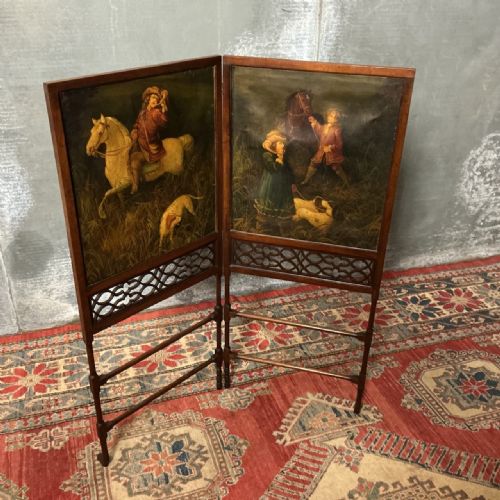
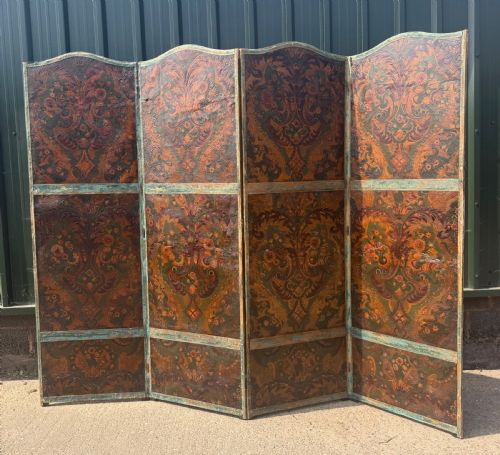
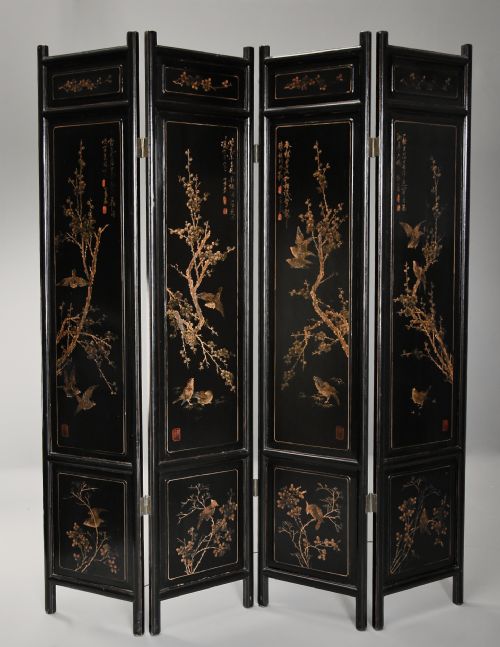
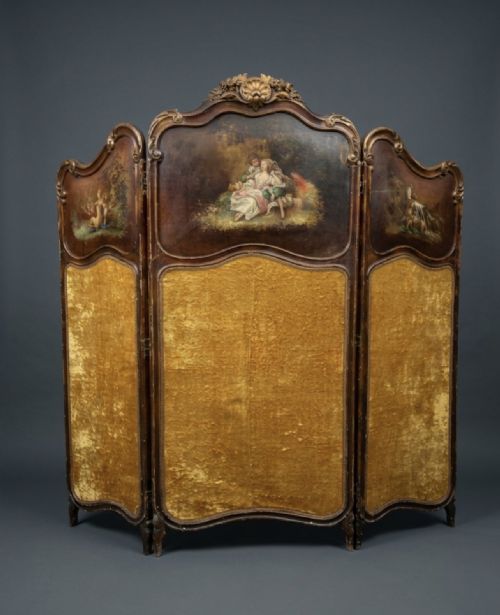
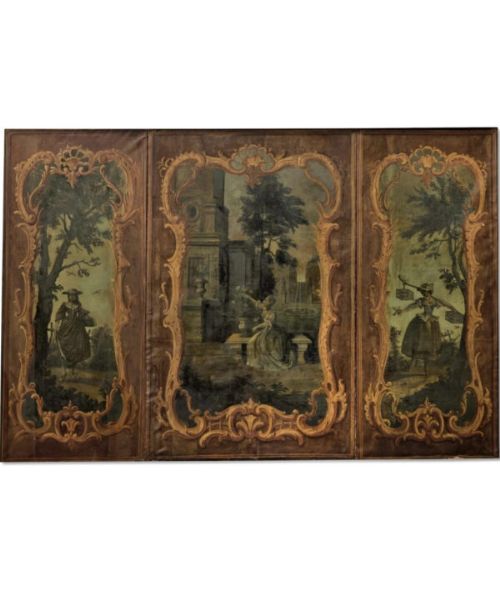
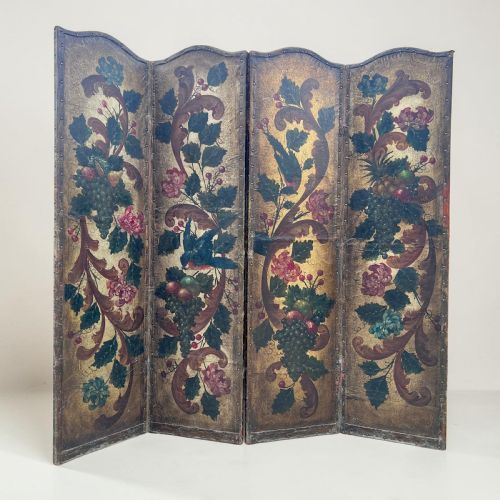
A painted panel screen brings division and painted surface to an interior, appearing most frequently as folding screens and room dividers from the nineteenth and early twentieth centuries. These pieces function both as architectural partitions and as vertical canvases displaying pastoral scenes, florals, and ornamental motifs across multiple hinged folds.
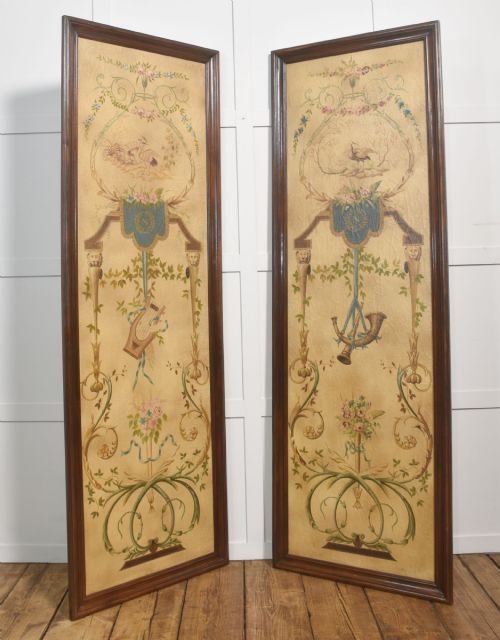
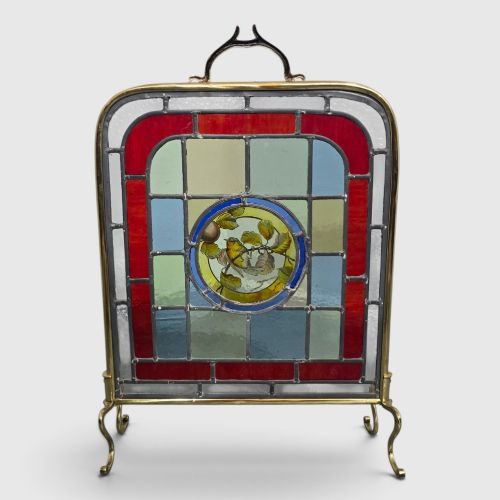
The selection ranges widely across forms, taking shape as freestanding room dividers, modesty screens, brass fire screens, and decorative wall panels. Origins span English, French, Chinese, Japanese, and Dutch workshops, encompassing styles from Chinoiserie and French Rococo Revival to Art Deco and Edwardian designs.
How They Were Made
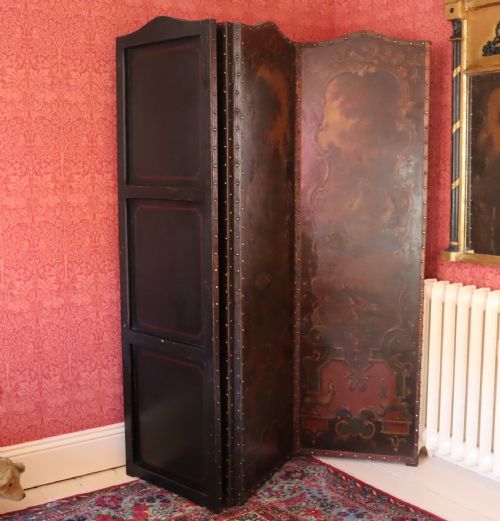
Construction relies primarily on wooden frames of mahogany, walnut, oak, or ebonised timber supporting panels of canvas, leather, silk, or paper. Hinges of brass or iron join multiple folds, allowing the panels to articulate and stand freely.
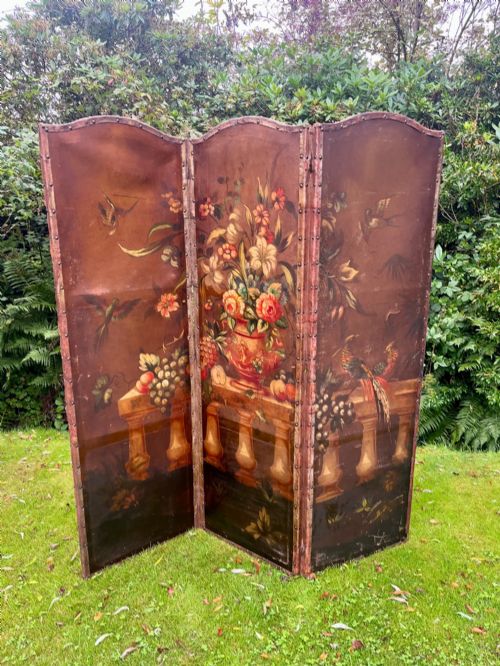
Surface decoration combines oil paint, tempera, gold leaf, and polychrome pigments applied directly to prepared leather, canvas, or lacquered wood. Artisans built up layers of paint and lacquer, occasionally incorporating gilt embossing or hardstone mounts to achieve rich decorative depth.
Materials across these listings include oil paint, canvas, leather, brass, gold leaf, and lacquer.
What Varies in Quality
Quality rests upon the execution of the painted surface, distinguishing freehand artistic skill and fine brushwork from mechanical reproduction. Superior examples display sophisticated composition, nuanced colour palettes, and well-preserved detail across every fold.
The integrity of the physical structure and materials marks the standard of craftsmanship. High-grade pieces utilise substantial timber frames, supple hand-tooled leather, or deep layers of polished lacquer with secure, original hardware.
Paul Sormani·Raymond Subes
The Painted Panel Screen Glossary
- Cordoban leather
- Heavy Spanish leather stamped with intricate patterns and finished with gold or silver leaf and paint. It provides a durable, tactile surface for folding screens.
- Grisaille
- Painting executed entirely in monochrome shades of grey. This technique creates the illusion of sculptural relief on panels and wall hangings.
- Modesty screen
- Low freestanding screen historically placed to shield diners from draughts or to provide privacy in domestic interiors. They often feature delicate painted panels.
- Pole screen
- Adjustable fire screen mounted on a vertical wooden pole with a tripod base. The panel protected a seated person's face from the heat of the hearth.
Painted Panel Screen: Frequently Asked Questions
How were painted panel screens used?
These screens divided large rooms into smaller zones, created private dressing spaces, or guarded against fireplace drafts.
Placed against walls, they also functioned as large-scale vertical artworks displaying narrative scenes or decorative motifs.
How do I care for a leather screen?
Keep painted leather screens away from direct sunlight and excessive heat sources to prevent the leather and paint from drying out.
Dust gently with a soft dry cloth and avoid liquid cleaners that can damage the aged surface.
Are these screens stable on carpets?
Multi-fold screens stand securely when the panels are angled rather than pulled straight.
Heavier wood and leather versions maintain balance well, though very tall or heavy pieces benefit from careful placement.
How do I date a painted screen?
Examine the timber frame construction, hinge types, and the preparation of the canvas or leather behind the paint.
Stylistic markers like Chinoiserie motifs, Rococo curves, or Art Deco geometry also help pinpoint the period.