



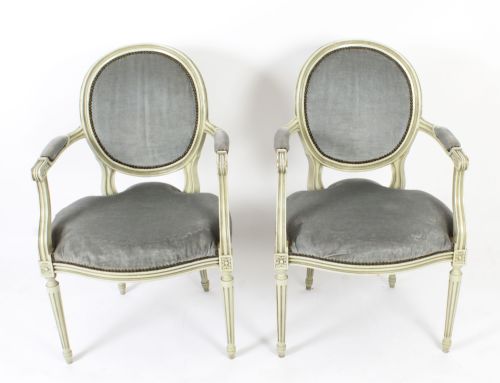

Painted Oval Back Armchair
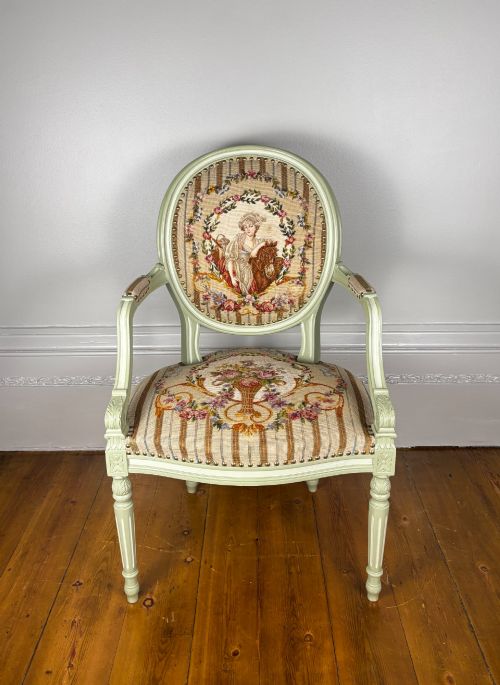
A painted oval back armchair brings French Neoclassical grace and carved medallion elegance into a room with understated poise.
Painted Oval Back Armchair
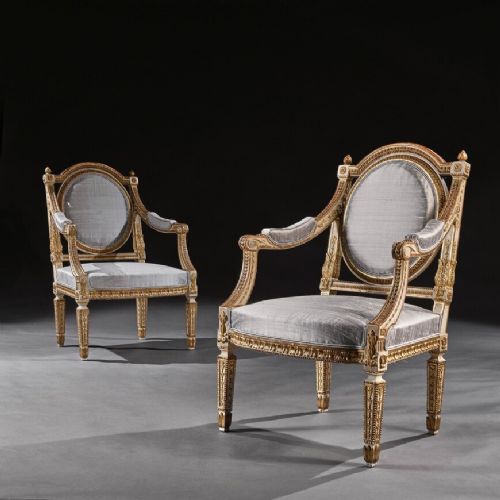
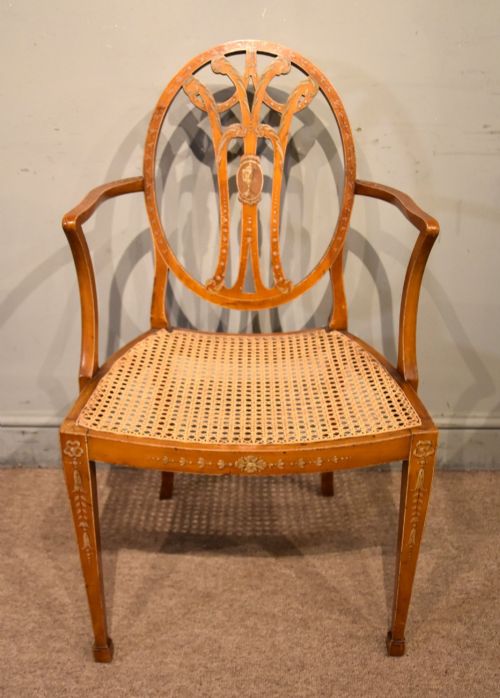
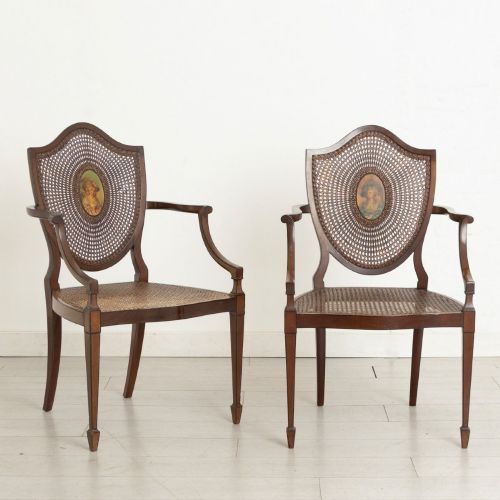
A painted oval back armchair draws on 18th Century French taste and later revivals, offering an upright, refined seat with a distinctive curved frame. These pieces span Edwardian adaptations, 19th Century interpretations, and earlier George III origins, taking the form of open armchairs and fauteuils.
The version most commonly met on this page is the Louis XVI style or Louis XVI Revival armchair, frequently finished in painted wood with parcel gilt highlights. Makers across the periods referenced these classical French forms, resulting in salon chairs and show frame armchairs that balance decorative paintwork with structural woodcarving.
How they were made
Makers shaped these frames from solid timbers like beech and satinwood, applying carved detail to the crest rails, arms, and legs. Upholstered elements rely on traditional stuffing and supportive foundations, occasionally incorporating cane work within the seat structures.
Surface finish defines the group, combining applied paint with gold leaf accents or parcel gilt highlights. Brass details sometimes appear in structural reinforcement or decorative mounts, while textiles range from velvet to tapestry and needlepoint panels.
Painted Oval Back Armchair Retail Price Guide 2026
Typical asking prices for painted oval back armchair among the pieces listed under this phrase on Sellingantiques today, from the lower quarter to the upper quarter. They describe what is for sale here now, not the wider market.
Materials recorded across the inventory include beech, satinwood, paint, gold leaf, brass, cane, and velvet.
What varies in quality
The distinction between standard and superior pieces rests on the crispness of the woodcarving and the subtlety of the painted surface. Earlier examples from the 18th Century demonstrate finer joinery and hand-carved proportion, whereas later revival pieces rely on the precision of their decorative finish.
The integrity of the show frame and the quality of the upholstery textiles dictate the overall success of the piece. Well-preserved paint and gilding, coupled with sound structural timber, separate everyday salon seating from the finest Neoclassical examples.
The Painted Oval Back Armchair Glossary
- Parcel Gilt
- A surface decoration where selected carved details are partially gilded with gold leaf while the rest of the wood remains painted. This technique highlights specific moulding and floral motifs on the frame.
- Medallion Chair
- An armchair featuring a rounded or oval backrest resembling a large medallion. It is a defining characteristic of Louis XVI and Neoclassical seating design.
- Show Frame
- The visible wooden structure of an armchair that surrounds or supports the upholstered sections. In these pieces, the frame is carved and painted rather than entirely concealed by fabric.
Painted Oval Back Armchair: Frequently Asked Questions
What is a painted oval back armchair?
A painted oval back armchair is an upholstered seat featuring a rounded wooden backrest and a painted finish, drawing on 18th Century French and Neoclassical design traditions.
These chairs function as decorative salon seating, combining exposed carved wood frames with upholstered panels.
How do I date a painted armchair?
Dating relies on stylistic clues, timber selection, and the execution of the paintwork across periods ranging from the 18th Century to the Edwardian era.
Earlier pieces show hand-carved joinery and specific Neoclassical proportions, while Edwardian and later revival items reflect the taste of their own time.
Where were these armchairs used?
These armchairs were traditionally placed in formal drawing rooms, boudoirs, and reception spaces within grand homes and salons.
Today, they serve as accent chairs in sitting rooms or bedrooms, adding a vertical oval silhouette to the interior.
What is the difference between French and English styles here?
French styles and their later revivals lean towards Louis XVI aesthetics with carved medallion backs and gilt highlights.
English interpretations, such as those from the George III period, adapt similar oval back forms with distinct cabinetmaking details and painted finishes.