


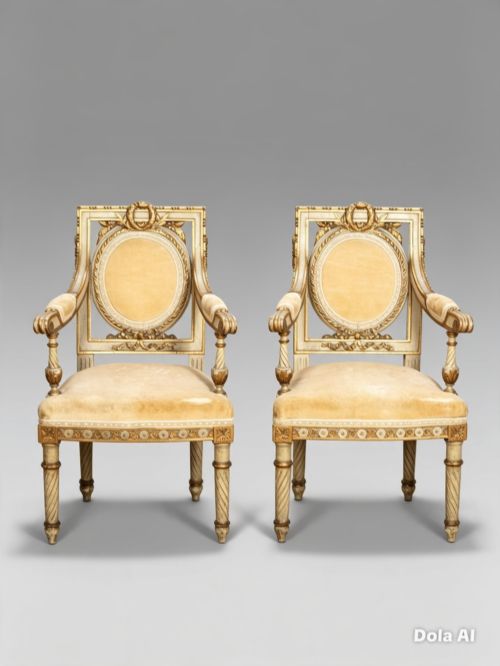


Painted Open Fauteuils
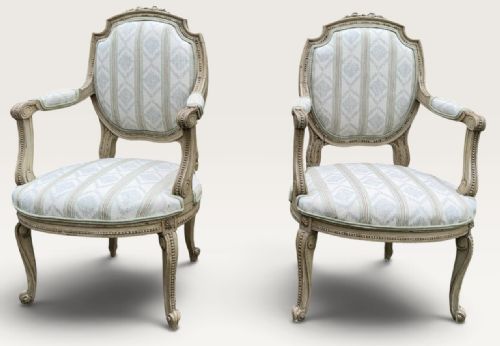
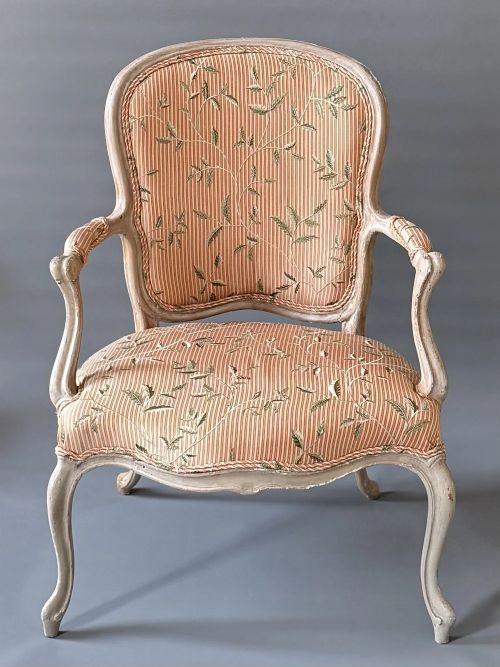
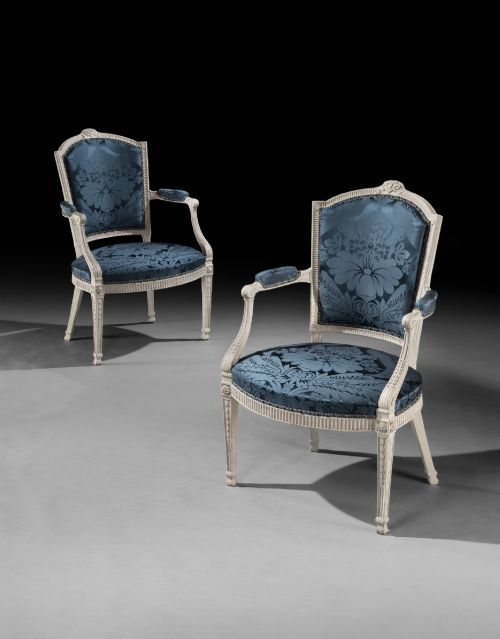
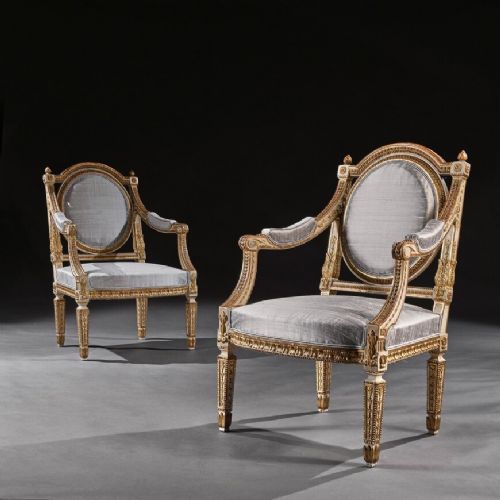
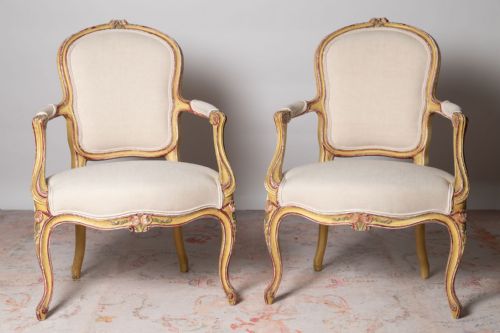
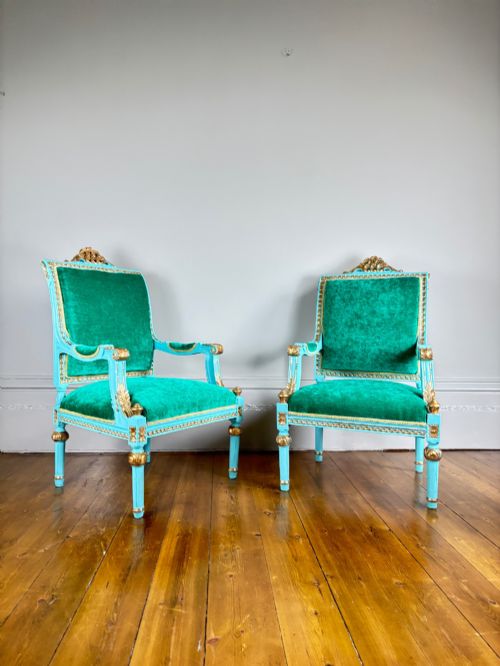
These painted open fauteuils combine timber frames with decorative finishes and upholstered seats, offering classical seating from French and English traditions.
Painted Open Fauteuils
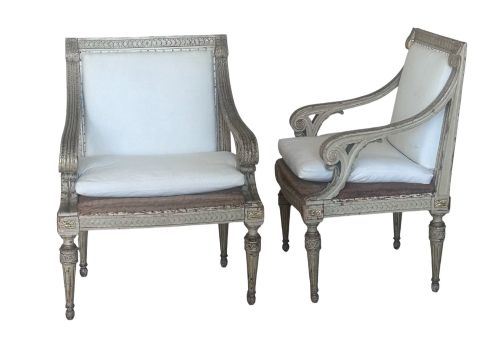
When you search for painted open fauteuils, you encounter wooden armchairs designed with open sides and finished in painted or parcel gilt schemes. These chairs emerge across the eighteenth, nineteenth, and early twentieth centuries in French, Italian, and English workshops.
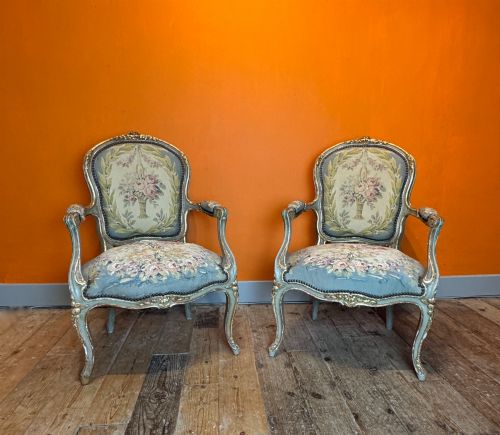
The versions most common on this page are nineteenth-century French armchairs carrying period paintwork or later revivals in Louis styles. They frequently appear in pairs, utilising carved wooden frames alongside fabric, tapestry, or needlepoint upholstery.
How they were made
Cabinetmakers shaped timber frames from beech or walnut, employing traditional joinery to build the structural support for open armchairs. Carvers added ornamentation directly to the wood before workshops applied layers of paint, gesso, and gold leaf.
Upholsterers finished the pieces by webbing and stuffing the seats and back panels with textiles such as velvet, tapestry, and needlepoint panels. Original surfaces often retain historical paint layers, showing the wear of successive generations.
Several listings include children's salon chairs, proving that tiny aristocrats also required proper painted seating.
What varies in quality
The standard of carving on the wooden frame determines much of the distinction between ordinary and superior armchairs. Crisp detail in the floral motifs, scrollwork, and moulded edges indicates skilled handwork rather than simple production.
The integrity of the painted surface and the survival of original upholstery textiles also dictate distinction. Pieces retaining early or original paint alongside period tapestry panels hold greater decorative character than those with later repainting.
The Painted Open Fauteuils Glossary
- Fauteuil
- An upholstered open-framed armchair originating in France during the seventeenth century. These chairs feature exposed wooden arms without padded elbow pads.
- Parcel Gilt
- A decoration method where selected portions of a painted wooden surface receive application of gold leaf. This technique highlights carved details against the primary paint colour.
- Gesso
- A plaster mixture applied to wooden frames to provide a smooth base for gilding and painting. It allows carvers to achieve sharp relief details.
- Needlepoint
- Hand-stitched canvas embroidery used for upholstery panels on seats and backs. These detailed textile panels often feature floral or figurative designs.
- Neoclassical
- A decorative style drawing inspiration from classical antiquity, prominent in eighteenth and nineteenth-century furniture. It relies on symmetry, straight lines, and classical motifs.
Painted Open Fauteuils: Frequently Asked Questions
Where were painted open fauteuils placed?
These armchairs sat principally in formal salons, withdrawing rooms, and grand bedchambers within eighteenth and nineteenth-century residences. They provided decorative seating for guests rather than heavy lounging.
Pairs often flanked fireplaces, console tables, or windows in reception rooms. Their open wooden frames kept rooms feeling light and spacious compared to fully upholstered chairs.
How do I identify Louis XV style chairs?
Louis XV style chairs display characteristic asymmetry, curved cabriole legs, and organic scrollwork derived from Rococo design. The framework avoids straight lines in favour of flowing contours.
Cartouche-shaped backs and floral carvings further define this style. Later nineteenth-century revivals adopted these exact contours while utilising period painting techniques.
Are these chairs comfortable for daily use?
While these fauteuils provide structured support through sprung or webbed seats, their upright open arms suit formal sitting rather than relaxed lounging. The low armrests are designed to accommodate voluminous period garments.
Placing them in modern rooms works best where they serve as accent seating. Adding a matching cushion can adjust the seat depth to personal preference.
What is the difference between original and later paint?
Original paint consists of historical layers applied during the chair's manufacture or first period of use, showing natural craquelure and mellow wear. This surface carries the authentic patina of age. Nineteeth-century or twentieth-century decorative overpainting alters the original appearance. Collectors generally value untouched historical paint surfaces for their authenticity.