




Burgundy Velvet Chairs
Burgundy velvet chairs bring rich colour and tactile warmth to a room, ranging from robust oak dining sets to carved French fauteuils.
Burgundy Velvet Chairs
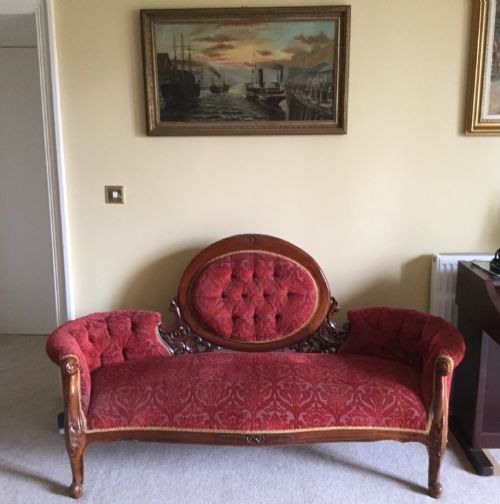
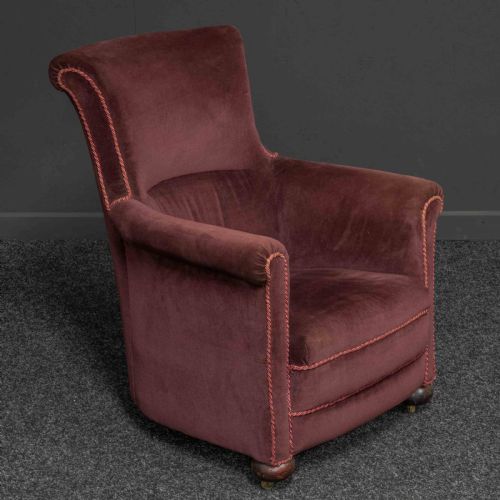
Burgundy velvet chairs encompass a diverse selection of seating forms spanning the nineteenth and twentieth centuries, including armchairs, dining chairs, sofas, and side chairs. When searching for burgundy velvet chairs, you encounter pieces upholstered in deep pile fabrics alongside historic frames originating from various periods.
The material evidence shows pieces primarily associated with Victorian, Edwardian, and nineteenth-century eras, reflecting distinct aesthetic movements such as Jacobean Revival and Louis XVI style. These seating options range from simple side chairs to large fireside armchairs and double-ended sofas.
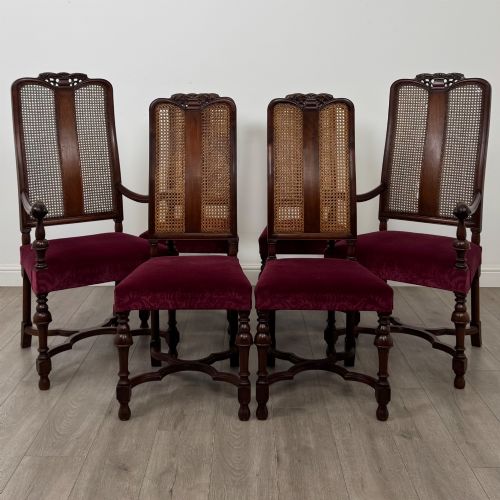
Makers and craftsmen utilised robust timbers like mahogany, oak, and walnut to construct the foundational frames, often incorporating brass details or cane accents. The resulting selection provides options suited to formal dining spaces as well as relaxed country house interiors.
How they were made
Craftsmen built the structural frames of these chairs using traditional timbers such as mahogany, oak, and walnut, frequently applying intricate carvings or painted finishes. Iron frames also appeared in specific Victorian designs to provide robust internal support for button-backed upholstery.
Upholstery techniques involved durable fabric coverings, deep pile brocade, and sprung settee bases to ensure comfort and longevity. Details like brass fittings, cane panels, and inlaid wood further enhanced the construction of Edwardian and nineteenth-century examples.
The available furniture spans nineteenth-century Victorian and Edwardian periods, alongside twentieth-century examples.
What varies in quality
The refinement of the timber frame and the depth of the carving set individual pieces apart, ranging from simple country house constructions to elaborately carved French revival armchairs. Superior examples feature carefully selected hardwoods like mahogany or walnut shaped with balanced proportions.
Upholstery execution dictates the overall tactile appeal, with dense pile fabrics and precise buttoning demonstrating superior craftsmanship. The integration of supporting materials such as brass hardware, cane work, and sprung bases distinguishes higher grade seating.
The Burgundy Velvet Chairs Glossary
- Fauteuil
- An open-framed armchair with upholstered armrests, typically originating from French design traditions. These chairs often feature exposed carved wooden frames.
- Bergere
- An enclosed upholstered armchair with a wooden frame, frequently incorporating cane work on the sides or back. This form gained popularity during the eighteenth and nineteenth centuries.
- Button back
- An upholstery style where depressions are formed in the padding by pulling strings or buttons deep into the stuffing. This technique secures the filling and creates a tufted pattern.
- Brocade
- A rich decorative fabric woven with raised patterns, often utilised for upholstery on period seating. It adds texture and visual depth to the piece.
Burgundy Velvet Chairs: Frequently Asked Questions
What periods do these chairs represent?
The listings span the nineteenth and early twentieth centuries, capturing Victorian, Edwardian, and various revival styles. These periods encompass diverse manufacturing traditions from British workshops and French design influences.
Craftsmen during these eras utilised traditional timbers and upholstery methods that define the character of each piece. Surviving examples reflect the shifting aesthetic preferences of their respective decades.
How do I identify a Victorian armchair?
Victorian armchairs often feature substantial frames made from mahogany, walnut, or iron, frequently accompanied by button-backed upholstery. These pieces prioritize sturdy construction and comfortable, padded seating forms.
Design characteristics from this era also include sprung bases and robust proportions suited for domestic parlours and libraries. The integration of deep pile fabrics further marks pieces from this period.
Where were oak framed chairs used?
Oak framed chairs generally served functional roles in dining rooms, libraries, and country houses. The durability of oak made it a preferred choice for larger seating sets and heavy-duty armchairs.
These pieces often display revival styles such as Jacobean or Carolean influences, reflecting historic British joinery traditions. Their sturdy construction ensured longevity through decades of daily use.
What materials make up the frames?
Frames are constructed primarily from solid hardwoods including mahogany, oak, and walnut, selected for their structural stability. Some specialised pieces incorporate iron internal frames or decorative wood veneers.
Additional materials like brass and cane frequently appear as supportive elements or decorative accents. These components work together to maintain the structural integrity of the seating.
How do French revival chairs differ?
French revival chairs, such as those in the Louis XVI style, typically showcase carved and painted wooden frames with open armrests. These pieces emphasise decorative elegance alongside classical proportions.
Craftsmen often incorporated subtle painted finishes and refined woodwork that distinguish them from heavier British Victorian furniture. Their design draws inspiration from historic continental court aesthetics.