



Painted Landscape Vase
A painted landscape vase brings distant vistas and serene horizons into a room through meticulous brushwork on porcelain or earthenware.
Painted Landscape Vase
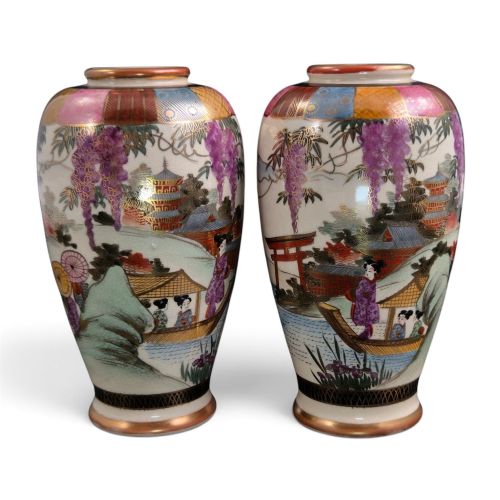
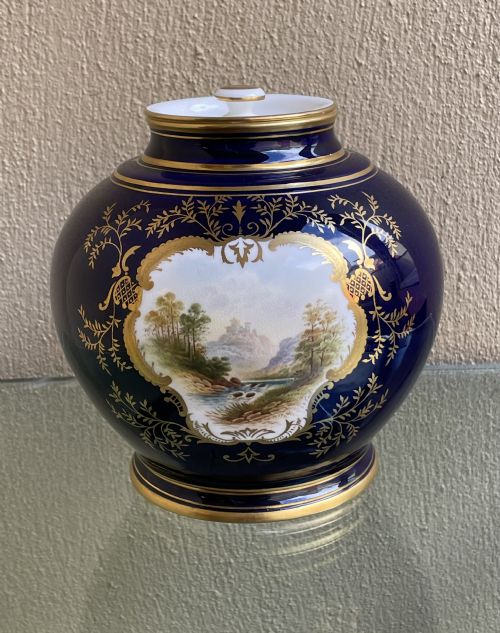
A painted landscape vase takes various forms across this selection, including traditional vessels, lidded urns, bough pots, and spill vases. These objects span periods from the Georgian and Regency eras through the Edwardian years and the early twentieth century, showing both British porcelain manufactories and East Asian ceramic traditions.
Makers such as Royal Worcester, Coalport, and Flight, Barr and Barr dominate the British offerings, frequently depicting cattle or pastoral views. Japanese Satsuma, Kutani, and Chinese wares introduce alternative decorative landscapes using enamel and gilt against various ceramic grounds.
Materials and construction
The foundation of these pieces relies on porcelain or earthenware bodies, shaped into vessels, ewers, and urns. Artisans then applied enamel paint, often enhanced with gold leaf, gilding, or gold gilt to highlight specific details of the scenery.
Techniques range from hand-painted topographical and pastoral scenes by named artists to intricate cloisonné and transfer methods. Brass mounts occasionally supplement the ceramic bodies on specific nineteenth-century pieces.
Highland cattle stare out from multiple Worcester vases, seemingly unfazed by the gilt foliage framing their pasture.
Assessing quality in landscape vases
Quality rests upon the precision and execution of the painted landscape itself, distinguishing standard production items from master-painted works by notable artists. The subtlety of the brushwork and the harmony between the ceramic form and the surrounding gilt or enamel decoration dictate the overall standing of a piece.
The reputation of the manufactory or the documented hand of a specific decorator significantly elevates the standard of the work. Preservation of the original gilding and enamel colours without restoration also governs the desirability of these vessels.
Coalport·Flight, Barr and Barr·Royal Doulton·Royal Worcester·Mason
The Painted Landscape Vase Glossary
- Bough pot
- A specialised vessel designed to hold cut flowering branches rather than simple stems. These containers often feature pierced covers and painted landscape scenes suitable for tabletop display.
- Spill vase
- A tall, slender cylindrical container used to hold wooden spills for lighting fires. They frequently display hand-painted pastoral or Highland views.
- Gilding
- The application of gold leaf or gold powder onto the ceramic surface to accent handles, rims, and borders. This technique frames the central landscape painting.
- Earthenware
- A porous pottery body fired at lower temperatures than porcelain. It forms the structural base for various decorative wares in this category.
- Cloisonné
- An enamel technique where metal wires form small compartments on the vessel surface to hold coloured pastes. These wires outline the landscape motifs before firing.
Painted Landscape Vase: Frequently Asked Questions
How were lidded vases used historically?
Lidded vases and urns functioned primarily as decorative garnitures on mantelpieces and sideboards. The covers maintained the continuous line of the painted landscape design when placed in formal rooms.
Variants like bough pots served a practical botanical purpose while still presenting prominent landscape art on their exterior surfaces.
How do I care for a painted vase?
Dust these vessels gently with a soft, dry cloth to protect the delicate enamel paint and gold leaf details. Avoid using water or chemical cleaners, which can damage historic pigments and gilding.
Keep them away from direct sunlight to prevent the painted landscape colours from fading over time.
How do I date a porcelain vase?
Dating relies on manufacturer factory marks stamped or painted on the underside of the base. Stylistic cues such as Edwardian neoclassical shapes or Meiji period motifs also point to specific decades of production.
Comparing the artist signature and ceramic body type helps confirm the active period of the manufactory.