


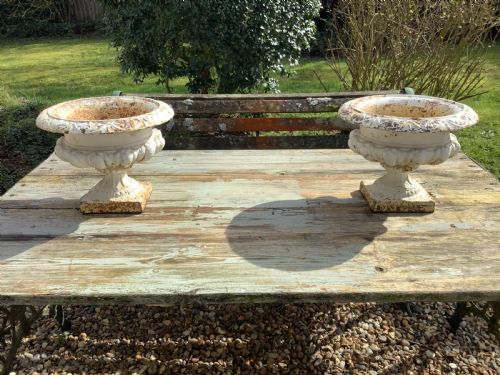


Painted Garden Urns
Painted garden urns bring architectural presence to grounds and terraces, offering enduring form and weathered charm.
Painted Garden Urns
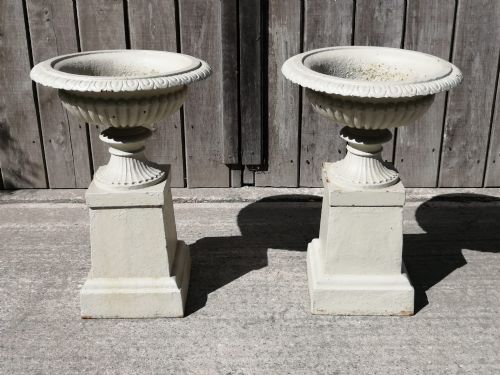
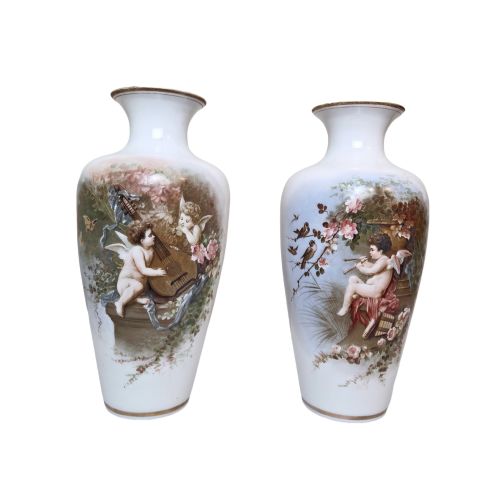
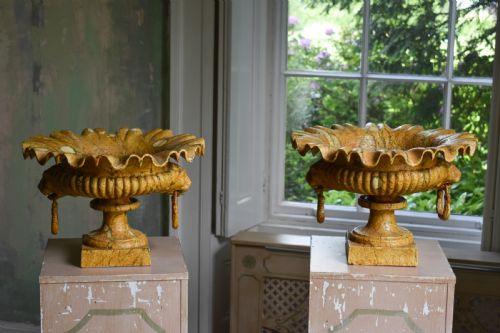
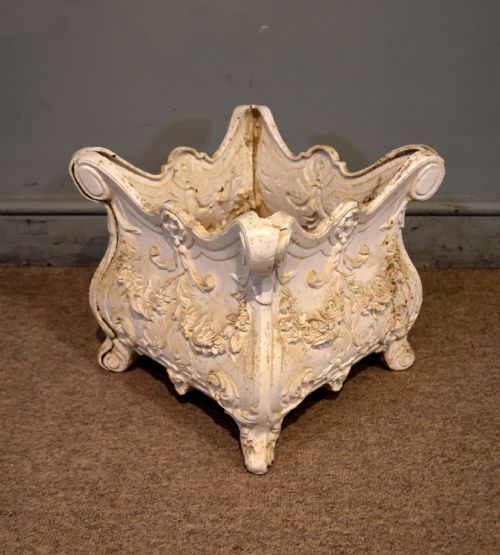
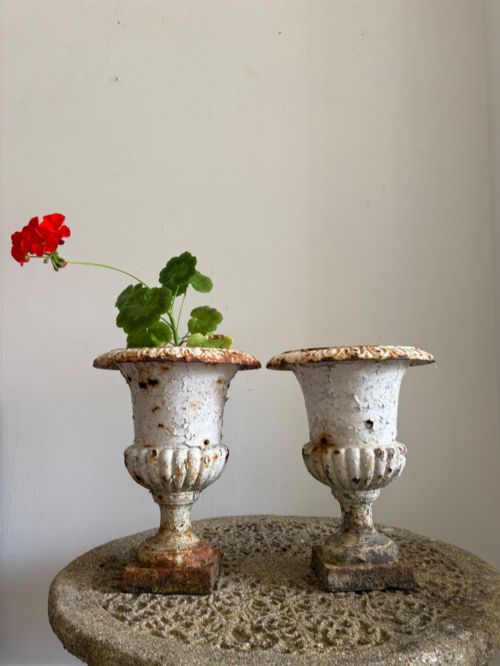
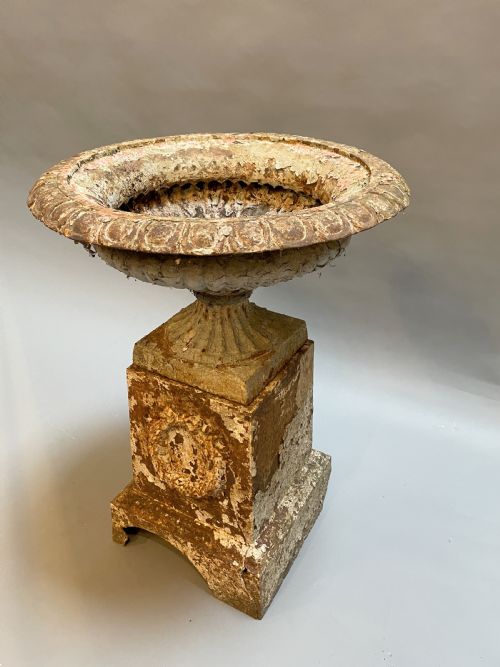
Painted garden urns comprise substantial vessels designed for outdoor placement, frequently encountered in robust cast iron from the nineteenth century alongside occasional terracotta or tin-glazed earthenware examples. Buyers searching for painted garden urns typically encounter classical silhouettes, including campana and gadrooned profiles resting upon dedicated pedestals or plinths.
The selection ranges from compact table urns to large, heavy garden planters displaying original distressed paint finishes. Prominent foundry designs, such as those attributed to Coalbrookdale or Carron, appear alongside French and Italian specimens shaped by nineteenth-century classical and neoclassical tastes.
How they were made
Foundries produced these heavy vessels by pouring molten metal into sand moulds, yielding durable cast iron bodies capable of supporting intricate relief decoration like acanthus leaves and gadrooning. Earthenware and terracotta alternatives relied on hand-thrown or moulded clay subsequently fired in kilns before receiving surface decoration.
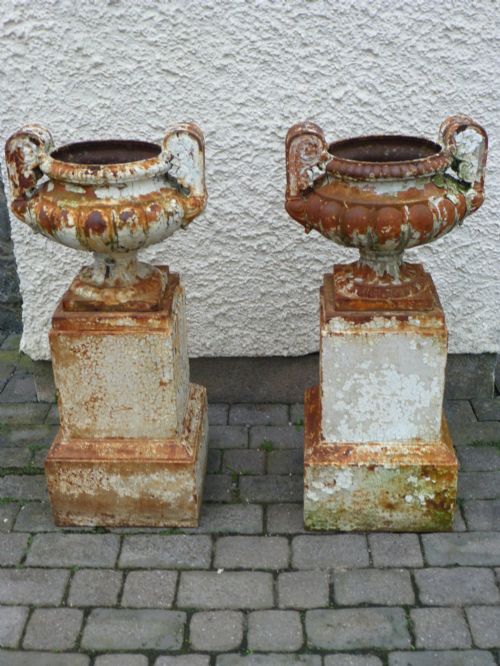
Makers applied protective coats of paint to guard against moisture and frost, creating the weathered layered surfaces seen on surviving nineteenth-century examples today. Gilding and tin-glazed finishes appear on more decorative ceramic variants intended for sheltered garden rooms or terraces.
Painted Garden Urns Retail Price Guide 2026
Typical asking prices for painted garden urns among the pieces listed under this phrase on Sellingantiques today, from the lower quarter to the upper quarter. They describe what is for sale here now, not the wider market.
Nineteenth-century foundry workers occasionally hid personal identification marks inside the hollow pedestal bases of heavy iron urns.
What varies in quality
Quality rests upon the crispness of the casting detail and the architectural balance of the vessel in relation to its base. Crisp relief mouldings on acanthus leaves or classical figures indicate superior foundry work from established makers like Coalbrookdale.
The integrity of the original metal and the character of the remaining paint layers determine the desirability of an iron urn. Heavy, thick-walled castings with original plinths stand apart from lighter decorative reproductions.
Coalbrookdale·Falkirk Carron foundry·Hakusan
The Painted Garden Urns Glossary
- Campana urn
- A bell-shaped garden vessel with an everted rim, widely produced in cast iron during the nineteenth century.
- Gadrooned
- Ornamented with a series of convex curves or flutes radiating outwards, often seen around the bowl of an urn.
- Plinth
- A heavy architectural base or pedestal upon which a garden urn is elevated.
- Tin-glazed earthenware
- Pottery coated with an opaque white glaze containing tin oxide, providing a smooth surface for painted decoration.
- Strapwork
- Ornamental bandwork resembling leather straps, frequently utilised on nineteenth-century ironwork and planters.
Painted Garden Urns: Frequently Asked Questions
How do I protect cast iron urns from frost?
Cast iron withstands cold weather well, but trapped water inside the bowl can freeze and expand to crack the metal. Ensure adequate drainage holes remain clear and elevate the base slightly off damp ground during winter months.
Applying a suitable protective exterior paint layer when the surface begins to weather preserves the iron beneath from sustained moisture damage.
Can these urns stay outside all year?
Iron and terracotta garden urns suit permanent outdoor placement, developing deeper patinas through exposure to the elements. Terracotta requires extra care during freezing temperatures to prevent moisture absorption and cracking.
Positioning heavy iron vessels on stable stone or gravel surfaces prevents subsidence and maintains proper drainage through the base.
How do I identify a nineteenth-century piece?
Nineteenth-century cast iron urns typically display heavy, thick-walled construction with sand-cast textures visible on unpainted interior surfaces. Design motifs follow classical, neoclassical, or Victorian styles popular during that era.
Foundry marks or registration numbers stamped into the iron sometimes provide direct confirmation of the manufacturing period.
What plants suit a classical garden urn?
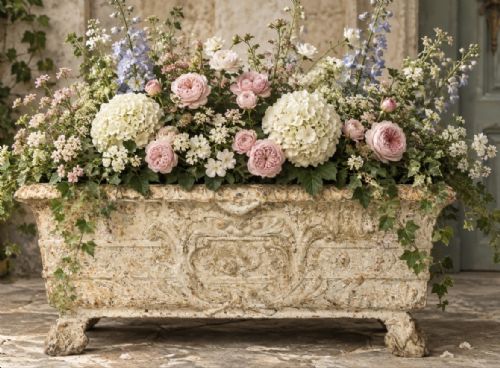
Trailing ivy, cascading geraniums, and structured box balls complement the traditional proportions of campana and gadrooned urns. The height of the vessel lifts foliage above ground level, framing pathways and terrace entrances effectively.
Ensure planting compost retains adequate moisture while allowing surplus water to escape freely through the drainage hole.