


Fluted Garden Planters
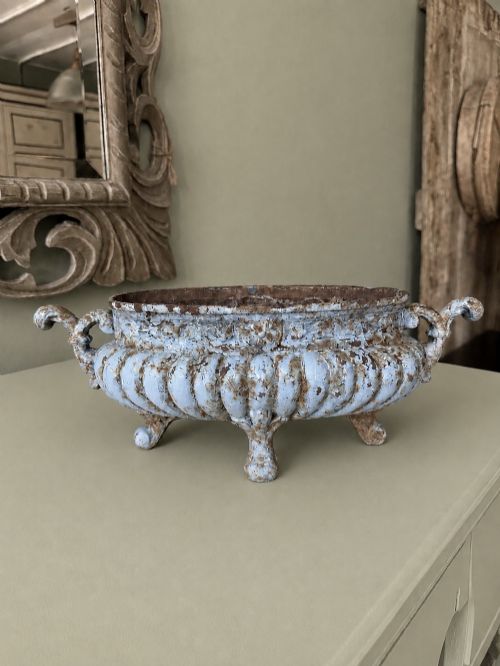
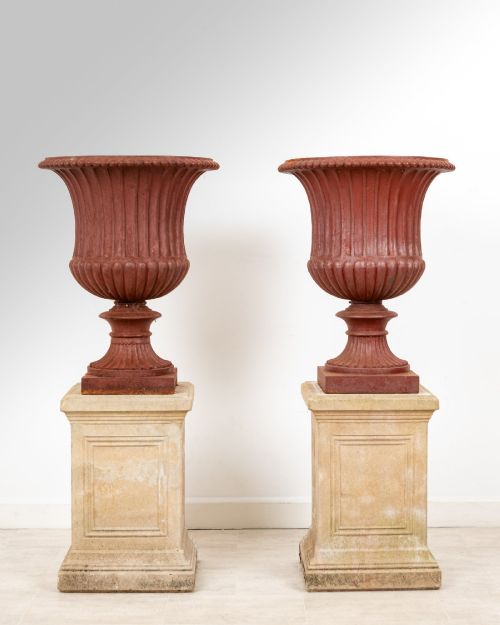
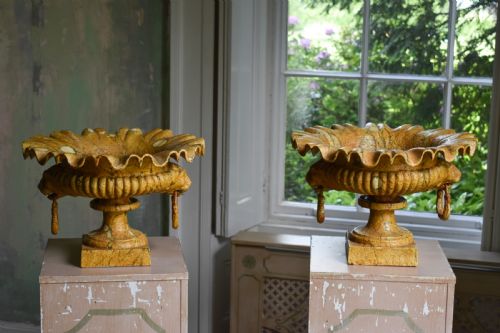
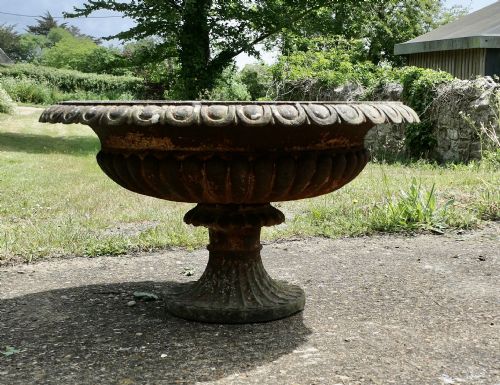
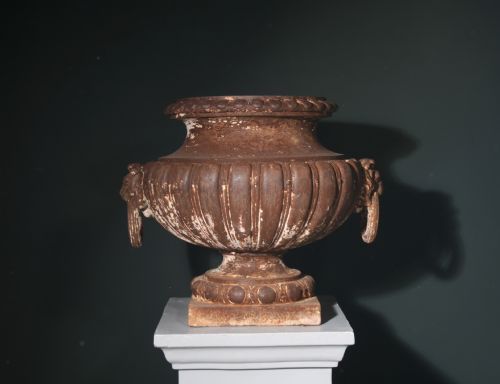
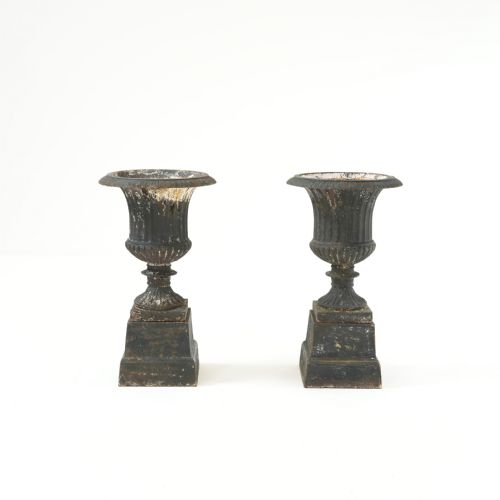
These fluted garden planters bring architectural weight to a terrace, taking the form of cast iron or stone campana urns.
Fluted Garden Planters
When searching for fluted garden planters, buyers encounter robust vessels designed to hold greenery while establishing a formal garden presence. The selection spans the nineteenth century through to the mid-twentieth century, drawing heavily on classical vocabulary.
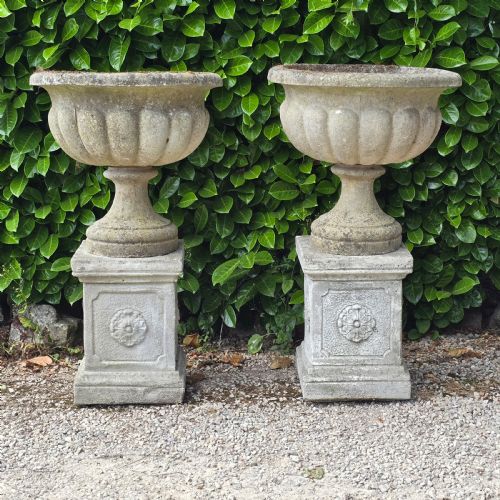
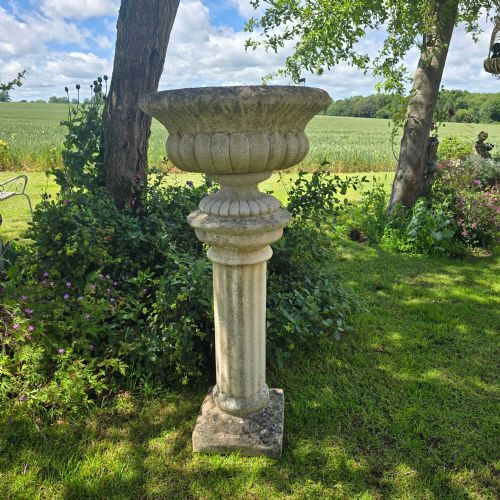
Victorian and nineteenth-century examples dominate the pieces seen here, frequently cast in iron or carved from stone. These take the shape of campana urns, tazzas, and jardinieres, often raised upon matching plinths or pedestals.
French and Italian influences appear across the styles, alongside domestic Victorian interpretations. Buyers most commonly meet heavy cast iron versions designed to weather outdoors over decades.
Materials and casting methods
Cast iron serves as the primary medium, shaped in foundry moulds to produce crisp fluting and classical ornament. Foundries such as Val d'Osne utilised this technique to create durable vessels that could withstand outdoor elements.
Alternative materials include reconstituted stone, lead, terracotta, and white marble. Each substance dictates the method of production, from hand-carved Italian marble to moulded terracotta and cast stone.
Listings feature nineteenth-century cast iron alongside white marble, lead, and terracotta examples.
Distinctions in craftsmanship and survival
The distinction between ordinary and exceptional pieces lies in the crispness of the casting and the depth of the relief work. Finer examples retain sharp vertical fluting and well-defined classical motifs without softening.
Surface patina and structural integrity separate surviving pieces. Uniform weathering and heavy, thick-walled metal or dense stone indicate higher grade production from established foundries.
VAL D'OSNE FOUNDRY·Andrew Handyside
The Fluted Garden Planters Glossary
- Campana urn
- A bell-shaped garden vessel with an everted rim, frequently mounted on a pedestal or plinth. This classical form provides the structural silhouette for many nineteenth-century planters.
- Jardiniere
- An ornamental pot or receptacle designed to hold growing plants or flowers. These vessels sit upon terraces or inside garden rooms.
- Tazza
- A shallow cup or bowl mounted on a stem and foot, used in stone or marble for formal garden display. The form derives from classical dining vessels adapted for horticulture.
- Plinth
- A heavy base block that elevates an urn or planter above ground level. Plinths add architectural presence and stability to heavy cast iron pieces.
- Reconstituted stone
- A composite material made from crushed stone bound with cement, moulded to replicate natural carved stone. This technique allowed for ornate garden ornament production.
Fluted Garden Planters: Frequently Asked Questions
Are these planters frost proof?
Cast iron and stone planters generally withstand outdoor winter conditions, provided water drainage remains unobstructed. Heavy metal and dense stone cope well with temperature drops when managed correctly.
Terracotta and certain reconstituted stone vessels require more care during freezing weather to prevent cracking. Placing pot feet underneath allows trapped moisture to escape safely.
How heavy are cast iron urns?
Nineteenth-century cast iron urns possess substantial weight, often requiring two people or lifting equipment to position safely. This heft keeps them stable on garden terraces without tipping.
Matching stone plinths add further mass to the overall assembly. Their weight makes them permanent garden fixtures once placed.
Can these urns go indoors?
These vessels suit conservatories, Orangeries, and large hallway spaces when paired with suitable saucers or trays. Their classical forms integrate cleanly into interior architectural schemes.
Cast iron pieces benefit from a protective interior coating if exposed to persistent indoor watering. Marble and terracotta versions adapt well to indoor display.
How do I date a cast iron urn?
Nineteenth-century pieces often display foundry marks, registration numbers, or distinct casting seams characteristic of period production methods. The thickness of the iron and the depth of the classical detailing offer further clues.
Victorian and Regency examples favor specific neoclassical proportions. Comparing the decorative relief work against documented foundry catalogues helps narrow the decade.