




Painted Iron Urns
These painted iron urns bring classical form and enduring weight to gardens and terraces, offering a striking focal point for outdoor planting.
Painted Iron Urns
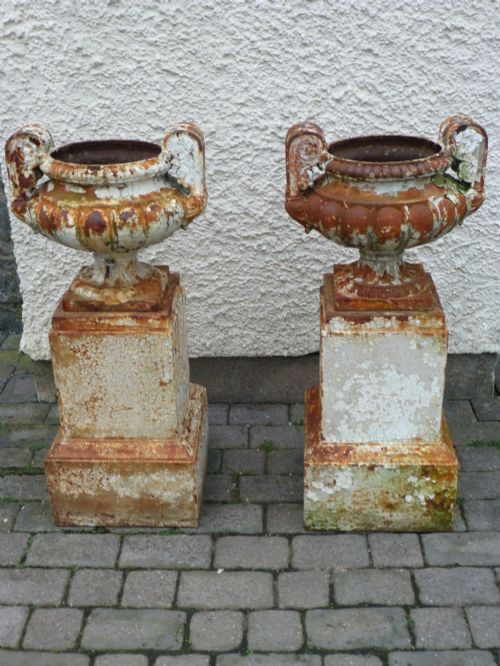
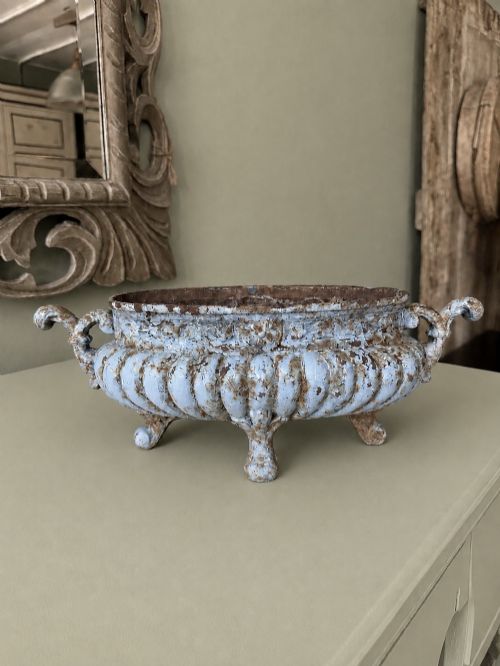
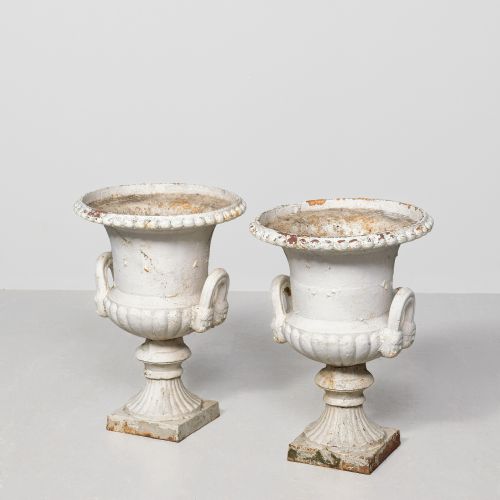
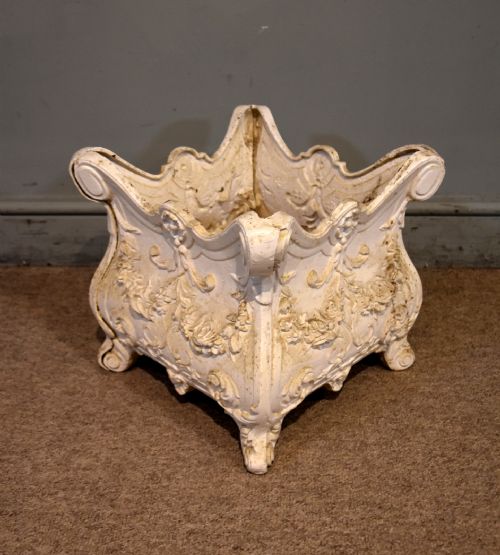
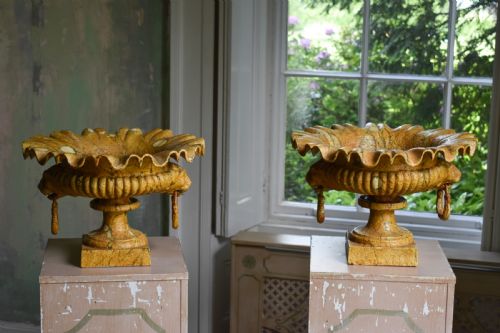
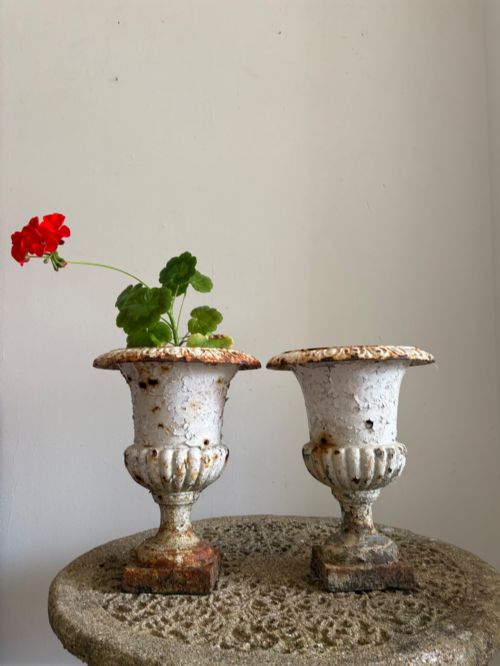
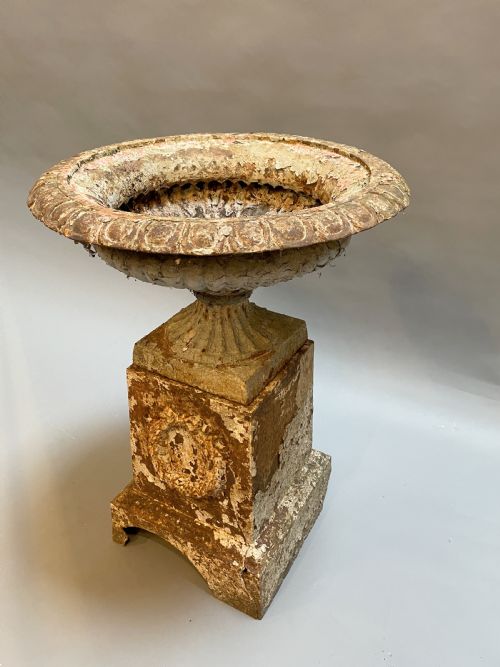
When you search for painted iron urns, you encounter robust vessels designed primarily for garden display, often taking the classic campagnolo or pedestal form. The selection ranges from compact table models to large garden planters set upon original plinths.
Most examples hail from the nineteenth century, including Victorian productions and French workshop pieces, alongside utilitarian or decorative variations from later decades. Foundry marks occasionally reveal notable makers, connecting sturdy ironwork to historic industrial output.
How they were made
Foundries produced these vessels by pouring molten metal into sand moulds, capturing crisp architectural details such as acanthus leaves and fluted bodies. Cast iron provided the necessary tensile strength for heavy garden ornaments exposed to the elements.
Surfaces received protective coats of paint or primer to prevent oxidation, with surviving pieces often retaining layers of distressed historic pigment. Some items incorporate wrought iron strapwork or pedestal stands secured during the primary casting process.
The listings span the nineteenth century through the Edwardian period, featuring cast iron, wrought iron, and painted surfaces.
What varies in quality
The finesse of the casting separates standard utility pieces from exceptional foundry output, visible in the sharpness of relief ornament and the symmetry of the vessel walls. Thicker iron sections and intact original plinths elevate the overall integrity of a piece.
Surface preservation dictates much of the appeal, as undisturbed historic paint layers carry more character than modern repainting. Well-defined foundry attribution also enhances the standing of an urn within historical ironwork.
Falkirk Carron foundry·Coalbrookdale
The Painted Iron Urns Glossary
- Campagna urn
- A bell-shaped vessel form with a flaring rim and a footed base, widely utilised for classical garden decoration. This silhouette derives from ancient Roman marble excavations.
- Cast iron
- An iron-carbon alloy poured into moulds while molten to create complex shapes. It forms the primary heavy structure for nineteenth-century garden urns and planters.
- Plinth
- A heavy rectangular or square base block supporting an urn or pedestal. Original matched plinths significantly complete the composition.
- Strapwork
- Ornamental metal bands applied or integrated into ironwork for structural reinforcement and visual rhythm. This technique appears on specific nineteenth-century planters.
- Jardiniere
- A decorative ornamental pot or stand designed to hold growing plants or flowers. These items appear in both interior table formats and larger garden designs.
Painted Iron Urns: Frequently Asked Questions
Where should iron urns be placed?
These vessels suit formal garden pathways, terrace corners, or flanking stone entrance steps where their weight provides stability.
Ensure the ground beneath is level and capable of supporting heavy ironwork, particularly when filled with soil and plants.
How do I care for painted iron?
Inspect the surface periodically for signs of weathering and touch up exposed metal with suitable protective paint to inhibit rust.
Avoid harsh chemical strippers that might disturb historic paint layers and patination accumulated over decades.
Are these urns frost resistant?
Cast iron withstands cold temperatures well, but trapped wet soil expanding inside the vessel during a freeze can exert severe internal pressure.
Elevate the base slightly to allow proper drainage and line the interior if planting delicate species susceptible to deep cold.
How do I date a cast iron urn?
Examine the casting seams, fastener types, and stylistic motifs such as classical acanthus leaves or nineteenth-century foundry stamps.
Original surface treatments and wear patterns also help distinguish nineteenth-century examples from later twentieth-century reproductions.