



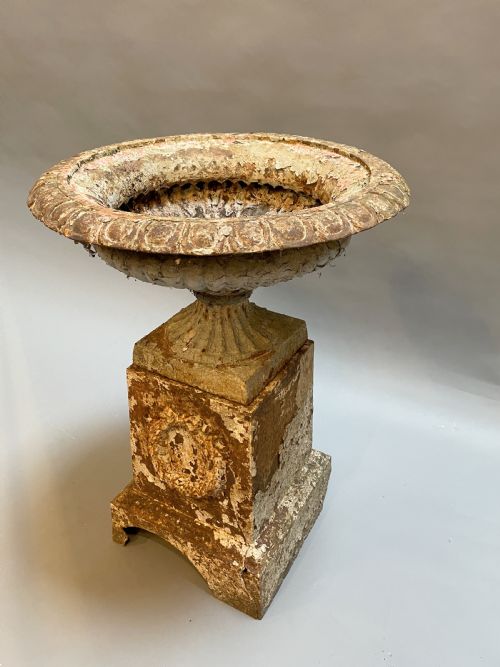
Outdoor Planter Pedestals
Outdoor planter pedestals elevate garden greenery, bringing classical weight and architectural height to terraces and lawns.
Outdoor Planter Pedestals
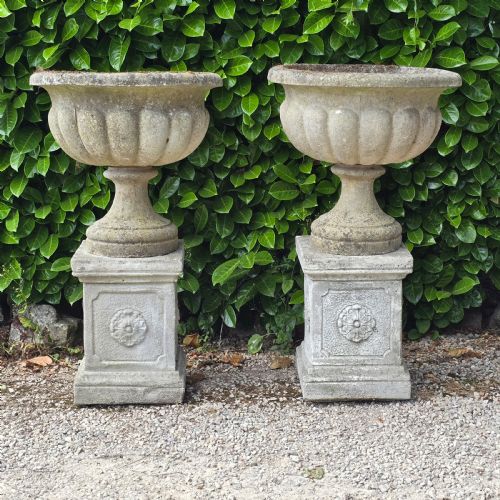
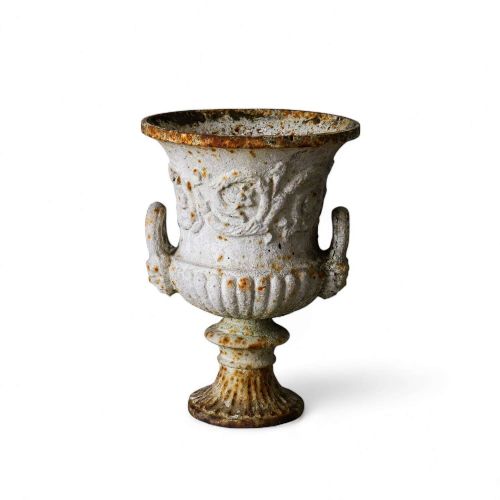
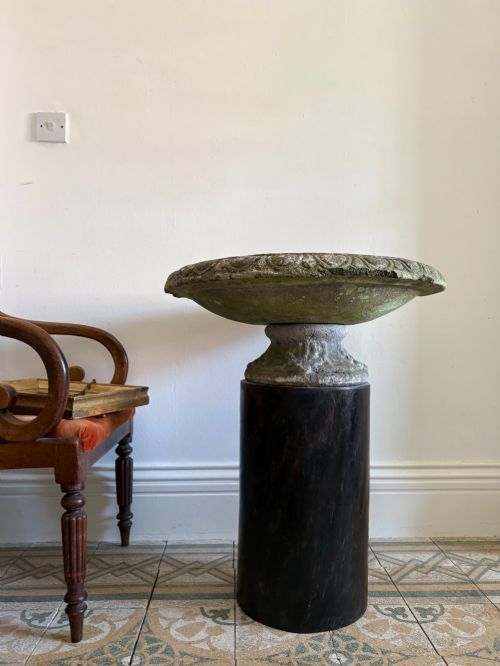
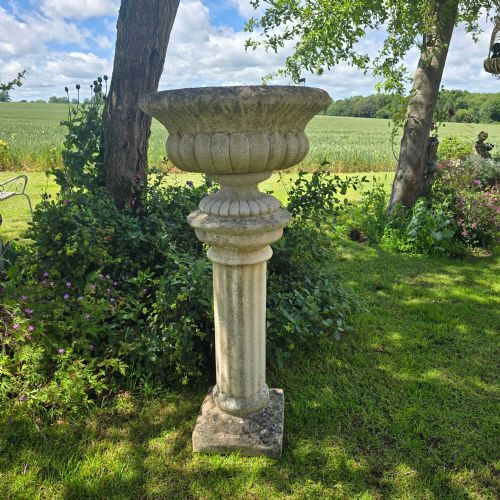
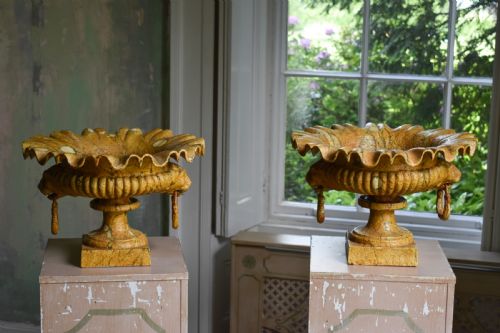
Outdoor planter pedestals combine raised stands, plinths, and columns with vessels like campana urns and jardinieres. These pieces elevate garden flora to create focal points in landscape design.
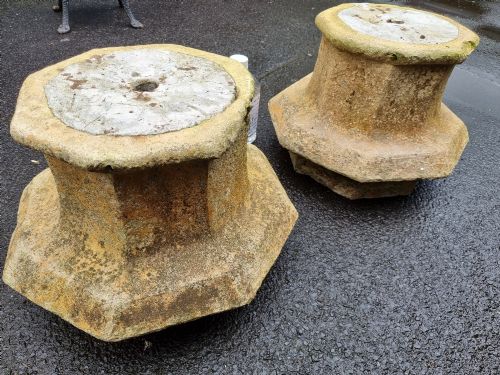
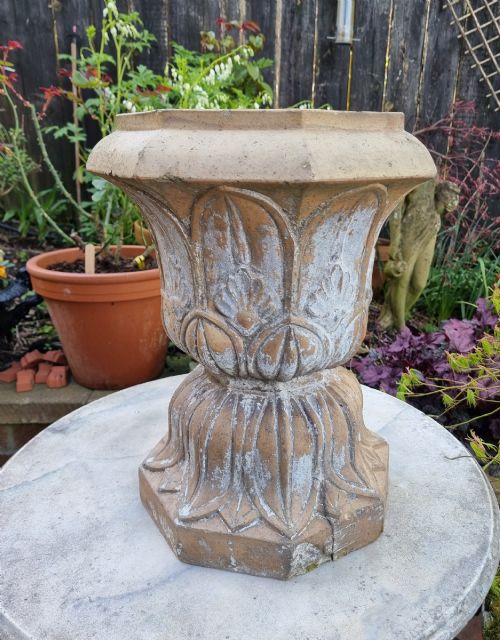
Victorian and nineteenth-century examples dominate the selection, often appearing in matched pairs alongside single monumental vessels. Forms range from classical acanthus-leaf motifs to simpler fluted columns and multi-sided pillars.
Origins stretch across the nineteenth and early twentieth centuries, encompassing Regency, Edwardian, and later periods. Buyers encounter traditional garden ornaments designed specifically to weather the elements outdoors.
Materials and Construction
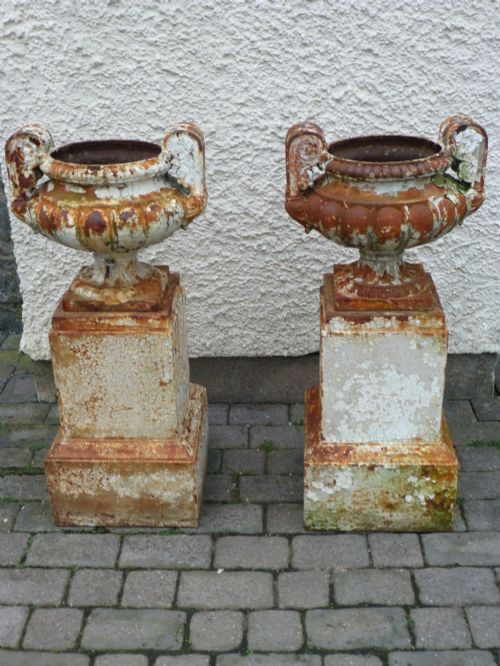
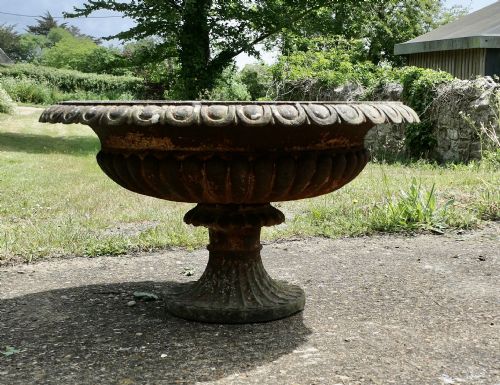
Cast iron serves as the primary medium for sturdy bases and decorative urns, frequently produced by notable foundries using traditional sand-moulding techniques. These iron pieces often display layers of historic paint or natural oxidisation.
Terracotta and salt-glazed stoneware provide porous, warm-toned alternatives shaped by historic pottery methods. These ceramic bodies rely on high-temperature firing to achieve durability in exterior settings.
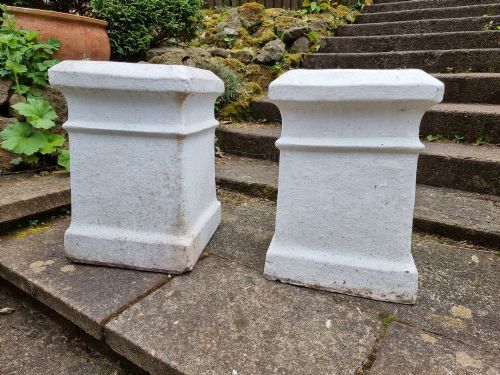
Cast stone, composite stone, and reconstituted stone offer robust mineral structures moulded into neoclassical and gothic forms. Such materials age gracefully outdoors, developing authentic patinas through exposure to weather.
Listings feature nineteenth-century cast iron, terracotta, and composite stone spanning the Regency, Victorian, and Edwardian periods.
Assessing Quality and Character
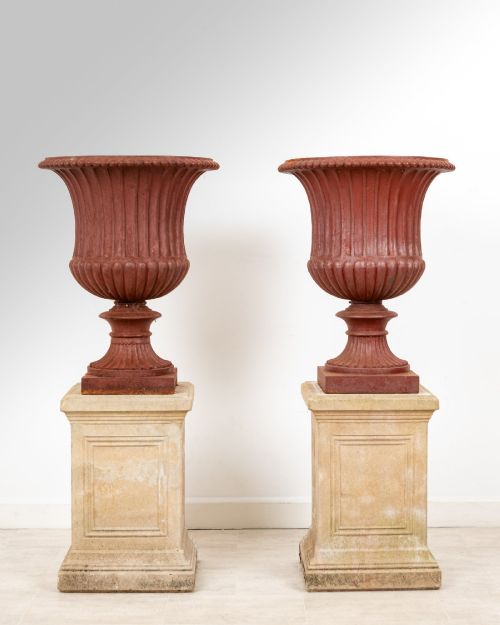
The definition and crispness of cast ornament separate superior examples from coarser work. Sharp detailing in acanthus leaves, gadrooned rims, and classical friezes indicates skilled pattern-making and clean foundry casting.
Originality of pairing heavily influences desirability, particularly with matched pairs of urns resting upon their matching plinths. Retained original surfaces, such as early painted finishes or deep historic weathering, add considerable appeal.
Falkirk Carron foundry·Coalbrookdale·Andrew Handyside
The Outdoor Planter Pedestals Glossary
- Campana urn
- A bell-shaped garden vessel with an everted rim, widely used on pedestals since classical antiquity. These pieces form a large proportion of classical garden ornaments.
- Plinth
- A heavy rectangular or square base supporting a column, urn, or statue. Plinths provide essential height and structural stability to outdoor displays.
- Gadrooned
- Decorated with a series of convex, rounded curves or flutes moulded in a parallel pattern. This ornamental carving often encircles the bowl of an urn.
- Jardiniere
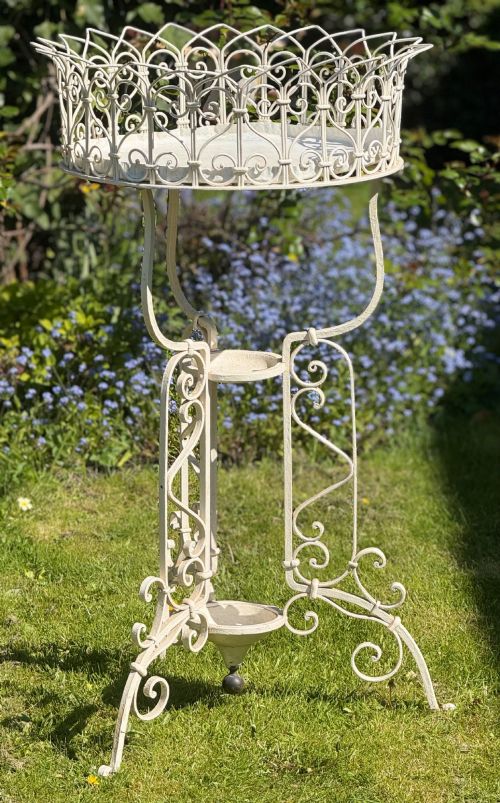
- An ornamental pot or stand intended to hold plants or flowers. These vessels frequently appear in heavy cast iron or terracotta for garden use.
- Salt-glazed
- Fired with common salt introduced into the kiln at high temperatures, producing a durable, slightly glossy vitreous coating. This finish protects ceramics from frost and weathering.
Outdoor Planter Pedestals: Frequently Asked Questions
Are outdoor planter pedestals frost-resistant?
Cast iron and properly fired salt-glazed stoneware generally withstand winter frost quite well. Terracotta and certain cast stone compositions may require protective cover or drainage during freezing conditions to prevent cracking.
Ensuring that base drainage holes remain clear stops trapped water from expanding inside the vessel walls. Historic materials handle weather best when placed on stable, well-drained stone footings rather than directly on damp soil.
How do I secure heavy cast iron urns?
The considerable weight of nineteenth-century iron urns and stone plinths often provides sufficient stability on level ground. For tall or top-heavy compositions, concealed dowels or specialist exterior adhesives anchor the components safely together.
Positioning pedestals on firm, compacted foundations prevents shifting or settling over time. Professional installation advice remains useful when assembling multi-part stone or iron garden monuments.
Can I paint cast iron garden pedestals?
Historic cast iron frequently carries layers of old paint that contribute to its character and protective barrier. Applying exterior metal paint over properly prepared surfaces helps preserve the metal against further rust.
Many collectors prefer to leave weathered surfaces untouched to showcase the natural patina accumulated over decades. Modern coatings should only be used when active corrosion threatens the structural integrity of the piece.
How do I distinguish Victorian from later pieces?
Victorian examples typically display heavier metal sections, deeper hand-finished casting details, and specific foundry markings where applicable. Twentieth-century pieces in cast stone or reconstituted stone often exhibit more uniform aggregate textures and standardised dimensions.
Examining the bolt fixings, seam lines, and oxidation patterns helps clarify the age of ironwork. Historic wear patterns on terracotta and stone also provide reliable clues regarding nineteenth-century origins.