




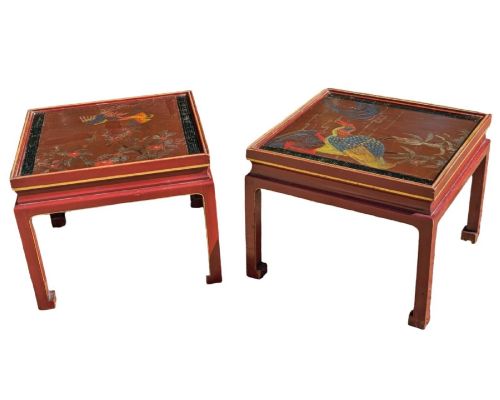
Painted Chinoiserie Table
A painted chinoiserie table brings imaginative decoration and glossy surfaces into a room, drawing on centuries of European interpretation of East Asian design.
Painted Chinoiserie Table
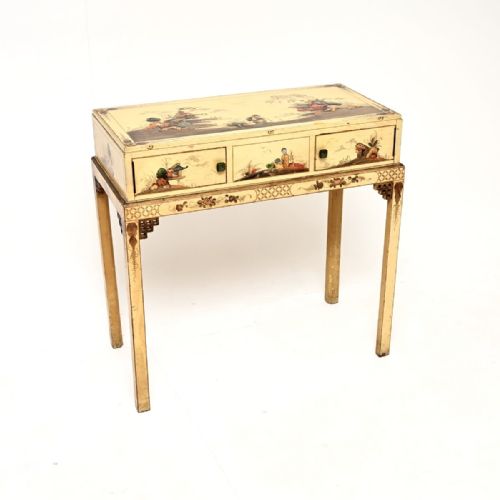
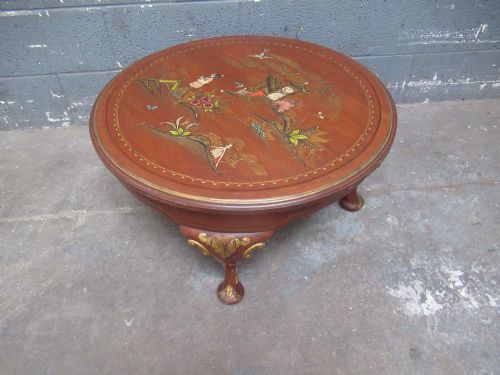
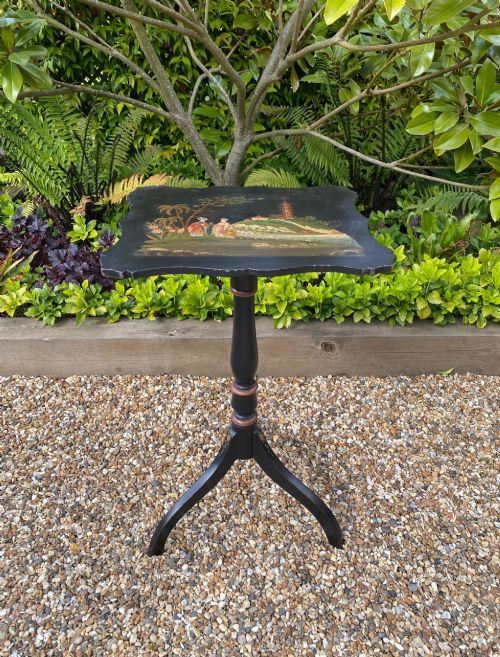
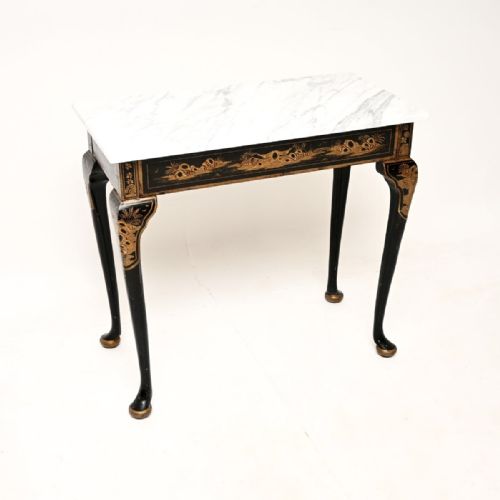
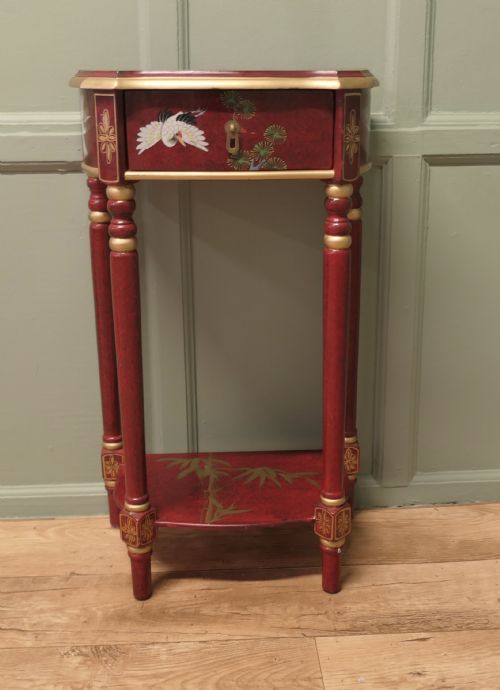
When you search for a painted chinoiserie table, you encounter diverse forms ranging from compact occasional pieces and coffee tables to console tables and low lacquer surfaces. These items bridge decorative arts and functional furniture through imaginative painted scenes.
The selections span the nineteenth century, the Edwardian era, and the early twentieth century, incorporating styles such as Regency Revival and Queen Anne alongside traditional Chinoiserie. Side tables and coffee tables dominate the current offerings, often displaying detailed figurative or landscape artwork.
Origins vary between English production, French influences, and Chinese export pieces adapted for Western interiors. The unifying characteristic remains the application of paint and lacquer over wood to create striking visual focal points.
How they were made
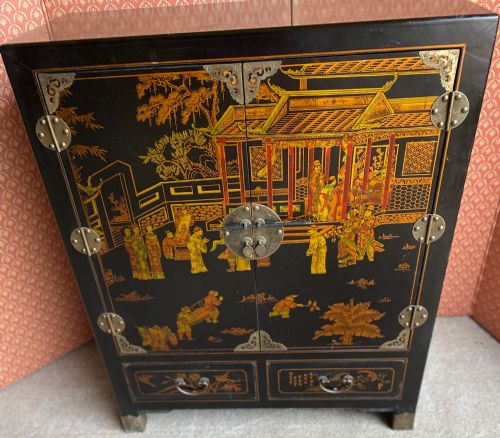
The construction relies fundamentally on wood frames prepared for surface decoration through layers of lacquer, paint, and sometimes gilt or gold leaf. Artisans built up smooth bases before applying intricate pictorial motifs depicting figures, pavilions, and natural scenes.
Detailing often involved contrasting colours such as red, black, ochre, or cream backgrounds paired with metallic highlights. Materials like brass and porcelain occasionally appeared alongside bamboo and lacquered wood to complete the decorative scheme.
Painted Chinoiserie Table Retail Price Guide 2026
Typical asking prices for painted chinoiserie table among the pieces listed under this phrase on Sellingantiques today, from the lower quarter to the upper quarter. They describe what is for sale here now, not the wider market.
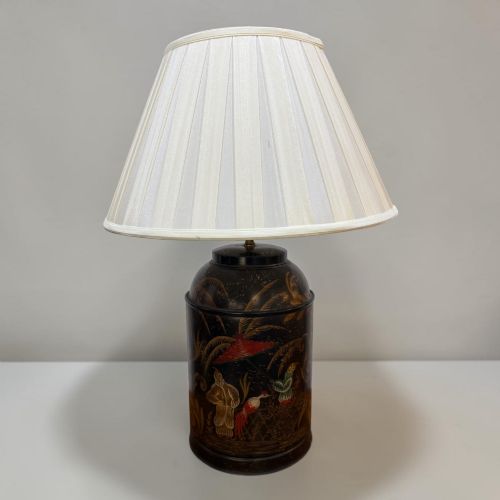
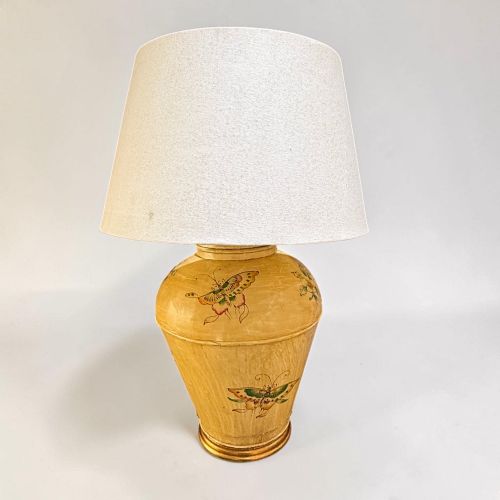
Butterflies flutter even onto table lamp switches when playful mid-century design meets traditional oriental motifs.
What varies in quality
The standard of execution in the painted decoration dictates the distinction between ordinary and exceptional pieces. Superior examples exhibit fine brushwork, depth in the perspective of the painted scenes, and harmonious colour palettes that integrate smoothly with the lacquer base.
Structural integrity of the underlying wooden frame and the preservation of the original lacquer finish also determine overall merit. Tables retaining their authentic surface patination without heavy modern restoration command greater appreciation among collectors.
Maison Bagues
The Painted Chinoiserie Table Glossary
- Lacquer
- A durable resin finish applied in multiple layers and polished to a hard sheen. This technique provides the smooth background common on Asian and European decorative furniture.
- Japanned
- European imitation of East Asian lacquerwork, utilising layered varnishes and painted designs. Artisans in England and France perfected this technique during the seventeenth and eighteenth centuries, influencing later revivals.
- Occasional table
- A small, portable table designed for specific, intermittent use rather than central placement. These pieces function easily as lamp stands, side supports, or decorative accents.
- Gilt
- The application of gold leaf or gold paint onto a prepared surface. This method highlights carved details and frames painted scenes with metallic brilliance.
Painted Chinoiserie Table: Frequently Asked Questions
What is a painted chinoiserie table?
A painted chinoiserie table is a piece of furniture decorated with European interpretations of East Asian art, typically featuring lacquered surfaces and pictorial scenes.
These tables range from small occasional and coffee tables to console formats produced across the nineteenth and early twentieth centuries.
How do I style a chinoiserie table?
You can integrate a painted chinoiserie table as a focal point in a neutral room to highlight its rich colours and detailed painted motifs.
Pair the surface with simple lamps or minimalist objects to let the intricate background artwork remain the primary visual element.
What periods do these tables come from?
The listings include items originating from the nineteenth century, the Edwardian era, and early twentieth-century revival periods.
Styles span Victorian and Edwardian interpretations alongside Regency Revival and mid-century interpretations of classic export designs.
How do I care for lacquered surfaces?
Protect antique lacquer by keeping tables away from direct sunlight and maintaining stable room humidity to prevent surface cracking.
Dust gently with a dry, soft cloth and avoid chemical cleaners that might damage the historic painted finish.