




Hand Painted Hall Table
A hand painted hall table brings surface colour and character to a narrow entryway.
Hand Painted Hall Table
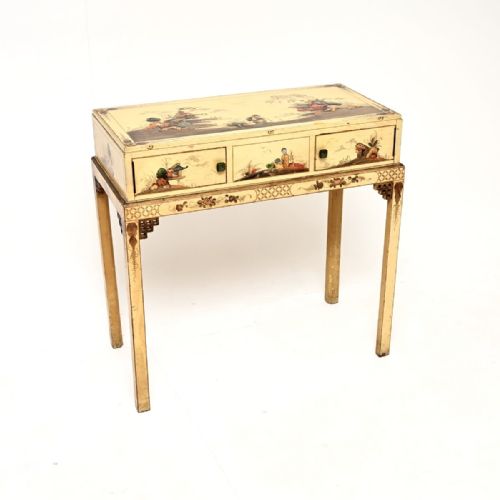
A hand painted hall table provides a decorative surface for an entryway, combining utility with artistic finish. These pieces span from the nineteenth century through the 1930s, encompassing styles such as Chinoiserie, Neoclassical, and Victorian.
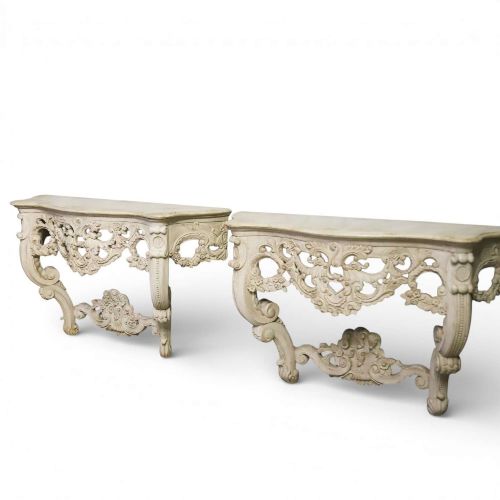
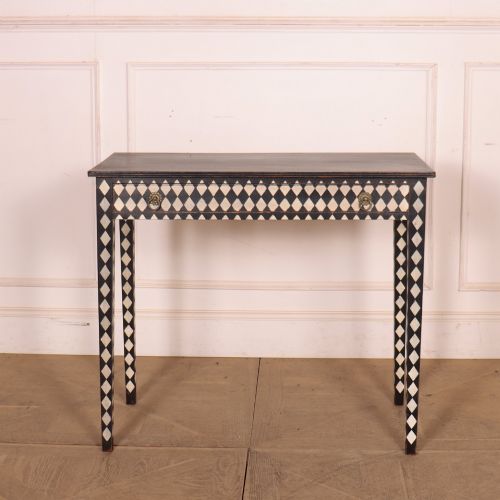
Console tables and side tables dominate the selection, often featuring demi-lune shapes or narrow rectangular profiles suited for corridors. Variants include tilt-top dining and hall combinations, dresser bases, and lowboys.
Origins range across English, French, Italian, and Chinese traditions, reflecting diverse decorative movements from Sheraton Revival to rustic farmhouse aesthetics.
Materials and construction
Construction relies primarily on wood substrates, including satinwood and painted wood, enhanced by applied pigments and lacquer. Surface decoration involves hand painting and intricate lacquerwork, particularly in Chinoiserie interpretations.
Selected examples incorporate contrasting elements such as brass fixtures and specimen marble tops. Hand-carved woodwork appears on French and Italian console tables, paired with antique white or coloured finishes.
Hand Painted Hall Table Retail Price Guide 2026
Typical asking prices for hand painted hall table among the pieces listed under this phrase on Sellingantiques today, from the lower quarter to the upper quarter. They describe what is for sale here now, not the wider market.
Listings feature wood, lacquer, brass, and marble materials across styles including Chinoiserie, Neoclassical, and French Chateau.
Assessing quality and execution
The sophistication of the hand painting determines visual impact, distinguishing fluid, detailed artistic motifs from simpler decorative applications. Lacquer finishes demonstrate varying depths of layering and polish.
Choice of underlying timber and supplementary materials, such as genuine specimen marble versus plain surfaces, dictates the standing of the piece. Fine joinery and preserved original carved details elevate the execution.
The Hand Painted Hall Table Glossary
- Console table
- A table designed to stand against a wall, frequently supported by wall brackets or front legs. These items are often narrow to fit corridors and halls.
- Demi-lune
- A half-moon shape used for table tops and furniture silhouettes. This format sits flush against a wall.
- Satinwood
- A durable hardwood with a natural golden sheen. It provides a smooth base for painted decoration.
- Specimen marble
- A mosaic of various coloured marbles arranged in geometric or pictorial patterns. It forms decorative table tops.
Hand Painted Hall Table: Frequently Asked Questions
What is a hand painted hall table used for?
These tables provide a narrow surface in corridors and entryways for holding post, keys, or decorative lamps.
They also serve as focal points for mirrors or artwork, adding colour and period style to transitional spaces.
How do I choose the right size?
Measure the width and depth of your hallway to ensure clearance for foot traffic before selecting a console or side table.
Demi-lune and narrow rectangular shapes work particularly well in restricted spaces where depth is limited.
How do I care for painted wood?
Dust surfaces regularly with a soft, dry cloth to protect the painted finish and lacquer work from abrasion.
Avoid placing items in direct sunlight or near heat sources to prevent the wood and paint from cracking.
How do I identify the period?
Examine the construction methods, underlying timber, and stylistic cues like Neoclassical or Victorian decorative motifs.
Paint techniques and hardware styles often reflect the aesthetic preferences of their specific decade of origin.