



Lacquered Writing Table
Lacquered writing table pieces combine utility with painted or decorated surfaces, offering distinctive focal points for period interiors.
Lacquered Writing Table
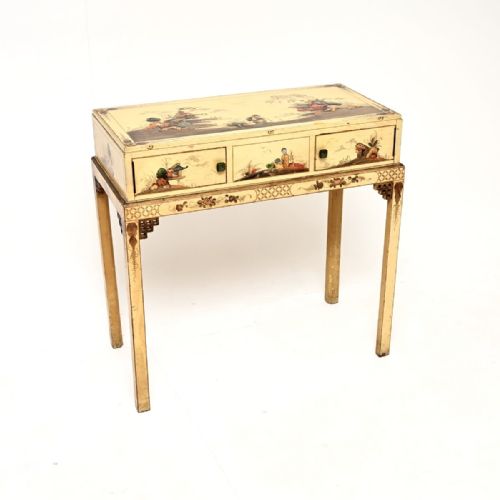
A lacquered writing table brings together functional desks and decorative finishes, spanning from 18th century pieces to late 19th century revival items. These surfaces range from red and black lacquer to intricate Chinoiserie scenes and Vernis Martin panels.
Origins vary from European chateau styles to Chinese regional workshops, offering diverse aesthetic approaches to the standard writing desk. Each piece displays distinct regional interpretations of lacquerwork applied to furniture.
Construction and materials
Construction relies upon traditional timber carcases, utilising woods such as kingwood, elm, and general hardwoods beneath the finished surfaces. Ormolu mounts and brass hardware are frequently integrated into the French revival and Venetian pieces.
Surface decoration involves specialised lacquer techniques, sometimes paired with leather writing inserts or detailed figural panels. Artisans applied layers of varnish and paint to achieve the glossy finishes seen on Chinoiserie and Vernis Martin examples.
Lacquered Writing Table Retail Price Guide 2026
Typical asking prices for lacquered writing table among the pieces listed under this phrase on Sellingantiques today, from the lower quarter to the upper quarter. They describe what is for sale here now, not the wider market.
Periods represented span from the 18th century through to Victorian and 1900 revival pieces.
Evaluating quality and execution
Quality reveals itself in the depth of the lacquer finish and the crispness of the hand-painted or gilt details upon the surface. Superior examples maintain intact pictorial panels without excessive craquelure or later repainting.
The integration of metalwork, such as cast or chased ormolu mounts, separates standard production from finer cabinetmaking. Well-fitted drawers and stable internal carcases distinguish better surviving items.
The Lacquered Writing Table Glossary
- Vernis Martin
- A type of simulated Japanese lacquer developed by the Martin brothers in 18th-century France. It is applied to furniture panels to create translucent, highly polished decorative scenes.
- Chinoiserie
- European artistic style reflecting Chinese motifs and decorative techniques. It frequently appears on 19th-century revival desks and dressing tables.
- Ormolu
- Gilt-bronze mounts used as decorative enrichment on furniture. It is cast and finished to accent the corners and borders of fine tables.
- Bureau Platt
- A flat-topped freestanding writing desk typically fitted with drawers. It originated in France and remains a prominent form in revival furniture.
Lacquered Writing Table: Frequently Asked Questions
Where were lacquered writing tables placed?
These tables served primarily in private studies, boudoirs, or principal reception rooms for correspondence and personal administration. Their finished backs often allowed them to sit away from walls in the centre of a room.
Smaller dressing table variants and travelling bureaux adapted these writing surfaces for bedrooms or temporary accommodation while travelling across Europe.
How do I care for a lacquered surface?
Maintenance requires keeping surfaces away from direct sunlight and extreme humidity changes to protect the delicate lacquer and underlying wood. Gentle dusting with a dry, soft cloth preserves the original sheen.
Avoid using modern chemical polishes or water on antique lacquer finishes, as moisture can penetrate the varnish layers and cause lifting.
What defines the Louis XV revival style?
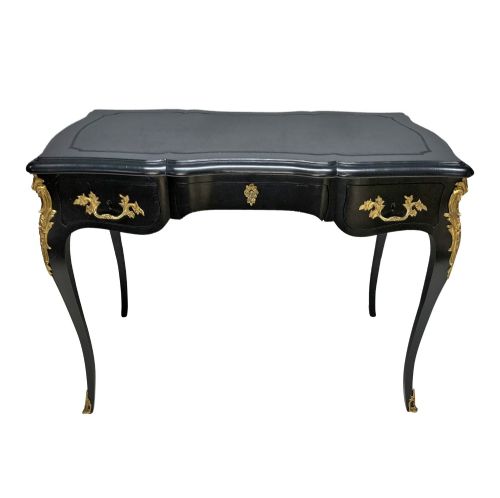
Louis XV revival pieces adopt the characteristic asymmetrical curves, cabriole legs, and rococo scrollwork of the mid-18th century. Makers in the 19th century reinterpreted these organic shapes using contemporary timber and lacquer techniques.
These desks often feature elaborate ormolu mounts that highlight the flowing contours of the aprons and legs.
How do Chinese and European styles differ?
Chinese regional pieces focus on structural simplicity in woods like elm, sometimes featuring traditional red or black lacquered finishes. They emphasise minimalist joinery and natural material grains.
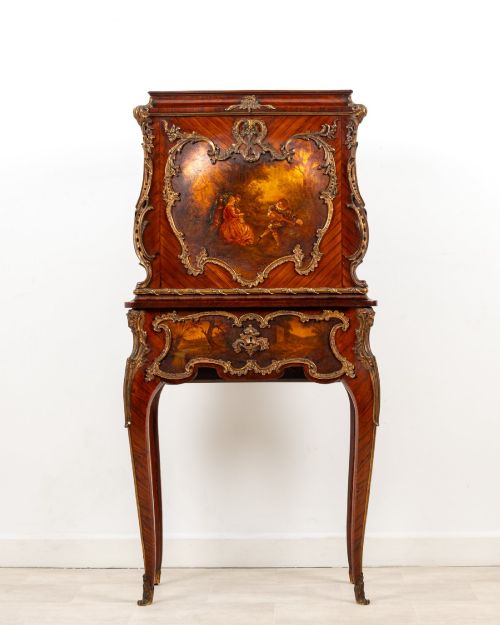
European interpretations, such as French Chinoiserie or Vernis Martin examples, incorporate ornate gilt bronze mounts and theatrical painted panels designed for decorative interiors.