
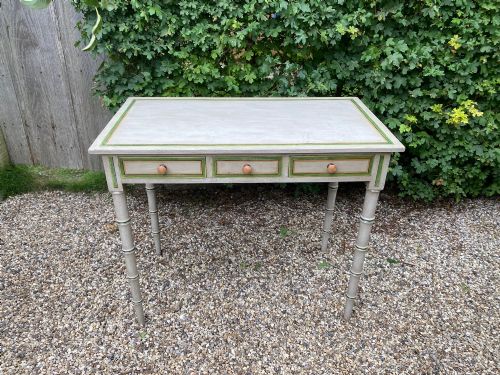
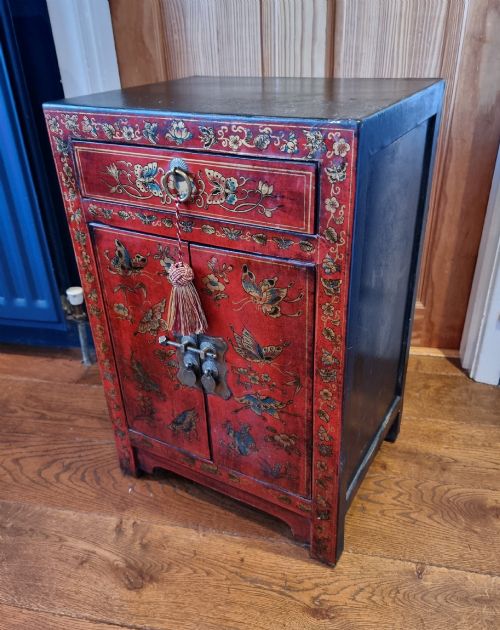
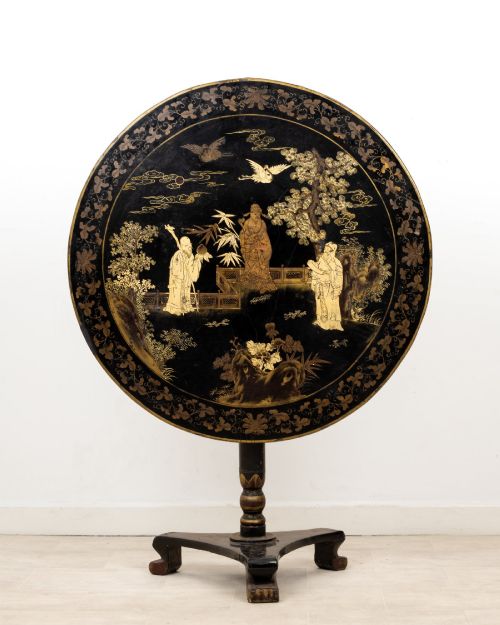
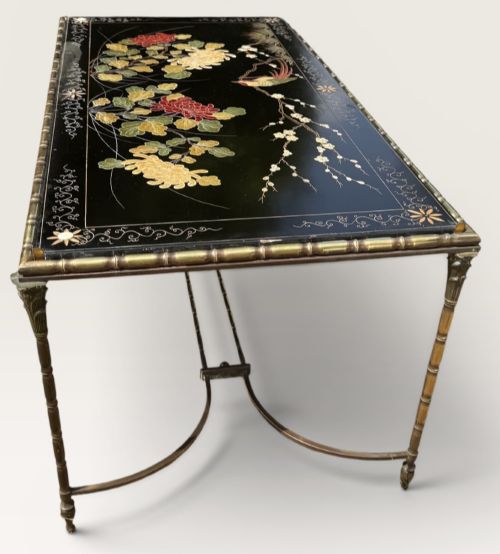




Painted Chinoiserie Side Table
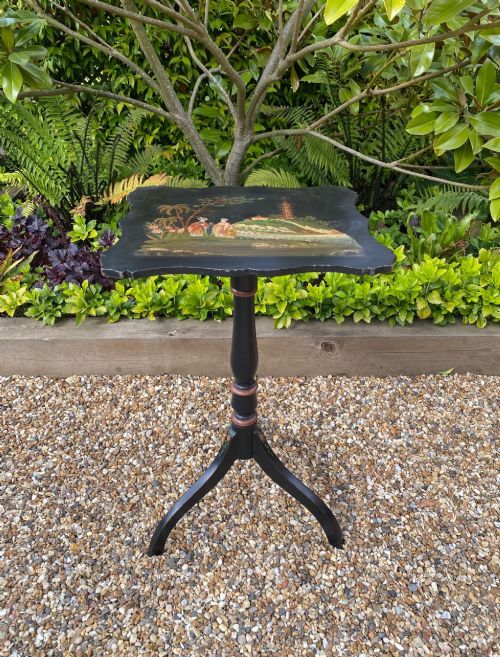
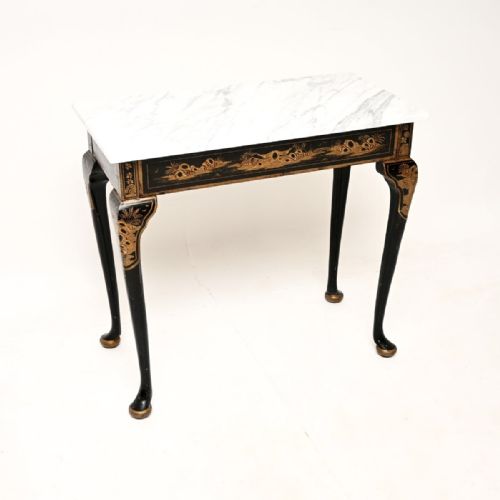
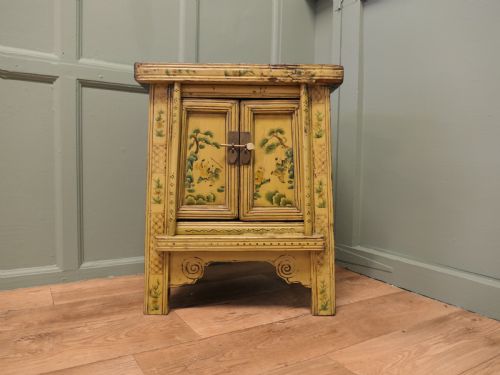
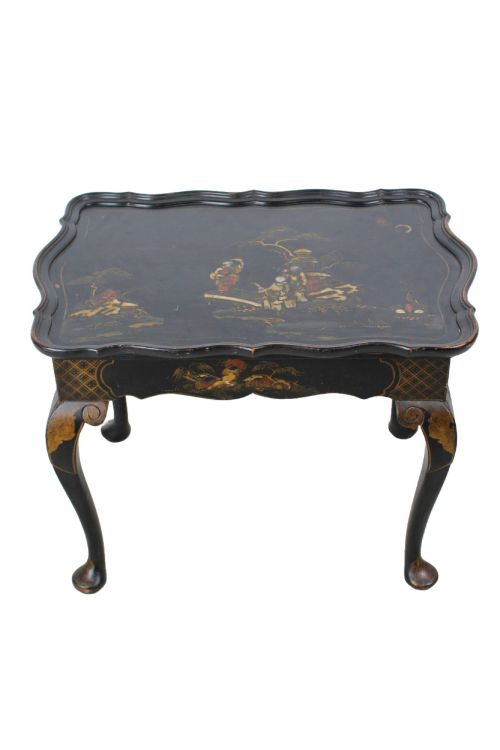
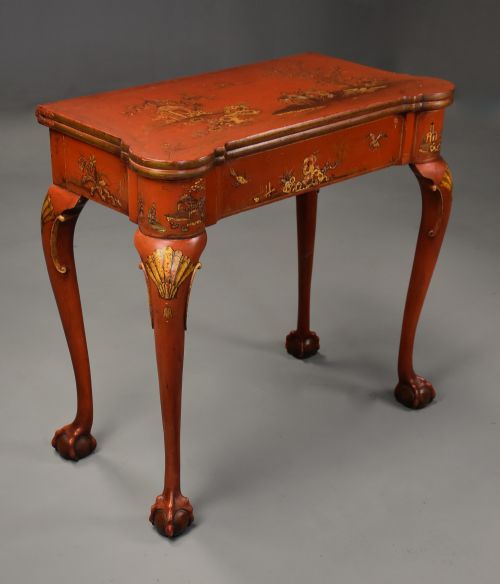
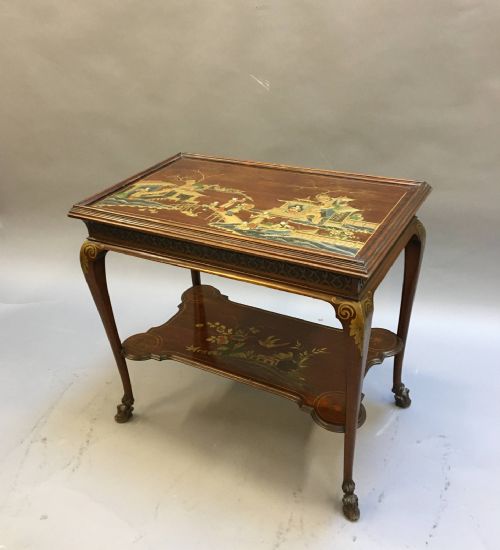
These painted chinoiserie side tables bring together European furniture forms and oriental decorative motifs, offering functional surfaces enlivened by lacquer and gilt.
Painted Chinoiserie Side Table
A painted chinoiserie side table combines structural forms such as tripod tables, nests, and tray tables with hand-painted Asian-inspired scenes. The selection spans the nineteenth century through the Edwardian period and the 1930s, reflecting changing revivals of oriental taste.
Most examples appear as occasional tables, lamp tables, or coffee tables finished in black, red, cream, or green lacquer. Makers drew upon Regency, Queen Anne, and Victorian styles to shape the wooden frames before applying intricate decorative schemes.
How they were made
Craftsmen built the underlying structures from wood, bamboo, or papier-mâché, shaping them into side tables, cabinets, and folding stands. Surfaces received coats of lacquer to build a smooth base for subsequent artistic work.
Painters applied paint, gold leaf, and gilt details to depict figures, pagodas, and landscapes. Brass hardware and occasional marble inserts completed the pieces.
The listings feature pieces spanning the nineteenth century, Edwardian era, and early twentieth century, utilising wood, lacquer, and paint.
What varies in quality
The refinement of the hand-painted decoration separates standard production from exceptional pieces. Superior examples display crisp detail in the gilt and figures against the lacquer ground.
The integrity of the wooden or papier-mâché structure and the preservation of the original paint surface dictate the standing of a piece within the range.
Maison Bagues
The Painted Chinoiserie Side Table Glossary
- Chinoiserie
- European artistic style reflecting Chinese and East Asian motifs. It gained popularity during various historic revivals across the eighteenth and nineteenth centuries.
- Lacquer
- Protective and decorative resin finish applied in multiple layers. It provides a glossy dark or coloured surface suitable for gilding.
- Tripod table
- Small table supported by three legs radiating from a central pillar. This form suits occasional use and compact spaces.
- Papier-mâché
- Composite material made from paper pulp or sheets mixed with adhesive. It allowed makers to mould lightweight trays and tables before painting.
Painted Chinoiserie Side Table: Frequently Asked Questions
How do I place a chinoiserie side table?
These compact tables function well beside seating or as lamp stands in sitting rooms.
Their decorative surfaces allow them to stand alone as focal points against plain walls.
Are these tables sturdy for daily use?
Most occasional and lamp tables handle light everyday placement of books or drinks.
Care should be taken with delicate lacquer surfaces to avoid moisture and scratching.
How do I identify the period?
Construction materials such as papier-mâché or bamboo often point toward nineteenth-century production.
Specific stylistic revivals like Edwardian or Regency design cues help narrow down the date.
What maintenance do lacquered surfaces need?
Dusting with a soft dry cloth preserves the painted and gilt details.
Harsh chemical cleaners must be avoided to protect the historic finish.