





Vintage Chinoiserie Cocktail Table
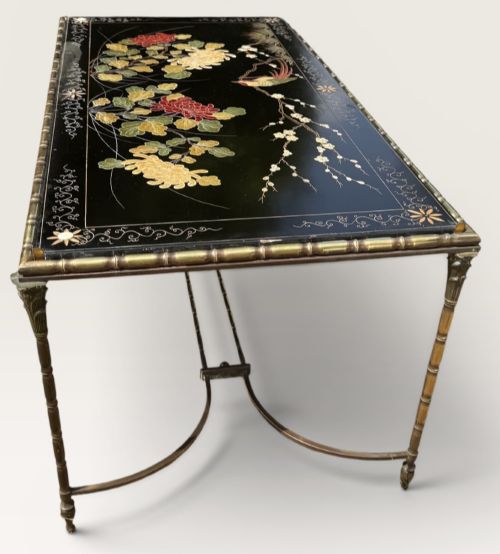
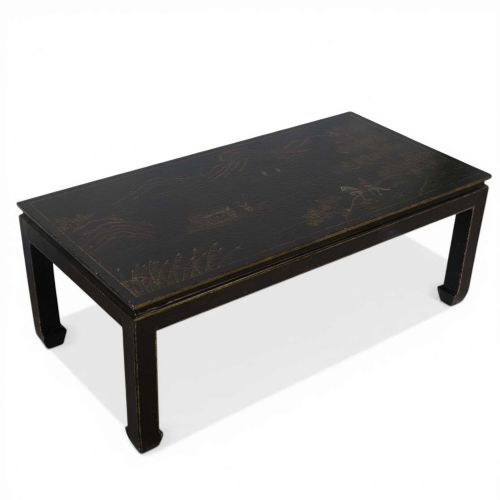
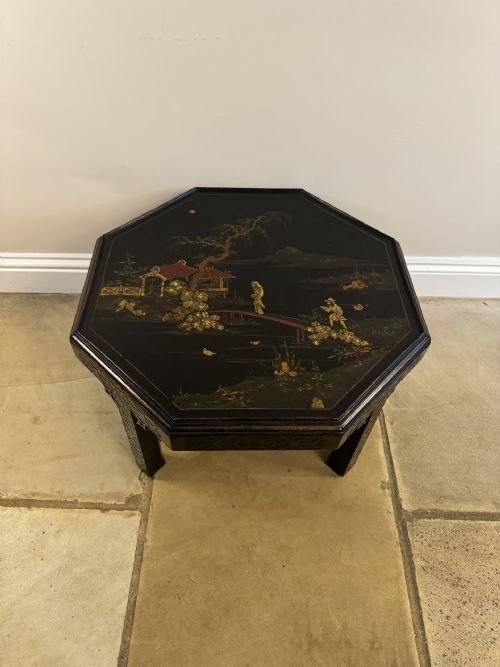
These vintage chinoiserie cocktail tables bring painted narrative scenes and rich black and gilt lacquer directly into a modern sitting room.
Vintage Chinoiserie Cocktail Table
A vintage chinoiserie cocktail table combines low coffee table proportions with European interpretations of East Asian decorative arts, spanning periods from the nineteenth century through the early twentieth century. You will encounter forms ranging from circular tables and low tables to tray tables supported by folding or fixed bases.
The aesthetic draws on Edwardian chinoiserie, mid-century French design, and Regency style, bringing together painted scenes and dark finishes. Pieces often feature black and gilt lacquered surfaces or decorative painted scenes depicting traditional motifs.
How they were made
Maker's workshops built these low tables from wood and lacquered timber, applying layers of lacquer to create smooth, dark reflective planes. Artisans then applied paint, gilt paint, and raised relief detail to build up intricate pictorial scenes across the tops.
Some examples incorporate additional materials such as brass mounts or soapstone details to accent the wooden frames and painted surfaces. The construction relies on traditional cabinet-making methods adapted to low occasional and coffee table forms.
Vintage Chinoiserie Cocktail Table Retail Price Guide 2026
Typical asking prices for vintage chinoiserie cocktail table among the pieces listed under this phrase on Sellingantiques today, from the lower quarter to the upper quarter. They describe what is for sale here now, not the wider market.
Several tables disguise themselves as tea trays until someone mistakes your cocktail for a kettle.
What varies in quality
Quality rests principally in the execution of the painted scenes and the depth of the lacquer finish. Finer examples show crisp detail in the raised relief work and careful application of gilt over deep black lacquer, whereas simpler pieces rely on plain painted surfaces.
The structural harmony between the table base and the decorated top also distinguishes the range. Tables retaining their original integrated tray tops or purpose-built frames demonstrate greater coherence than later adaptations.
Maison Bagues
The Vintage Chinoiserie Cocktail Table Glossary
- Chinoiserie
- European decorative style imitating East Asian artistic traditions. It appears across furniture and decorative arts through painted landscapes and figures.
- Japanned
- European technique mimicking traditional Japanese lacquerwork using resin varnishes and metallic powders. This finish creates the characteristic glossy black ground found on many low tables.
- Raised relief
- Decorative technique where motifs are built up in relief before painting and gilding. This creates a tactile, three-dimensional surface on the table top.
- Tray table
- Table featuring a removable or fixed tray top set upon a folding or rigid stand. Nineteenth-century examples often utilise papier-mâché or timber trays.
Vintage Chinoiserie Cocktail Table: Frequently Asked Questions
What periods do these tables come from?
The selection spans from the nineteenth century through the early twentieth century, including Edwardian and 1930s examples.
Most pieces date around 1910 to 1930, alongside nineteenth-century tray tables adapted for low seating.
How do I clean a lacquered surface?
Dust gently with a soft, dry microfibre cloth to protect the delicate gilt paint and lacquer layers.
Avoid chemical polishes and moisture, which can damage the traditional finish over time.
Are tray tops removable?
Certain examples feature a detachable tray resting on a folding or fixed wooden stand.
Other pieces integrate the tray top permanently into a standard coffee table frame.
What materials make up the frames?
Makers utilised wood and lacquered timber as the primary structural materials for these low tables.
Details in brass, soapstone, and gilt paint provide decorative contrast against the dark lacquer.